


Security questionnaires and vendor assessments have become unavoidable gatekeepers in modern business relationships. Before signing contracts, enterprises send vendors detailed questionnaires containing 100-500 questions about information security practices, compliance certifications, disaster recovery capabilities, and data protection measures. For vendors, these assessments represent both critical sales requirements and massive time drains, with each questionnaire requiring 10-40 hours to gather input from InfoSec, Legal, Engineering, and Compliance teams.
Our own platform data echoes that scale: 1 in 10 questionnaires exceeds 233 questions — and 68% of those questions are near-duplicates of ones already answered in the last 90 days, which is exactly what makes them automatable.
AI tools for security questionnaires are transforming how organizations handle this challenge. By automating response generation, maintaining verified answer repositories, and intelligently mapping questions to existing knowledge, AI-powered platforms reduce questionnaire completion time from days to hours while improving accuracy and consistency. Teams that once struggled to handle 10 questionnaires monthly now process 30-40 without adding headcount.
This comprehensive guide explores how AI tools revolutionize security questionnaire and vendor assessment processes, the specific capabilities that deliver value, implementation considerations, and proven approaches for maximizing ROI from AI automation.
Understanding the security questionnaire bottleneck
Before examining AI solutions, understanding why security questionnaires create such significant bottlenecks helps identify where automation delivers maximum impact.
1. The manual process workflow
Traditional security questionnaire completion follows a predictable but inefficient pattern. When a questionnaire arrives, someone (typically from Sales, Presales, or a dedicated RFP team) must first review all questions to understand what's being asked. They then identify which subject matter experts need to provide input: InfoSec for security controls questions, Legal for privacy and compliance items, Engineering for technical architecture queries, and HR for background check policies.
Each SME receives a spreadsheet or document section with their assigned questions. Days or weeks pass as busy experts fit questionnaire responses around their primary responsibilities. Responses trickle back with varying levels of detail and quality. Throughout this process, bottlenecks emerge at every stage: Sales doesn't know which questions InfoSec answered in the last 10 questionnaires. InfoSec rewrites the same answer about encryption standards for the 15th time this quarter. Legal's response to a GDPR question contradicts Engineering's position on data residency. The compiled questionnaire sits waiting for final review from an SME who's traveling.
2. The hidden costs of manual responses
The obvious cost, hours spent completing questionnaires, represents only part of the burden. Hidden costs often exceed direct labor:
Opportunity cost of expert time: When your Chief Information Security Officer spends 5 hours weekly answering repetitive questionnaire questions, that's time not spent on actual security improvements, threat analysis, or strategic initiatives. According to a Ponemon Institute study, security professionals spend an average of 8.5 hours per week on compliance and vendor assessment activities, time they identify as their least valuable work activity.
Deal velocity impact: Sales cycles extend when questionnaires take weeks to complete. Prospects waiting for security responses may engage other vendors in parallel, reducing win probability. Delayed questionnaires signal poor organization or lack of security maturity, damaging buyer confidence.
Inconsistency risk: When 5 different people answer similar questions across multiple questionnaires, inconsistencies emerge. One questionnaire says data is encrypted using AES-256, another says AES-128. These discrepancies create compliance risk and buyer confusion.
Knowledge loss: When the one person who knows your disaster recovery procedures leaves the company, institutional knowledge disappears. The next questionnaire, asking about DR capabilities, requires rebuilding that information from documentation and interviews.
3. Why traditional solutions fall short
Organizations have tried various approaches to streamline questionnaire processes before AI tools for security questionnaires emerged:
Static answer libraries: Creating a database of pre-written answers seems logical. The problem: questions are phrased differently across questionnaires ("Do you encrypt data at rest?" vs. "What encryption standards do you use for stored data?" vs. "Describe your data-at-rest protection measures"). Finding the right answer requires knowing it exists and searching effectively.
Dedicated RFP teams: Hiring specialists to handle all questionnaires centralizes expertise but doesn't scale indefinitely. Each new team member requires months of training to understand your security posture, and even specialized teams struggle when volume spikes.
Questionnaire templates: Some vendors create their own security questionnaires and proactively share them with prospects, hoping to avoid the need for custom questionnaires. This rarely works; enterprises have standardized assessment frameworks they must use for compliance reasons.
The fundamental limitation of pre-AI approaches: they reduce but don't eliminate the repetitive work, knowledge access challenges, and consistency problems that make questionnaires so painful.
Top AI-powered tools to automate security questionnaires in 2026
The evaluation criteria above apply across every platform in this category, but the platforms themselves take meaningfully different approaches — some are standalone questionnaire tools, others are questionnaire features bolted onto a broader trust or compliance suite.
Here's how the leading options compare.
SiftHub: Best for teams that don't treat questionnaires in isolation
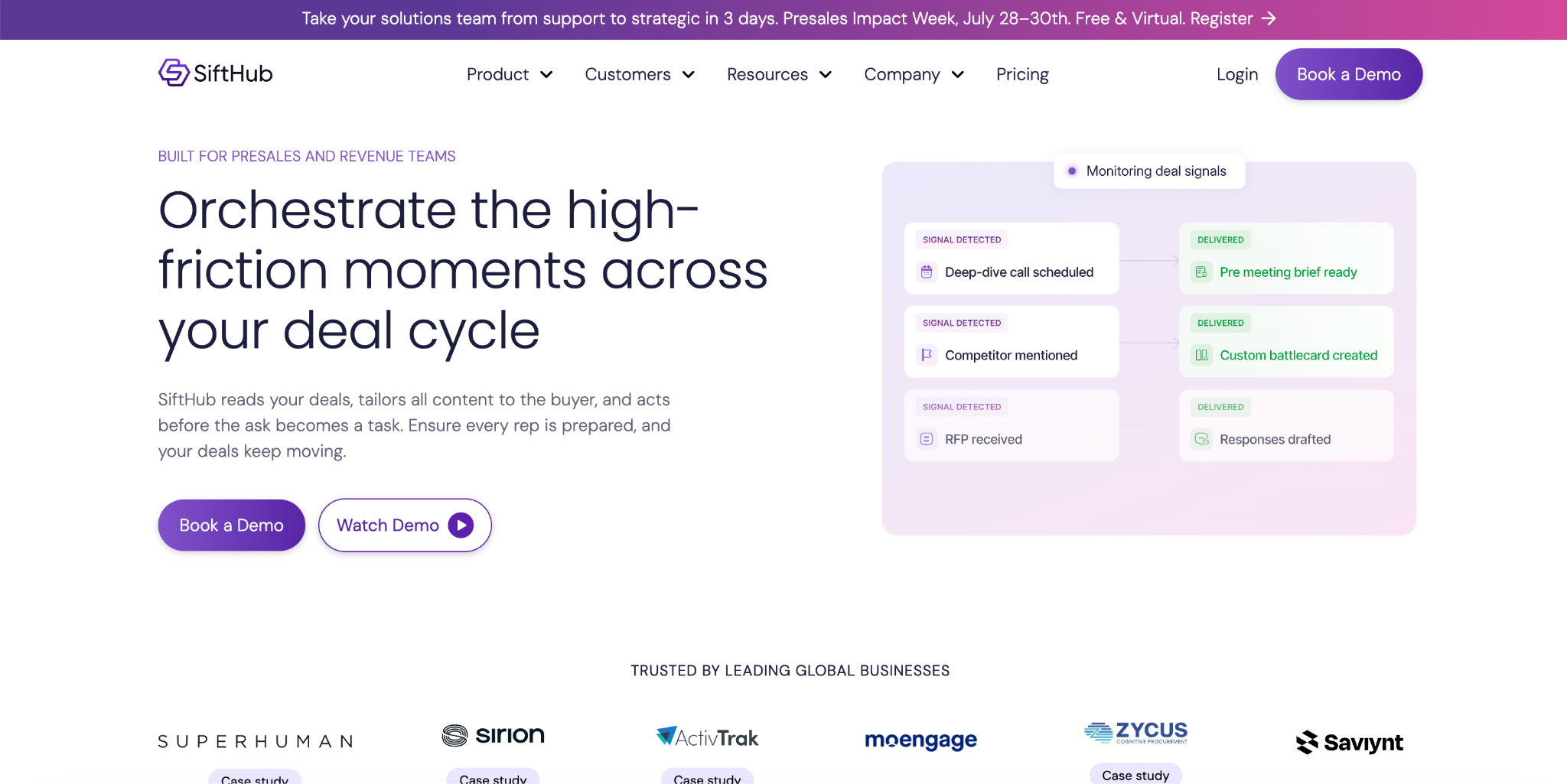
Most tools in this category are built around a single use case: security questionnaires. SiftHub treats questionnaires as one of several connected response types, alongside RFPs, RFIs, and DDQs — pulling from the same verified knowledge base across all of them. AI Autofill auto-populates up to 90% of responses with confidence scoring, Smart Repository keeps the underlying content fresh through real-time sync rather than manual curation, and project management routes low-confidence questions to the right SME automatically. For teams whose questionnaire volume is really one piece of a broader RFP/proposal workload, consolidating onto one platform avoids maintaining a separate content library for each document type.
Vanta: Best for teams already standardized on Vanta for compliance
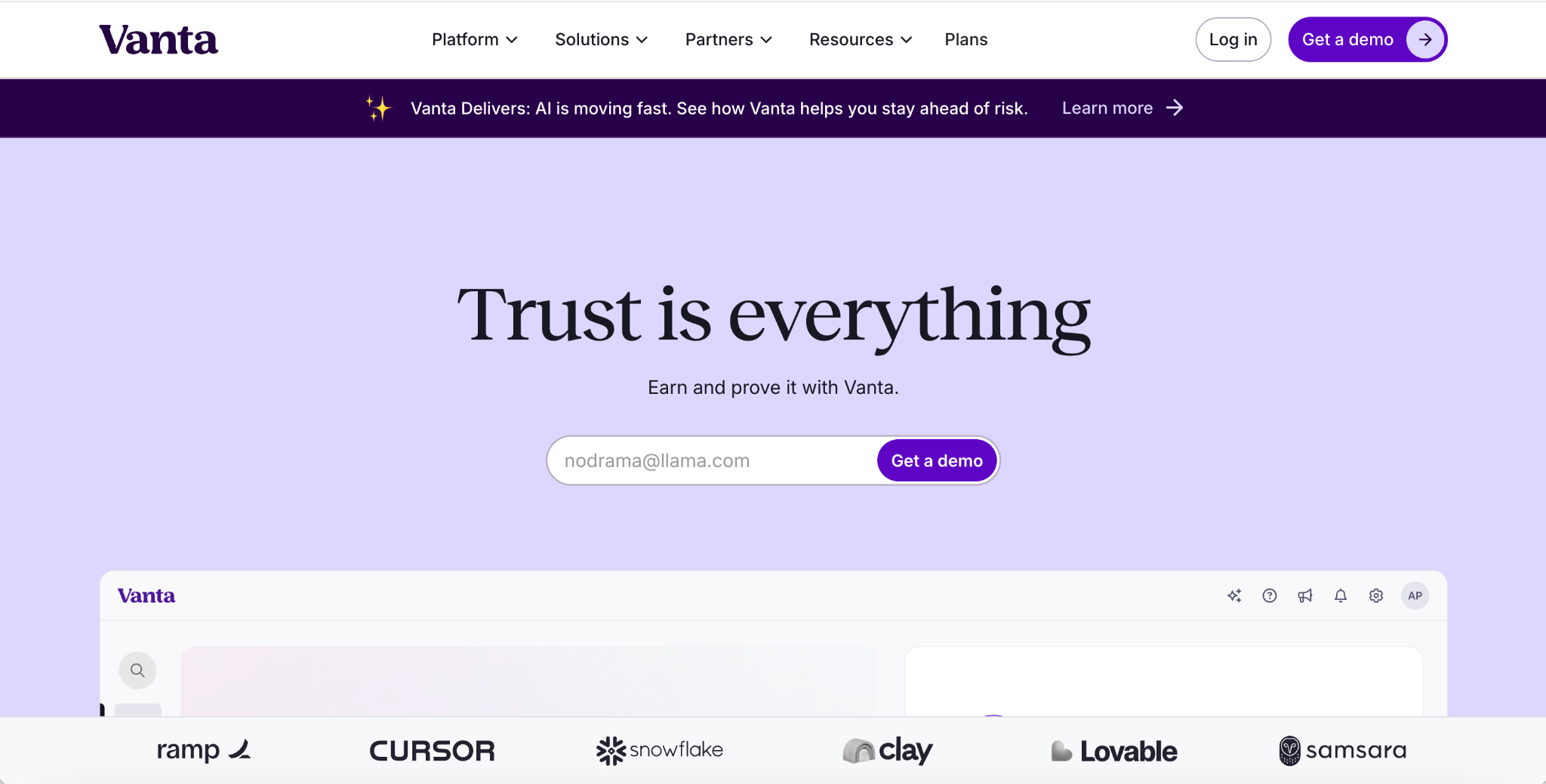
Vanta's questionnaire automation lives inside its broader trust management platform, with answers tied directly to continuously monitored controls rather than a static content library. The tighter the existing Vanta footprint, the more this integration pays off; teams without Vanta as their compliance backbone get less differentiated value from the questionnaire feature specifically.
How AI transforms security questionnaire processes
AI tools for security questionnaires attack the problem differently than traditional automation. Instead of requiring exact question matches or rigid templates, AI understands question intent, retrieves relevant information from multiple sources, and generates contextually appropriate responses.
1. Intelligent question interpretation
Modern AI systems using large language models understand that "What encryption algorithms do you use?" and "Describe your cryptographic standards for data protection" are essentially asking the same thing, even though the wording differs completely. This semantic understanding means the AI can match questions to existing answers even when phrasing varies significantly.
This capability eliminates the most tedious part of manual processes: reading each question, trying to remember if you've answered something similar before, searching through past questionnaires, and deciding if a previous answer actually addresses the current question. The AI handles this mapping automatically, often with confidence scores indicating how well existing answers match current questions.
2. Multi-source knowledge retrieval
Effective security questionnaire responses require information from diverse sources: security documentation, compliance certifications, past questionnaire responses, technical specifications, policies and procedures, and audit reports. For presales and solutions teams, hunting through all these sources consumes hours per questionnaire.
AI tools, like SiftHub, connect to your existing knowledge repositories, i.e., Google Drive, Confluence, SharePoint, Slack, and past RFP responses, and search across all simultaneously. When asked about your penetration testing practices, the AI finds relevant information in your security policy document, the pentest report from your last audit, previous questionnaire responses explaining your testing frequency, and Slack conversations where your CISO discussed the testing vendor you use.
3. Automated response generation
The most powerful AI capability: generating complete response drafts from your existing knowledge. Upload a 300-question security questionnaire, and the AI analyzes each question, searches your knowledge base, and produces complete answers, often with source citations showing which documents informed each response.
SiftHub's AI Autofill auto-populates 90% of security questionnaire responses from your verified knowledge base, with confidence scores indicating which answers need human review. Questions the AI answers with high confidence (like "What certifications do you maintain?" when you have ISO 27001 and SOC 2 certificates documented) require only quick verification. Low confidence answers flag where human expertise is needed.
This automation transforms the workflow: instead of starting from blank responses, your team reviews and refines AI-generated drafts. A questionnaire requiring 20 hours of manual effort drops to 3-4 hours of review and customization.
4. Continuous learning and improvement
Advanced AI systems learn from human edits and feedback. When a subject matter expert revises an AI-generated answer, the system can incorporate that refinement into future responses. Over time, the AI gets better at understanding your specific security posture, preferred phrasing, and level of detail appropriate for different question types.
5. Smart repository management
Rather than maintaining static Q&A banks that quickly become outdated, modern AI platforms create intelligent repositories that automatically stay current. When your product team updates a specification sheet in Google Drive or your security team renews a certification, the AI-powered repository reflects these changes immediately through real-time sync with connected systems.
Smart Repository uses AI to auto-identify similar Q&A pairs when creating new ones, keeping the answer database clean and relevant in real time, while also preventing clutter that makes traditional answer libraries difficult to maintain. AI-powered tagging and categorization ensure the right answers surface for the right questions, and automated expiration alerts prevent the submission of outdated information. Teams can import existing Q&As from Google Sheets, Excel, or legacy RFP tools without manually removing duplicates and set automated expiration reminders to keep content current after certification renewals or policy changes.
Key capabilities of effective AI security questionnaire tools
Not all AI tools for security questionnaires deliver equal value. Understanding which capabilities matter most helps evaluate solutions effectively and set realistic expectations for automation potential.
1. Confidence scoring and human-in-the-loop workflows
The best AI tools recognize their own limitations. Rather than presenting all answers as equally reliable, sophisticated systems provide confidence scores indicating how certain the AI is that its response accurately addresses the question.
- High confidence (90%+): The AI found clear, relevant information in your knowledge base that directly answers the question. These responses typically require only quick verification.
- Medium confidence (60-89%): The AI found related information but may need human judgment about whether it fully addresses the question or requires additional context.
- Low confidence (below 60%): The AI found some relevant information but isn't certain it comprehensively answers the question. These require full human review and likely additional research.
This confidence-based flagging ensures humans focus their time on questions genuinely requiring expertise while quickly approving well-sourced, straightforward answers.
2. Version control and answer governance
Security postures evolve, you achieve new certifications, update encryption standards, and change disaster recovery procedures. AI tools must maintain current, accurate information while preserving historical context.
Effective platforms include version control showing when answers changed, who approved updates, and which questionnaires used which versions. When your SOC 2 Type II certification renews, you update that information once, and all future questionnaires automatically reference the current certification, eliminating manual updates across multiple repositories.
3. Collaboration and review workflows
Security questionnaires require input from multiple stakeholders. AI tools should support collaborative workflows where different team members review sections relevant to their expertise.
For example, your AI might auto-populate 85% of a questionnaire, then route specific question sections to appropriate reviewers: encryption and access control questions to InfoSec, data privacy questions to Legal, disaster recovery questions to IT Operations. Each reviewer sees only their assigned sections, makes edits or approvals, and the system tracks progress toward completion.
SiftHub's project management capabilities support exactly this workflow, allowing teams to assign sections, track review and approval status, and maintain visibility into questionnaire completion progress.
4. Integration with existing systems
AI tools deliver maximum value when they connect to your current knowledge sources rather than requiring you to recreate information in a new system. Look for platforms with pre-built integrations to:
- Document repositories: Google Drive, SharePoint, OneDrive, Confluence, Notion
- Collaboration platforms: Slack, Microsoft Teams
- Security and compliance tools: Vanta, Drata, Secureframe
- CRM systems: Salesforce, HubSpot (for tracking which prospects received which questionnaires)
- Past RFP/questionnaire repositories: Wherever you currently store historical responses
The broader the integration ecosystem, the more comprehensive the AI's knowledge base and the more accurate its responses.
5. Customization and personalization
Different industries, company sizes, and buyer types require different response approaches. A questionnaire from a healthcare prospect might need detailed HIPAA compliance information that's irrelevant to a financial services buyer focused on SOC 2 and PCI DSS.
Advanced AI tools support customization based on buyer characteristics, industry requirements, and deal context. SiftHub's personalization capabilities allow you to tailor responses by industry, company size, and specific buyer concerns, ensuring each questionnaire feels customized rather than generic.
Implementation strategies for AI security questionnaire tools
Successfully implementing AI tools for security questionnaires requires more than software procurement. Organizations that achieve 10x productivity improvements follow deliberate implementation strategies that address technology, processes, and change management.
1. Building your knowledge foundation
AI tools are only as good as the knowledge they can access. Before implementation, audit your current security documentation:
Essential knowledge sources:
- Security policies and procedures
- Compliance certifications and audit reports
- Disaster recovery and business continuity plans
- Incident response procedures
- Data protection and privacy policies
- Technical architecture and infrastructure documentation
- Past security questionnaire responses
Identify gaps where information exists in people's heads but isn't documented. The implementation process provides an excellent opportunity to capture and document this institutional knowledge.
2. Establishing governance and approval processes
Determine who owns the AI system, who approves answer updates, and how you ensure accuracy:
- Content ownership: Assign clear ownership for different knowledge domains. InfoSec owns security control answers, Legal owns privacy and compliance responses, and Engineering owns technical architecture information. Owners review AI-generated answers in their domains and approve accuracy.
- Update procedures: Define how often you review and update stored answers. After certification renewals, policy changes, or infrastructure updates, trigger content reviews to ensure the AI uses the latest information.
- Approval workflows: For sensitive information or high-stakes prospects, you might require human approval of all AI-generated responses. For routine questionnaires, allow presales and solutions teams to approve high-confidence answers directly while routing low-confidence responses for expert review.
3. Measuring success and ROI
Track metrics demonstrating the value AI tools deliver:
Efficiency metrics:
- Hours per questionnaire (before and after AI implementation)
- Number of questionnaires completed per month
- Time from receipt to submission
- SME hours required per questionnaire
Quality metrics:
- Answer consistency across questionnaires
- Error or correction rates
- Prospect feedback on response quality
- Questions requiring significant human research (declining over time as the knowledge base grows)
Business impact metrics:
- Security questionnaire-related deal delays (should decrease)
- Win rates for opportunities requiring security assessments
- Sales cycle length for deals involving questionnaires
Organizations implementing RFP Agent typically report a 75-90% reduction in questionnaire completion time, saving more than 24 hours, with teams handling 2-3x more assessments without adding headcount. Customer results include:
- Rocketlane: 50% reduction in RFP turnaround time, 70% bandwidth improvement for solutions engineers, more than 10 days saved per week
- Sirion: 1.5x increase in RFPs handled per month, 48-hour reduction in RFP SLAs
- Allego: 14+ hours saved per project, 8x faster process, 90% automated questionnaires
- Superhuman: 50% of sales team queries diverted via Slack bot, more than 8 hours saved per week, 75% automated RFP completion
- Observe Inc: 10 minutes to first draft of questionnaire, 24 hours saved per questionnaire
More importantly, subject matter experts reclaim 5-10 hours weekly previously spent on repetitive questions, redirecting that expertise toward actual security improvements and strategic initiatives.
4. Training and change management
AI tools change how teams work. Successful implementations include training addressing:
- For sales teams: How to upload questionnaires, interpret confidence scores, and know when to escalate to SMEs versus approving AI responses. Sales teams benefit from knowing they can move deals forward without waiting days for SMEs to be available for routine questions.
- For subject matter experts: How to review and refine AI-generated answers, update the knowledge base when security practices change, and provide feedback that improves future AI performance.
- For executives: The value proposition, ROI metrics, and strategic benefits of questionnaire automation, faster sales cycles, better SME time allocation, and improved consistency.
Emphasize that AI augments rather than replaces human expertise. SMEs still provide the knowledge and judgment; AI just eliminates the repetitive work of reformatting that knowledge for each new questionnaire.
Selecting the right AI tool for security questionnaires
The market for AI tools for security questionnaires has expanded rapidly, with solutions ranging from purpose-built security assessment platforms to general RFP automation tools adapted for questionnaires. Evaluation criteria should focus on capabilities that matter most for your specific situation.
Evaluation criteria checklist
AI capabilities:
- Semantic question understanding (not just keyword matching)
- Multi-source knowledge retrieval
- Confidence scoring on generated responses
- Learning from human edits
- Support for complex, multi-part questions
Integration and architecture:
- Connects to your existing knowledge repositories
- API access for custom integrations
- Security and compliance (SOC 2, ISO 27001, data residency)
- Cloud vs. on-premise deployment options
Workflow and collaboration:
- Multi-user review and approval workflows
- Version control and answer governance
- Progress tracking and reporting
- Export formats matching typical questionnaire requirements
Usability and adoption:
- Intuitive interface requiring minimal training
- Mobile access for on-the-go reviews
- Slack/Teams integration for workflow notifications
- Customer support and implementation assistance
Pilot programs and proof of value
Before full implementation, run focused pilots demonstrating value:
Pilot approach: Select 3-5 recent security questionnaires your team completed manually. Upload them to the AI tool and measure:
- What percentage of questions did the AI answer with high confidence
- How much time would the AI-generated first draft have saved
- Whether AI responses match the quality of your manual responses
- What additional features or integrations do you need for full value
A successful pilot demonstrates clear time savings and quality comparable to manual responses, building confidence for broader rollout.
The future of AI in vendor assessments and security
AI tools for security questionnaires represent just the beginning of how artificial intelligence transforms vendor assessment and third-party risk management. Several emerging trends suggest even more sophisticated capabilities ahead.
1. Standardization through AI
As more organizations adopt AI for questionnaire responses, pressure increases for standardized security frameworks. When 100 vendors can all auto-generate responses to the same 50 questions, those questions become less differentiating. We'll likely see evolution toward more sophisticated assessment approaches that AI assists with but doesn't fully automate, perhaps interactive interviews, continuous monitoring, or evidence-based verification.
2. Real-time security posture sharing
Instead of point-in-time questionnaires, we may move toward continuous sharing of security posture, where vendors maintain current security documentation in standardized formats, and prospects can query that information on-demand. AI tools would keep this documentation current, translating your security practices into whatever framework prospects require.
3. Predictive risk assessment
Future AI systems might analyze patterns across thousands of vendor assessments to predict risk: "Vendors with this combination of answers have 15% higher breach probability" or "This response pattern correlates with poor incident response capability." These insights could help both vendors (identifying security improvements with highest risk reduction) and assessors (focusing deep review on truly high-risk vendors).
The bottom line
Security questionnaires will remain a reality of B2B sales for the foreseeable future. Regulatory requirements, security concerns, and third-party risk management demands ensure continued emphasis on vendor assessments. The question isn't whether you'll handle questionnaires, but how efficiently and effectively you'll complete them.
AI tools for security questionnaires transform this burden from a sales blocker into a manageable process that showcases your security maturity. Teams that once struggled to complete 10 questionnaires monthly now handle 40+ while providing more consistent, comprehensive responses. Subject matter experts reclaim hours weekly previously lost to repetitive questions, redirecting that expertise toward actual security improvements.
For infosec teams responsible for vendor assessments and for sales organizations that depend on fast, accurate security responses to close deals, AI automation represents not just efficiency gains but a competitive advantage. Faster turnaround times, more thorough answers, and standardized, high-quality responses help demonstrate security sophistication that builds buyer confidence.
The technology has matured to the point where implementation risk is minimal, and ROI is measurable within weeks. Organizations can be up and running in under a week and often see value in as little as 15 minutes of use.
Schedule a demo to see how AI automation can transform your security questionnaire process and drive better outcomes for your sales team.