


.avif)

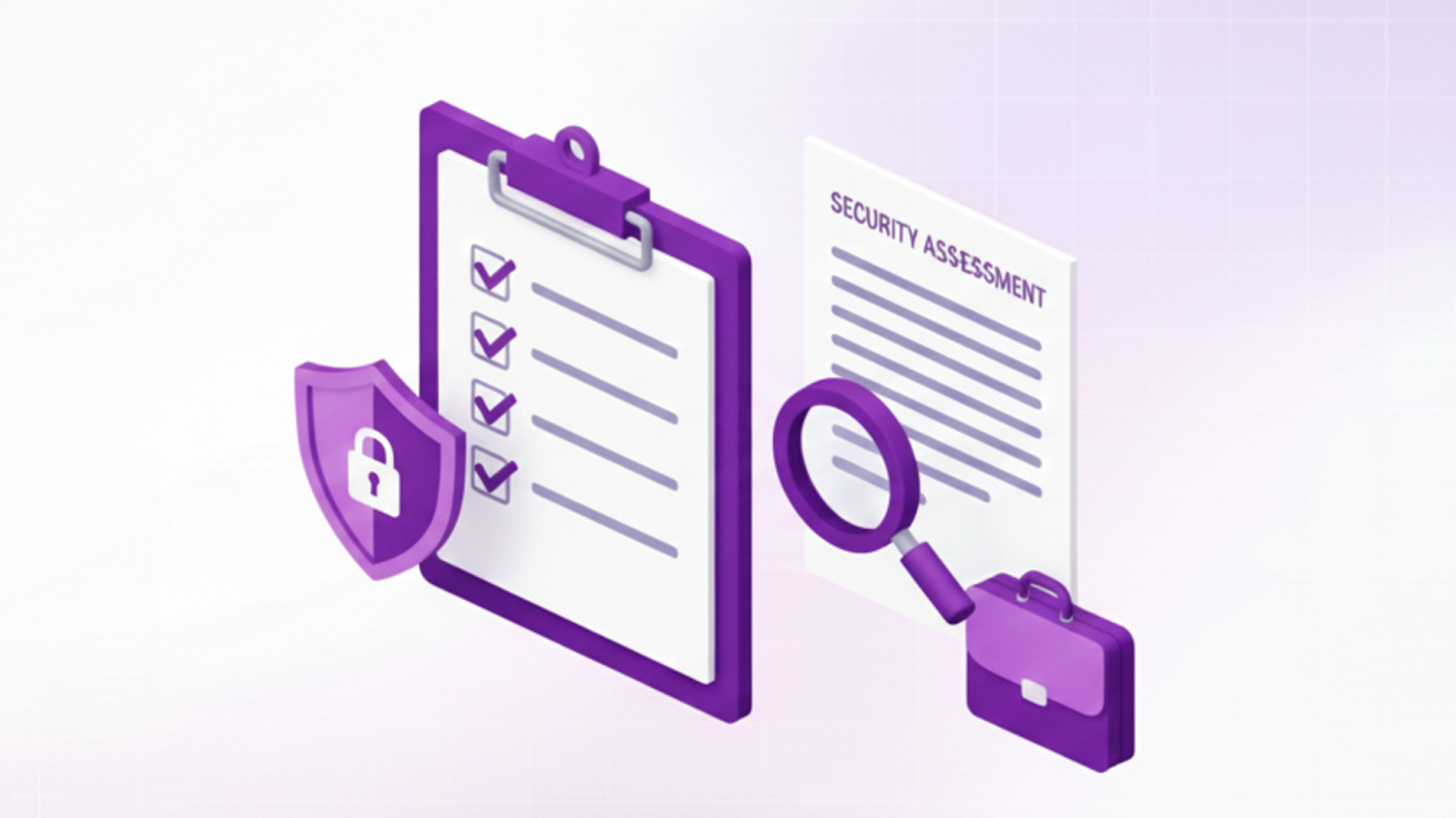
Vendor security assessments protect organizations from third-party risks that could compromise sensitive data or disrupt operations. Research shows 60%+ of organizations experience cyber incidents linked to third-party vendors, making thorough security vetting critical before granting vendors access to systems, data, or networks.
Key takeaways:
- 9 essential question categories: Information security policies/governance, data protection/privacy, access controls/authentication, infrastructure/network security, incident response/business continuity, third-party/supply chain risk, application security, physical security, compliance/legal considerations
- Assessment best practices: Tailor questions to risk levels (50-100+ for high-risk, 30-50 for medium-risk, 10-20 for low-risk); request evidence and documentation; conduct follow-up discussions; integrate findings into contracts; establish ongoing monitoring
- Common mistakes: Accepting yes/no answers without detail; focusing only on technical controls vs. governance; treating assessments as one-time exercises; ignoring red flags for convenience
Vendor efficiency: Centralized repositories, standardized frameworks (SIG, CAIQ, VSAQ), AI platforms auto-populate responses, reducing time from days to hours.
Vendor security assessments protect organizations from third-party risks that could compromise sensitive data or disrupt operations. Research shows 60%+ of organizations experience cyber incidents linked to third-party vendors, making thorough security vetting critical before granting vendors access to systems, data, or networks.
Key takeaways:
- 9 essential question categories: Information security policies/governance, data protection/privacy, access controls/authentication, infrastructure/network security, incident response/business continuity, third-party/supply chain risk, application security, physical security, compliance/legal considerations
- Assessment best practices: Tailor questions to risk levels (50-100+ for high-risk, 30-50 for medium-risk, 10-20 for low-risk); request evidence and documentation; conduct follow-up discussions; integrate findings into contracts; establish ongoing monitoring
- Common mistakes: Accepting yes/no answers without detail; focusing only on technical controls vs. governance; treating assessments as one-time exercises; ignoring red flags for convenience
Vendor efficiency: Centralized repositories, standardized frameworks (SIG, CAIQ, VSAQ), AI platforms auto-populate responses, reducing time from days to hours.
Vendor security assessments protect your organization from third-party risks that could compromise sensitive data, disrupt operations, or damage your reputation. Research shows that more than 60% of organizations experience cyber incidents linked to third-party vendors. The right security questions help you identify vulnerabilities, evaluate vendor preparedness, and make informed decisions about which partners to trust with your critical business processes and information.
This comprehensive blog provides great security questions organized by category, explains why each question matters, and offers practical guidance for conducting effective vendor security assessments. Whether you're evaluating cloud service providers, software vendors, or professional services firms, these questions help you understand security postures thoroughly and identify potential risks before they materialize.
Why great security questions matter in vendor assessments?
1. The third-party risk landscape
Your organization's security is only as strong as your weakest vendor relationship. When you grant vendors access to your systems, data, or networks, their security practices directly impact your risk exposure. A vendor breach can expose your customer information, intellectual property, or financial records just as effectively as a direct attack on your own infrastructure.
High-profile breaches increasingly involve third-party vendors. Attackers recognize that smaller vendors often have weaker security controls than large enterprises, making them attractive entry points for supply chain attacks. By compromising a vendor with access to multiple client organizations, attackers can impact dozens or hundreds of companies through a single successful intrusion.
2. The cost of inadequate vendor vetting
Organizations that skip thorough security assessments or ask superficial questions pay steep prices when vendor relationships go wrong. Direct costs include breach response expenses, regulatory fines for inadequate due diligence, legal fees from customer lawsuits, and remediation work to secure compromised systems. Indirect costs include reputation damage, customer trust erosion, and competitive disadvantages when security failures become public.
Beyond immediate breach costs, inadequate vendor security creates ongoing operational risks. When vendors lack proper backup procedures, business continuity capabilities, or incident response plans, their failures can disrupt your operations even without malicious attacks. Service outages, data loss, or compliance violations stemming from vendor problems affect your business regardless of who's technically at fault.
How great security questions drive better outcomes?
Well-crafted security questions serve multiple purposes beyond simple information gathering. They signal to vendors that security matters to your organization, encouraging them to prioritize security investments. They help you compare vendors objectively using consistent criteria rather than relying on subjective impressions or marketing claims. They identify specific areas requiring contractual protections or service level agreements (SLAs).
Great security questions also establish baseline expectations for the vendor relationship. When vendors know upfront that you'll scrutinize security practices, monitor compliance, and require transparency about incidents, they're more likely to maintain rigorous standards throughout the engagement.
Essential security question categories
1. Information security policies and governance
- Does your organization have a formal, documented information security policy?
- How often is your security policy reviewed and updated?
- Who has executive responsibility for information security at your organization?
- Do you conduct regular security awareness training for all employees?
- What security certifications or compliance frameworks do you maintain?
2. Data protection and privacy
- What types of data will you access, process, or store on our behalf?
- Where is data physically stored, and in what jurisdictions?
- Is data encrypted both in transit and at rest?
- What are your data retention and deletion policies?
- How do you handle data segregation in multi-tenant environments?
Pro tip for vendors: Streamlining data protection responses:
AI enablement platforms like SiftHub help sales teams responding to these data protection questions access relevant security documentation, privacy policies, and compliance certifications instantly, enabling fast, accurate responses without hunting through file repositories or waiting for subject matter experts.
3. Access controls and authentication
- How do you control and monitor access to systems and data?
- Do you implement multi-factor authentication (MFA) for system access?
- How frequently are user access rights reviewed and updated?
- Do you maintain audit logs of system and data access?
- How do you manage privileged accounts and administrative access?
4. Infrastructure and network security
- What technical security controls protect your infrastructure?
- How do you segment networks to limit potential breach impact?
- What measures protect endpoints like laptops, desktops, and mobile devices?
- How do you manage software patching and vulnerability remediation?
- Do you conduct regular vulnerability assessments and penetration testing?
5. Incident response and business continuity
- Do you have a formal incident response plan?
- How quickly do you detect and respond to security incidents?
- What is your process for notifying customers about security incidents?
- Have you experienced any security breaches in the past 3 years?
- What backup and disaster recovery capabilities do you maintain?
- Do you have business continuity plans for various disruption scenarios?
6. Third-party and supply chain risk
- Do you rely on subcontractors or fourth-party service providers?
- How do you assess and monitor the security of your third-party vendors?
- What contractual security requirements do you impose on subcontractors?
- Can you provide a list of all subcontractors who will access our data?
Pro tip for vendors: Accessing supply chain documentation quickly
Presales and solutions teams frequently face detailed questions about subcontractors and supply chains during RFP responses. Enterprise search capabilities help them quickly locate vendor agreements, security assessments, and approved subcontractor lists without disrupting workflows.
7. Application security (for software vendors)
- What secure development practices do you follow?
- Do you conduct application security testing?
- How do you manage application vulnerabilities and security patches?
- Do you have a bug bounty program or responsible disclosure policy?
- What authentication and authorization mechanisms does your application use?
8. Physical security (for on-premise data centers)
- What physical security controls protect facilities where our data is stored?
- How do you monitor and log physical access to facilities?
- What environmental controls protect against equipment failure?
- How do you securely dispose of physical media?
9. Compliance and legal considerations
- What regulatory compliance requirements apply to your services?
- Can you provide current compliance certification documents?
- What are your insurance coverage levels for cybersecurity incidents?
- What are the terms for security audits and right-to-audit clauses?
- How do you handle data subject access requests and privacy compliance?
How to conduct effective vendor security assessments?
1. Tailor questions to risk levels
Not every vendor requires the same scrutiny. Risk-based approaches focus detailed assessments on high-risk relationships while using lighter-touch processes for lower-risk vendors. Risk factors include the sensitivity of data accessed, the criticality of services provided, vendor access to internal systems, and whether the vendor handles regulated data.
High-risk vendors handling sensitive data or providing critical services warrant comprehensive assessments using most or all questions in this guide. Medium-risk vendors might receive abbreviated questionnaires focusing on key areas. Low-risk vendors with minimal data access might only need to confirm basic security practices.
2. Request evidence and documentation
Vendor self-assessment alone provides insufficient assurance. Request supporting documentation for key security claims: copies of security policies, recent audit reports and certifications, penetration test results (with sensitive details redacted), incident response plans, and business continuity procedures.
Review documentation critically. Generic policies copied from templates without customization suggest security isn't taken seriously. Recent audit findings with numerous unresolved issues indicate potential problems. Documentation that's outdated or obviously hasn't been maintained raises red flags.
3. Conduct follow-up discussions
Written questionnaire responses provide starting points, but follow-up conversations reveal a deeper understanding. Schedule discussions with vendor security leaders to explore concerning responses, clarify ambiguous answers, and assess whether staff truly understand their security practices versus simply reading from prepared scripts.
Technical discussions help differentiate vendors with mature security programs from those providing superficial responses. Ask how they would handle specific scenarios, request examples of how policies are applied in practice, and probe areas where initial responses seemed weak.
4. Integrate with contract negotiations
Security assessment findings should inform contract terms. Issues identified during assessment might require specific contractual protections: data encryption requirements, incident notification timelines, audit rights and frequencies, liability allocation for security breaches, and termination rights if security standards aren't maintained.
Don't assume vendor standard contracts adequately address security concerns. Many boilerplate agreements provide minimal protection. Use assessment findings to negotiate specific security commitments and remedies if the vendor fails to maintain promised security levels.
5. Establish ongoing monitoring processes
Initial assessments provide point-in-time snapshots, but vendor security postures evolve. Some vendors improve security over time, while others allow practices to degrade. Establish ongoing monitoring, including annual reassessments or questionnaire updates, continuous monitoring using security rating services, review of new audit reports and certifications as they're completed, and incident notification requirements with regular confirmation that no incidents occurred.
Changes in vendor ownership, leadership, or business focus can affect security priorities. Major acquisitions, mergers, or financial distress should trigger reassessment even if regular review cycles haven't arrived.
Streamlining security questionnaire responses
1. The vendor perspective: Responding efficiently
For vendors receiving dozens or hundreds of security questionnaires annually, efficient response processes prevent security assessments from becoming overwhelming bottlenecks. Many organizations struggle because security knowledge is scattered across multiple people and systems, questionnaires use inconsistent terminology for similar concepts, subject matter experts are constantly interrupted with requests, and maintaining current security documentation requires significant effort.
Modern AI response generation capabilities transform how vendors handle security questionnaires. Rather than manually searching for technical specifications, policy documents, and certification details, teams can access AI-powered systems that instantly provide verified answers with complete source traceability.
SiftHub help bid and proposal teams respond to security questionnaires by centralizing security documentation, automating repetitive responses, maintaining consistency across multiple assessments, and tracking how answers evolve as security postures improve.
2. Building comprehensive security knowledge repositories
Organizations that excel at security questionnaire responses maintain centralized repositories of standard answers, supporting documentation, and recent audit reports. This knowledge base approach ensures all team members have access to current, accurate information rather than relying on memory or hunting through email threads.
The AI teammate approach provides on-demand support when responding to security questions, instantly surfacing relevant policies, certifications, and technical specifications without requiring team members to remember where everything is stored or interrupt security leaders with repetitive requests.
3. Leveraging standardized frameworks
Industry-standard questionnaires like the Standardized Information Gathering (SIG) questionnaire, Consensus Assessments Initiative Questionnaire (CAIQ), or Vendor Security Alliance Questionnaire (VSAQ) provide consistent frameworks that reduce duplication. Vendors can complete these comprehensive assessments once, then share results with multiple customers rather than answering similar questions repeatedly.
Organizations requesting security information should consider whether standardized questionnaires meet their needs before creating custom assessments. Using recognized frameworks signals sophistication and makes it easier for vendors to provide thorough responses efficiently.
Common mistakes in security assessments
Mistake 1: Accepting "yes/no" answers without detail
Simple confirmations that security controls exist provide insufficient assurance. Follow up asking how controls are implemented, how frequently they're tested, and what evidence demonstrates effectiveness. Request specific examples rather than accepting generic affirmations.
Mistake 2: Focusing only on technical controls
Technology alone doesn't create security. Process maturity, organizational culture, employee awareness, and leadership commitment matter enormously. Balance technical questions with inquiries about governance, policies, training, and incident response capabilities.
Mistake 3: Treating assessments as one-time exercises
Security postures change constantly as threats evolve, vendors expand services, or organizational priorities shift. Initial assessments should begin ongoing monitoring relationships, not represent one-time checkboxes completed before contract signing.
Mistake 4: Ignoring red flags in favor of convenience
When vendors provide concerning responses or refuse to share important security documentation, organizations sometimes proceed anyway because the vendor offers attractive pricing, unique capabilities, or established relationships. Security compromises made for convenience often result in expensive consequences later.
Mistake 5: Failing to verify claims
Self-reported security practices don't always reflect reality. Whenever possible, verify key claims through third-party audit reports, certifications, or customer references. Vendors making impressive security claims should be able to substantiate them with evidence.
Taking action on assessment findings
Completing security assessments creates value only when findings drive decisions and actions. Establish clear criteria for how assessment results influence vendor selection, required contract terms, or ongoing monitoring intensity. Document risk acceptance decisions when choosing vendors despite identified concerns, ensuring leadership explicitly acknowledges tradeoffs.
For existing vendor relationships, assessment findings might trigger required improvements, enhanced monitoring, contract modifications, or even vendor replacement if gaps are severe enough. Don't let assessment results sit in files without driving meaningful risk management activities.
Security questionnaires represent critical due diligence, protecting your organization from third-party risks. Great security questions dig beneath surface-level claims to understand real practices, capabilities, and commitment. By asking the right questions, thoroughly evaluating responses, and acting on findings, you build vendor relationships that enhance rather than undermine your security posture.
Ready to transform how your team handles security questionnaires? If you're responding to customer security assessments and vendor questionnaires, discover how SiftHub enables faster, more accurate questionnaire completion with verified answers and complete source traceability