


.avif)

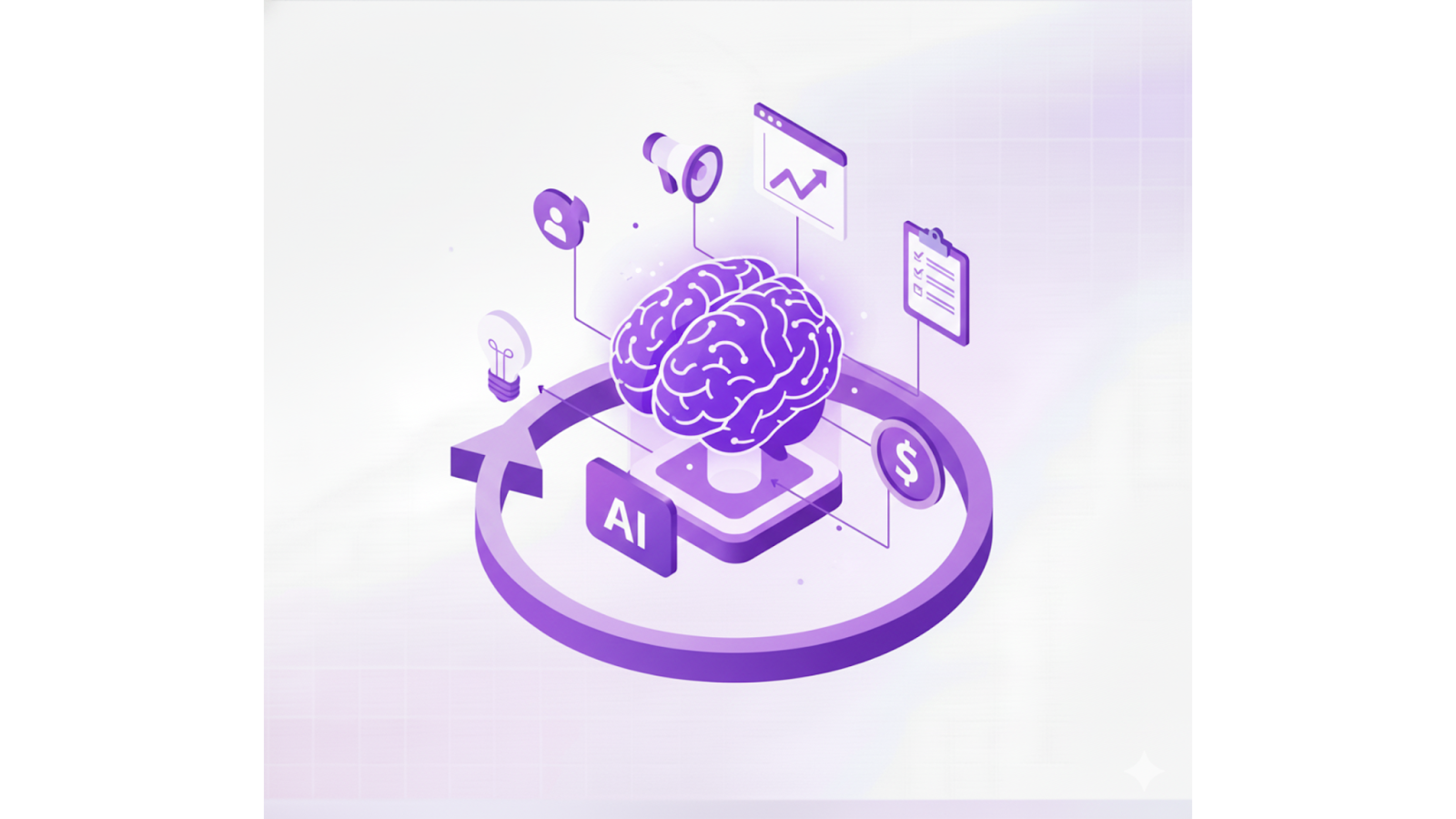
Artificial intelligence in sales applies machine learning and natural language processing to automate tasks, surface insights, and augment decision-making. Research shows revenue teams using AI report 3.7x higher likelihood of meeting quota, with organizations seeing 18-25% improvement in win rates, 20-30% shorter sales cycles, and 35-40% higher rep productivity.
Key takeaways:
- 3 AI categories: Predictive AI (lead scoring, opportunity risk, churn prediction), generative AI (email drafting, proposal generation, call summaries), conversational AI (chatbots, virtual assistants, information retrieval)
- Top use cases: Automated RFP/security questionnaire responses (85-95% auto-populated, 2.5-3x more completed), instant technical Q&A (50-60% reduction in SE support tickets), personalized outreach (35-40% higher open rates), automated meeting prep (60-70% time savings)
- Implementation principles: Start with the biggest bottleneck, not the flashiest feature; prioritize integration with existing workflows; ensure data quality; plan change management; set realistic accuracy expectations
Common pitfalls: Expecting AI to fix poor fundamentals; choosing features over fit; implementing too many tools simultaneously; neglecting security/compliance.
Artificial intelligence in sales applies machine learning and natural language processing to automate tasks, surface insights, and augment decision-making. Research shows revenue teams using AI report 3.7x higher likelihood of meeting quota, with organizations seeing 18-25% improvement in win rates, 20-30% shorter sales cycles, and 35-40% higher rep productivity.
Key takeaways:
- 3 AI categories: Predictive AI (lead scoring, opportunity risk, churn prediction), generative AI (email drafting, proposal generation, call summaries), conversational AI (chatbots, virtual assistants, information retrieval)
- Top use cases: Automated RFP/security questionnaire responses (85-95% auto-populated, 2.5-3x more completed), instant technical Q&A (50-60% reduction in SE support tickets), personalized outreach (35-40% higher open rates), automated meeting prep (60-70% time savings)
- Implementation principles: Start with the biggest bottleneck, not the flashiest feature; prioritize integration with existing workflows; ensure data quality; plan change management; set realistic accuracy expectations
Common pitfalls: Expecting AI to fix poor fundamentals; choosing features over fit; implementing too many tools simultaneously; neglecting security/compliance.
Artificial intelligence has moved from experimental technology to essential sales infrastructure faster than almost any other business innovation. According to the research by Gartner, ‘revenue teams using AI report 3.7x higher likelihood of meeting quota." Yet despite these compelling numbers, many sales organizations struggle to move beyond pilot programs and proofs-of-concept to systematic AI adoption that transforms performance.
The challenge isn't whether AI works in sales, the evidence is overwhelming. The question is how to implement AI strategically to solve your specific bottlenecks without disrupting workflows, overwhelming teams with new tools, or investing in capabilities that don't address your actual constraints. Generic AI enthusiasm without clear use cases and implementation strategy wastes budget and creates change fatigue that makes future innovation harder.
This guide explores practical applications of using AI in sales across the entire revenue cycle, from prospecting through customer success. You'll see concrete use cases with measurable outcomes, understand what separates successful AI implementations from failed experiments, and learn how to build an adoption roadmap aligned with your team's priorities and capabilities.
What does AI in sales actually mean?
When sales leaders discuss "using AI in sales," they're typically referring to 3 distinct but related technology categories that apply machine learning and natural language processing to automate tasks, surface insights, and augment human decision-making throughout the sales process.
- Predictive AI analyzes historical data to forecast outcomes and prioritize actions. This includes lead scoring models that predict conversion likelihood, opportunity risk analysis that flags deals likely to slip, and churn prediction that identifies at-risk customers before they cancel. Predictive AI answers questions like "which prospects should my team contact first?" and "which deals need immediate intervention?"
- Generative AI creates new content based on patterns learned from training data. This encompasses email drafting, proposal generation, call summaries, and personalized outreach messaging. Generative AI handles questions like "what should I say to this prospect?" and "how do I customize this proposal for this specific buyer?"
- Conversational AI interacts with users through natural language to answer questions, automate workflows, and provide instant access to information. This includes chatbots that qualify inbound leads, virtual assistants that answer product questions, and AI agents that handle repetitive tasks like scheduling or data entry. Conversational AI addresses "how do I find information quickly?" and "who can handle these routine tasks?"
The most impactful sales AI implementations combine all 3 categories to create end-to-end workflow automation. For example, predictive AI identifies high-value prospects, generative AI creates personalized outreach messaging for those prospects, and conversational AI handles follow-up questions from interested buyers, all working together to accelerate pipeline generation without requiring more headcount.
What AI in sales is not: a replacement for human relationship building, strategic thinking, or complex negotiation. The technology excels at pattern recognition, content generation, and information retrieval but lacks the judgment, empathy, and creativity that differentiate top performers. The goal is augmentation rather than replacement, making every rep more productive by eliminating low-value tasks and providing instant access to information that previously required hours of searching or waiting for subject matter experts.
Key benefits of using AI in sales
Organizations implementing AI across their revenue operations report measurable improvements in both efficiency metrics and revenue outcomes. Understanding these benefits helps build the business case for investment and sets appropriate expectations for what AI can deliver.
- Dramatic time savings on non-selling activities: Sales professionals spend only 28% of their time actually selling, according to industry research, with the rest consumed by administrative work, information searching, and meeting preparation. AI reclaims significant portions of this lost productivity.
Account executives using AI sales assistants report saving 10-15 hours weekly on tasks like researching accounts, finding collateral, drafting follow-up emails, and preparing for calls. Those hours return directly to revenue-generating activities like discovery conversations, relationship building, and negotiation.
- Faster response times to buyer inquiries: Modern buyers expect instant answers to technical questions, pricing inquiries, and product comparisons. Traditional sales processes requiring escalation to sales engineers or product specialists create delays that cost deals.
AI sales assistants like SiftHub enable account executives to answer both basic and more technical buyer questions immediately with accurate, cited information, reducing average response time from hours or days to under a minute. In competitive situations where multiple vendors compete for the same opportunity, response speed often determines who advances to finalist status.
- Consistency and accuracy across all customer interactions: Different reps answering the same question differently creates confusion and damages credibility. AI ensures every customer receives accurate, on-brand responses regardless of which team member they interact with.
This consistency matters particularly for distributed teams across multiple regions or new hires still ramping up on product knowledge. Rather than hoping prospects happen to reach your most knowledgeable rep, AI democratizes expertise across the entire organization.
- Scalability without proportional headcount growth: Traditional sales models require adding headcount to increase capacity, more deals require more reps, more RFPs require more proposal writers, and more technical questions require more sales engineers. AI breaks this linear relationship by automating repetitive work and multiplying each person's output.
Sales teams using autonomous AI agents report handling 2-3x more RFPs, security questionnaires, and technical evaluations without adding specialized resources.
- Better decision-making through data-driven insights: AI surfaces patterns and insights buried in CRM data, call recordings, email threads, and document repositories that humans lack time to analyze systematically.
Predictive models identify which deals need attention, which prospects are most likely to convert, and which customers face churn risk, enabling proactive intervention rather than reactive firefighting.
- Improved buyer experiences through personalization: Generic, one-size-fits-all outreach and proposals signal that vendors don't understand buyer-specific challenges. AI enables true personalization at scale by analyzing buyer context, industry, company size, technology stack, pain points, and adapting messaging, case studies, and recommendations accordingly. This level of customization was previously feasible only for strategic accounts, but AI makes it economically viable for every opportunity.
The cumulative impact of these benefits shows up in top-line metrics. Companies with mature AI implementations report 18-25% improvement in win rates, 20-30% shorter sales cycles, and 35-40% higher rep productivity compared to pre-AI baselines.
Real-world use cases for AI in sales
The abstract benefits of using AI in sales become concrete when mapped to specific workflows and pain points that every revenue team experiences. Here are the highest-impact applications with measurable outcomes.
1. Automated RFP and security questionnaire responses
- The challenge: Enterprise sales cycles inevitably involve RFPs and security questionnaires containing 100-500 questions requiring input from sales, engineering, security, legal, and product teams. Traditional response processes take 10-40 hours per document, creating bottlenecks that delay deals and prevent teams from pursuing all available opportunities.
- How AI solves it: AI-powered RFP automation pulls answers from your knowledge base, product documentation, security certifications, past proposals, technical specifications, and auto-populates 85-95% of questionnaire responses with source citations. The system flags new questions requiring human expertise while handling everything it's seen before automatically. SiftHub's RFP agent specifically reduces response time from days to hours while maintaining accuracy and consistency.
- Measurable impact: Bid and proposal teams using AI automation report completing 2.5-3x more RFPs per quarter, reducing average response time by 48 hours, and improving win rates by 15-20% due to faster, more complete submissions.
The reason it works is structural: 68% of questions in any questionnaire are near-duplicates of ones answered in the last 90 days, and across SiftHub customers 240,000+ questions were answered in six months.
2. Instant technical Q&A and product knowledge access
- The challenge: Account executives field constant technical questions from prospects but lack the deep product expertise to answer without escalating to sales engineers. This creates delays, frustrates buyers expecting immediate responses, and overwhelms sales engineers with repetitive inquiries that prevent them from focusing on complex, strategic deals.
- How AI solves it: Conversational AI trained on your product documentation, competitive intelligence, and technical specifications acts as an always-available sales assistant. Reps ask questions via Slack or web interface in natural language and receive accurate answers with source citations in seconds. The system handles 70-80% of routine technical questions automatically while escalating complex scenarios to human experts.
- Measurable impact: Organizations implementing AI-powered technical Q&A report 50-60% reduction in sales engineer support tickets, 400+ questions answered automatically per month, and 10-15 hours saved weekly per account executive previously spent searching for information or waiting for SE responses.
3. Personalized outreach and email generation
- The challenge: Effective prospecting requires personalized messaging that references buyer-specific challenges, industry trends, and relevant use cases. But manually researching and customizing outreach for dozens or hundreds of prospects weekly is unsustainable, leading to generic emails that get ignored.
- How AI solves it: Generative AI analyzes prospect information, company, industry, role, recent news, technology stack, and creates customized outreach messaging that feels hand-written. The system incorporates relevant case studies, addresses industry-specific pain points, and adapts tone based on persona. Reps review and approve rather than drafting from scratch.
- Measurable impact: Sales teams using AI-generated outreach report 35-40% higher email open rates, 25-30% higher response rates, and 8-10 hours saved weekly per rep on prospecting activities. The key is that AI handles first draft creation while humans add strategic insight and personal touches.
4. Automated meeting preparation and account research
- The challenge: Preparation for discovery calls, demos, and executive meetings requires reviewing CRM history, past emails, call recordings, Slack threads, and competitive intelligence. This research takes 1-2 hours per meeting and often gets skipped when reps are busy, leading to unprepared conversations that waste buyer time.
- How AI solves it: AI assistants automatically generate pre-call briefings by synthesizing all available information about the account, key stakeholders, previous interactions, stated pain points, and relevant competitive context. The system highlights talking points, suggests questions, and flags potential concerns based on similar deals.
SiftHub specifically solves the context-switching problem by connecting directly to applications holding deal context, Zoom, Gong, Salesforce, Slack, and email, so reps access comprehensive briefings without jumping between different tools. Instead of opening 5-7 different applications to piece together account history, reps receive unified pre-call summaries pulling from all connected sources automatically. This eliminates the workflow disruption that causes many sellers to skip preparation entirely when time is tight.
- Measurable impact: Revenue teams using AI-powered meeting prep report 60-70% time savings on research activities, more substantive discovery conversations, and 15-20% improvement in meeting-to-opportunity conversion rates due to better preparation.
5. Competitive battlecard generation and intelligence
- The challenge: Competitors constantly launch new features, change pricing, and adjust positioning. Keeping battlecards current requires dedicated resources, yet outdated competitive intelligence leaves reps unprepared for buyer questions about alternatives. Creating new battlecards for emerging competitors takes weeks.
- How AI solves it: AI agents monitor competitor websites, press releases, review sites, and social media to identify changes automatically. The system generates updated battlecards on-demand, highlighting recent developments and suggesting positioning responses. When buyers mention competitors you haven't documented, AI creates provisional battlecards within minutes rather than weeks.
- Measurable impact: Organizations using AI-powered competitive intelligence report always-current battlecards, 90% reduction in time spent maintaining competitive content, and 20-25% improvement in win rates in competitive situations due to better-prepared reps.
6. Sales collateral and proposal creation
- The challenge: Every prospect needs customized proposals, one-pagers, and solution briefs that address their specific use case, but creating these materials from scratch takes hours. Templates are too generic and don't differentiate, while full customization doesn't scale.
- How AI solves it: AI sales collateral builders generate personalized proposals by pulling relevant content from your knowledge base and adapting it to the buyer context. The system incorporates appropriate case studies, tailors feature descriptions to stated pain points, and maintains brand consistency while enabling true customization at scale.
- Measurable impact: Presales and solutions teams using AI collateral generation report 8-10x faster proposal creation, 40-50% reduction in time spent on documentation, and higher buyer engagement due to increased relevance and personalization.
Automated post-sales handover and customer success enablement
The challenge: After deals close, critical context gets lost during the sales-to-customer-success transition. Stakeholder relationships, technical commitments, pricing negotiations, and buyer sentiment live scattered across call transcripts, CRM notes, and Slack conversations. Customer success managers start relationships blind, forcing customers to repeat information and delaying time-to-value.
How AI solves it: AI-powered handover automation compiles comprehensive transition documentation by synthesizing every touchpoint during the sales cycle. SiftHub generates complete handover summaries pulling from call transcripts, CRM data, Slack channels, and email exchanges, capturing deal fundamentals (ARR, TCV, close date, term) alongside detailed stakeholder snapshots showing titles, roles, and sentiment.
Customer success teams receive clear breakdowns of business context, including specific use cases discussed, technical requirements promised, competitive alternatives considered, and commitments made throughout the sales process. This eliminates traditional handover meetings where account executives try to verbally transfer months of relationship context.
Implementation tips for success with AI in sales
The gap between AI pilot programs and sustained organizational adoption comes down to implementation approach. These principles separate successful deployments from abandoned experiments.
- Start with your biggest bottleneck, not the flashiest feature: Resist the temptation to implement AI everywhere simultaneously. Identify the single constraint most impacting revenue. Is it RFP response capacity? SE availability? Prospect response time?, and focus initial implementation there. Solving one critical problem builds credibility and organizational momentum for broader adoption.
- Prioritize integration with existing workflows: AI tools requiring reps to switch between multiple applications or manually transfer information face adoption resistance regardless of capabilities. Choose solutions that integrate natively with tools your team already uses daily, Slack, CRM, email, so AI augments existing workflows rather than creating new ones. SiftHub specifically meets teams where they work rather than forcing them into separate interfaces.
- Ensure data quality before implementing AI: AI quality depends entirely on the information it can access. Before deploying AI assistants, audit your knowledge base for completeness, accuracy, and currency. Outdated product documentation, incomplete competitive intelligence, or inaccurate security certifications will produce poor AI outputs that damage trust. Invest in knowledge management infrastructure alongside AI implementation.
- Plan for the change management challenge: Technology implementation is often easier than behavior change. Develop explicit training programs, create champions within each team, and measure adoption metrics as rigorously as you measure business outcomes. Reps accustomed to Slack-ing sales engineers won't automatically start using AI assistants without intentional change management.
- Set realistic expectations about accuracy: AI will occasionally provide incorrect answers or generate content requiring human correction. This is expected and acceptable as long as errors are rare and easily caught during review. Frame AI as a first-draft generator and research assistant rather than an infallible oracle. Teams understanding this balance adopt more quickly than those expecting perfection.
Common pitfalls to avoid when adopting AI
Even well-intentioned AI implementations fail when organizations make predictable mistakes. Avoiding these pitfalls improves your success odds dramatically.
- Expecting AI to compensate for poor fundamentals: AI amplifies existing processes, if your knowledge base is disorganized, your messaging is inconsistent, and your CRM data is incomplete, AI will amplify those problems rather than fixing them. Address foundational issues before expecting AI to transform performance.
- Choosing tools based on features instead of fit: Every AI vendor claims impressive capabilities, but features matter less than how well the solution integrates with your workflows, addresses your specific bottlenecks, and matches your team's technical sophistication. A slightly less capable tool that reps actually use beats a feature-rich platform that sits unused.
- Underestimating the knowledge management requirement: AI quality depends on content quality. Organizations that treat AI as set-and-forget technology without ongoing knowledge base maintenance see degrading performance over time as information becomes outdated. Budget for continuous content curation alongside technology costs.
- Implementing too many AI tools simultaneously: Tool sprawl creates confusion, divides attention, and prevents any single solution from reaching critical adoption mass. Start with 1-2 well-chosen AI capabilities that address clear pain points before expanding to additional use cases.
- Neglecting security and compliance considerations: AI systems access sensitive customer information, product roadmaps, pricing details, and competitive intelligence. Ensure solutions meet security requirements, comply with data privacy regulations, and protect intellectual property. This due diligence prevents problems that are expensive to fix after implementation.
- Failing to define success metrics upfront: Without clear KPIs established before deployment, you can't determine whether AI is delivering value or identify needed improvements. Define specific, measurable goals, reduce RFP response time by 24 hours, increase SE capacity by 30%, improve email response rates by 15%, and track progress systematically.
The future of AI in sales is autonomous agents
Early AI sales tools focused on discrete tasks, transcribe this call, score this lead, draft this email. The next evolution centers on autonomous agents that handle end-to-end workflows with minimal human intervention.
Rather than waiting for reps to ask questions, autonomous AI agents proactively complete entire tasks. An RFP agent doesn't just answer individual questions when asked, it identifies incoming RFPs, performs bid/no-bid analysis, auto-fills responses, routes sections requiring human expertise to appropriate subject matter experts, and manages approval workflows. The human role shifts from executing tasks to reviewing and approving agent-completed work.
This architectural shift from assistive AI to autonomous agents transforms what's possible in revenue operations. Tasks that previously required dedicated teams, RFP responses, security questionnaire completion, and competitive intelligence maintenance become automated workflows requiring only light human oversight.
SiftHub exemplifies this autonomous agent approach with specialized agents handling specific domains. The RFP agent manages proposal responses end-to-end. The battlecard agent maintains competitive intelligence automatically. The answer agent provides instant technical responses without waiting for human queries. Together, these autonomous AI agents function as a 24/7 revenue operations team, augmenting human expertise rather than just providing information on demand.
Transform your sales operations with intelligent AI
The evidence is overwhelming: using AI in sales delivers measurable improvements in productivity, win rates, and revenue outcomes. But realizing these benefits requires moving beyond experimentation to systematic implementation aligned with your specific bottlenecks and workflows.
The teams seeing transformative results focus on three principles: start with clear use cases addressing genuine pain points, integrate AI into existing workflows rather than creating new ones, and invest in change management alongside technology deployment. This approach turns AI from interesting pilot programs into essential revenue infrastructure.
For organizations handling complex sales with technical products, knowledge bottlenecks represent the highest-impact starting point. When account executives wait hours or days for sales engineer support, when RFPs take weeks to complete, when competitive intelligence sits outdated in static documents, these constraints directly limit revenue growth. AI agents that democratize knowledge and automate documentation eliminate these bottlenecks without requiring additional headcount.
SiftHub's AI sales assistant uses autonomous agents to handle complete workflows, from pre-call prep that synthesizes deal context across all your systems, to battlecard creation that delivers real-time competitive intelligence, to sales collateral generation that produces personalized proposals in minutes, to post-sales handover that captures critical context for seamless customer success transitions.
The platform handles everything from instant technical Q&A to automated RFP completion to on-demand competitive battlecard generation, all while learning from your content and improving over time. This comprehensive approach delivers faster results than point solutions, addressing only one piece of the puzzle.
Ready to see how AI can eliminate your biggest sales bottlenecks? Book a demo to explore how SiftHub's autonomous AI agents can reduce response times from days to hours, free your sales engineers for strategic work, and empower every rep to perform at the level of your best technical sellers.