




In 2026, the best AI knowledge management tool for revenue teams is SiftHub. Unlike general KM platforms, SiftHub connects to your CRM, call recordings, and content library and automatically converts that context into deal-ready outputs.
- General-purpose tools like Notion and Confluence organize knowledge well, but don't generate deal-specific content from it
- Support-focused tools like Guru and Document360 deliver in-workflow answers but weren't designed for RFPs, proposals, or deal briefs
- SiftHub goes further; it replaces fragmented tribal knowledge with AI-generated deal context that directly impacts deal velocity
- RevOps leaders should evaluate AI KM tools on 3 criteria: cross-stack connectivity, output type (search vs. generation), and time to value
- Teams that make the switch see measurable gains in RFP turnaround, rep consistency, and deal velocity, often within the first week
In 2026, the best AI knowledge management tool for revenue teams is SiftHub. Unlike general KM platforms, SiftHub connects to your CRM, call recordings, and content library and automatically converts that context into deal-ready outputs.
- General-purpose tools like Notion and Confluence organize knowledge well, but don't generate deal-specific content from it
- Support-focused tools like Guru and Document360 deliver in-workflow answers but weren't designed for RFPs, proposals, or deal briefs
- SiftHub goes further; it replaces fragmented tribal knowledge with AI-generated deal context that directly impacts deal velocity
- RevOps leaders should evaluate AI KM tools on 3 criteria: cross-stack connectivity, output type (search vs. generation), and time to value
- Teams that make the switch see measurable gains in RFP turnaround, rep consistency, and deal velocity, often within the first week
Your reps aren't losing deals because they lack product knowledge. They're losing because that knowledge is buried in Gong calls, Salesforce notes, Confluence pages, and the heads of your 2 best SEs.
This blog breaks down the top AI KM tools in 2026. Who each one is built for. And how to choose if your goal is faster deals, not just better documentation.
What is AI knowledge management?
AI knowledge management is the use of artificial intelligence to capture, organize, retrieve, and deliver organizational knowledge at the point of need.
Modern platforms go beyond static wikis. They use semantic search and generative AI to surface answers and automate documentation, so the right person gets the right information without having to search manually.
Why revenue teams have a knowledge management problem
Revenue teams have a knowledge management problem because their knowledge is fragmented across tools that don't integrate, and deals can't wait for someone to go find it.
Product knowledge lives in Confluence. Competitive intel is scattered across Slack. Objection-handling examples are locked in Gong recordings. Deal history is in Salesforce if reps remembered to log it.
That knowledge is also bigger and more perishable than it looks: a single response draws on 23 distinct files across 3 different systems, and 71% of Google Drive content and 62% of SharePoint content sits untouched for over 12 months — even structured Q&A pairs run 37% stale.
General KM tools solve for search. Revenue teams need execution. That's not the same problem.
How does deal fragmentation slow revenue teams down
Knowledge fragmentation costs revenue teams' deals, not just time.
A buyer sends an RFP on Tuesday and expects a response by Friday. A prospect mentions a competitor on a call, and your rep needs a battlecard before the next meeting. A deal closes, and the handover brief needs to reflect 6 months of call history.
General KM tools weren't built for any of this. They're built for engineers and project managers who search for information at their own pace. Asking your revenue team to use those tools for deal execution is like sending them to a library mid-pitch.
What does knowledge fragmentation cost revenue teams
Knowledge fragmentation costs revenue teams' deals, not just time.
Sales reps spend only 30% of their time actually selling. The rest goes toward searching for context, manually assembling content, and chasing SMEs for answers that already exist within the organization.
The result: RFPs take weeks. Follow-ups slip. New reps take months to ramp. When a top performer leaves, their knowledge leaves with them.
How to evaluate AI knowledge management tools for sales teams
Evaluate AI KM tools for sales teams on 3 criteria: cross-stack connectivity, output type (retrieval vs. generation), and time to value. Here's what each one means in practice.
Integrations that matter for revenue teams
Native connectivity to your CRM, call platform, content library, and communication tools is non-negotiable. That means Salesforce or HubSpot, Gong or Chorus, Google Drive or SharePoint, and Slack or email.
Ask vendors directly: 'Which integrations are native, and which require a manual export?' The answer tells you how much maintenance your RevOps team will own.
Retrieval vs. generation: why it matters for sales teams
A tool that retrieves a relevant document and a tool that generates a tailored RFP response are solving different problems. For revenue teams, retrieval alone isn't enough.
Your reps don't need to find the right case study. They need a draft follow-up email with that case study already written in. Evaluate whether a tool surfaces information or converts it into something immediately usable.
Time to value for AI KM tools
General KM platforms measure time-to-value in months, content migration, knowledge structuring, and team training. Revenue-focused AI platforms should deliver in days.
The best tools connect to your existing stack without a rebuild. Ask vendors: 'What does week one look like?' If the answer involves a lengthy migration project, factor that cost into your evaluation.
The top AI knowledge management tools for revenue teams in 2026
1. SiftHub: the best revenue-focused AI knowledge management tool
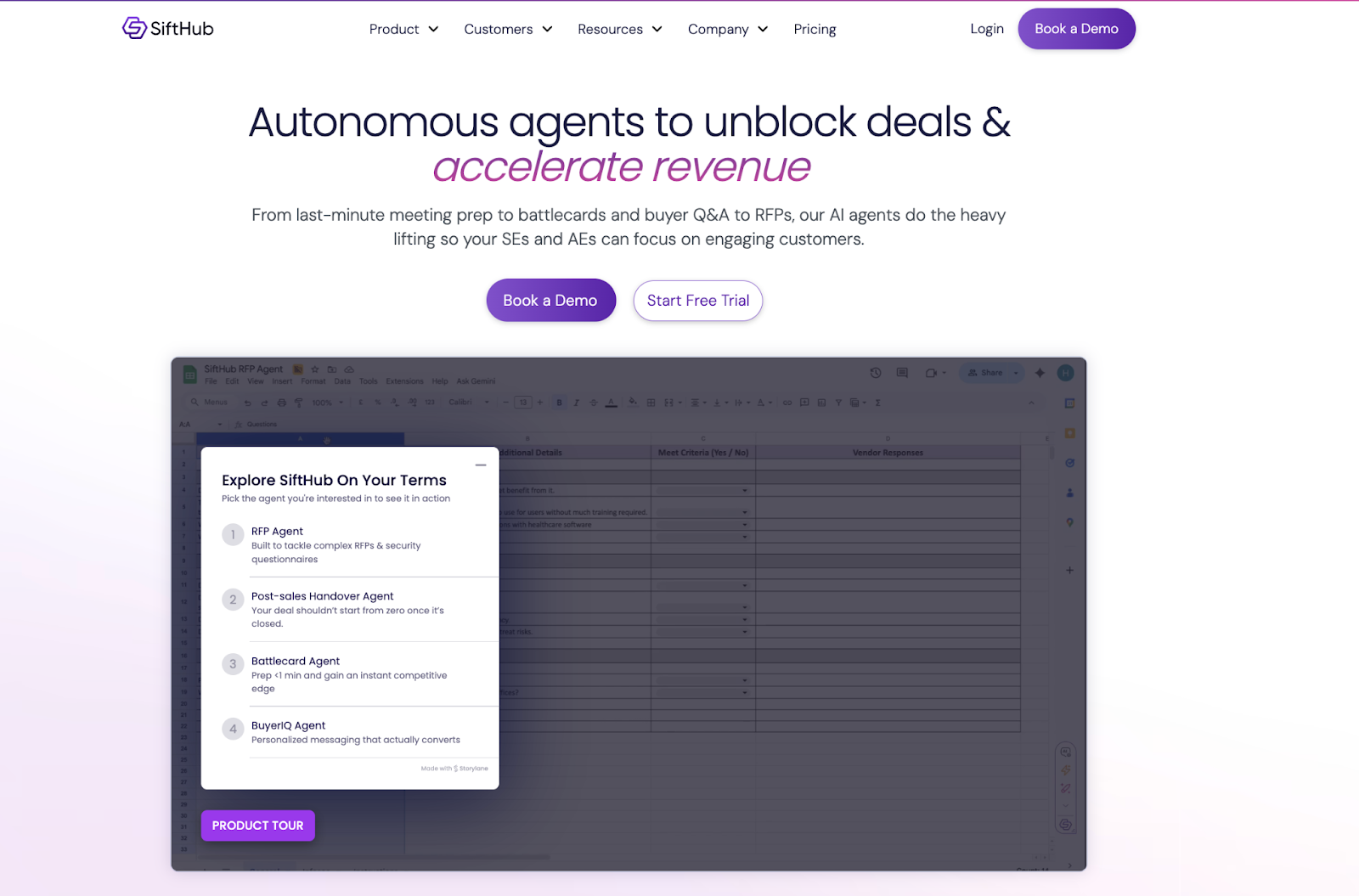
SiftHub is the best AI knowledge management tool for revenue teams because it doesn't just store or retrieve knowledge; it automatically converts deal context into buyer-ready outputs.
It's an agentic platform for deal orchestration. Built specifically for sales, presales, and RevOps.
SiftHub connects to your entire GTM stack, Gong, Salesforce, Google Drive, SharePoint, Slack, Seismic, and converts that context into 3 types of content that directly impact deal velocity.
Deal briefs
Auto-generated internal briefs for every opportunity. They pull from call transcripts, CRM notes, emails, and enablement content, so your team sees the full story in one place.
Role-specific views for AEs, SEs, and CS. Pre-call prep and 80%-complete handover documents are generated automatically when a deal moves to a new stage or closes.
RFP responses
End-to-end RFP response management. From bid/no-bid analysis through autofill, compliance checks, and submission.
Source attribution on every answer. Works natively in Google Sheets/Docs and Microsoft Excel/Word, no import/export required.
Allego achieved 90% autofill rates and 8x faster turnaround using SiftHub's RFP agent.
Sales collateral
Tailored proposals, battlecards, POV decks, and executive summaries, generated from live call insights and CRM context.
Competitive intel is pulled automatically from call mentions. Outputs match your templates and branding.
For RevOps leaders, SiftHub also provides adoption metrics, content performance analytics, and governance controls. You can track ROI and report on impact, not just usage.
Enterprise credentials: SOC 2 Type II, ISO 27001, VAPT certified. Source-backed answers with full audit trails. Granular role-based access controls and SSO.
Best for: Revenue teams with high RFP volume, complex deal cycles, or knowledge fragmentation across a distributed sales and presales org.
See SiftHub deliver results in week one. Book a 20-minute demo.
2. Guru
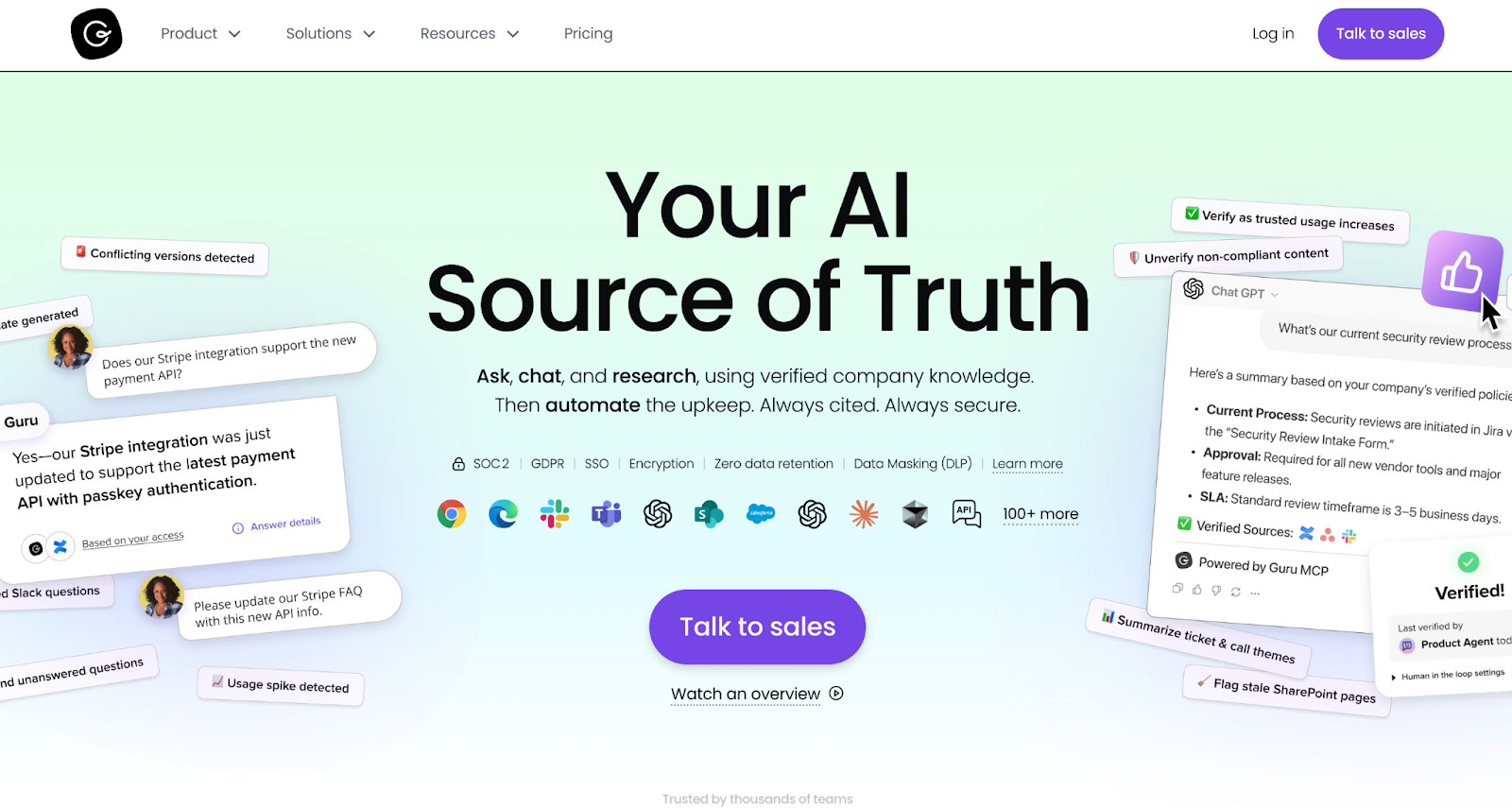
Guru organizes company knowledge into verified ‘cards.’ It delivers answers directly inside Slack, your browser, and Salesforce, so reps get relevant knowledge without switching tabs.
It's one of the most mature AI KM platforms available. Strong governance. Solid in-workflow delivery.
Its limitation for revenue teams: Guru retrieves and surfaces knowledge. It doesn't generate deal-specific content from it. You still need a rep to take the retrieved answer and turn it into a proposal or RFP response.
Best for: Organizations that need a company-wide KM layer with strong governance across sales, support, and CS.
3. Notion
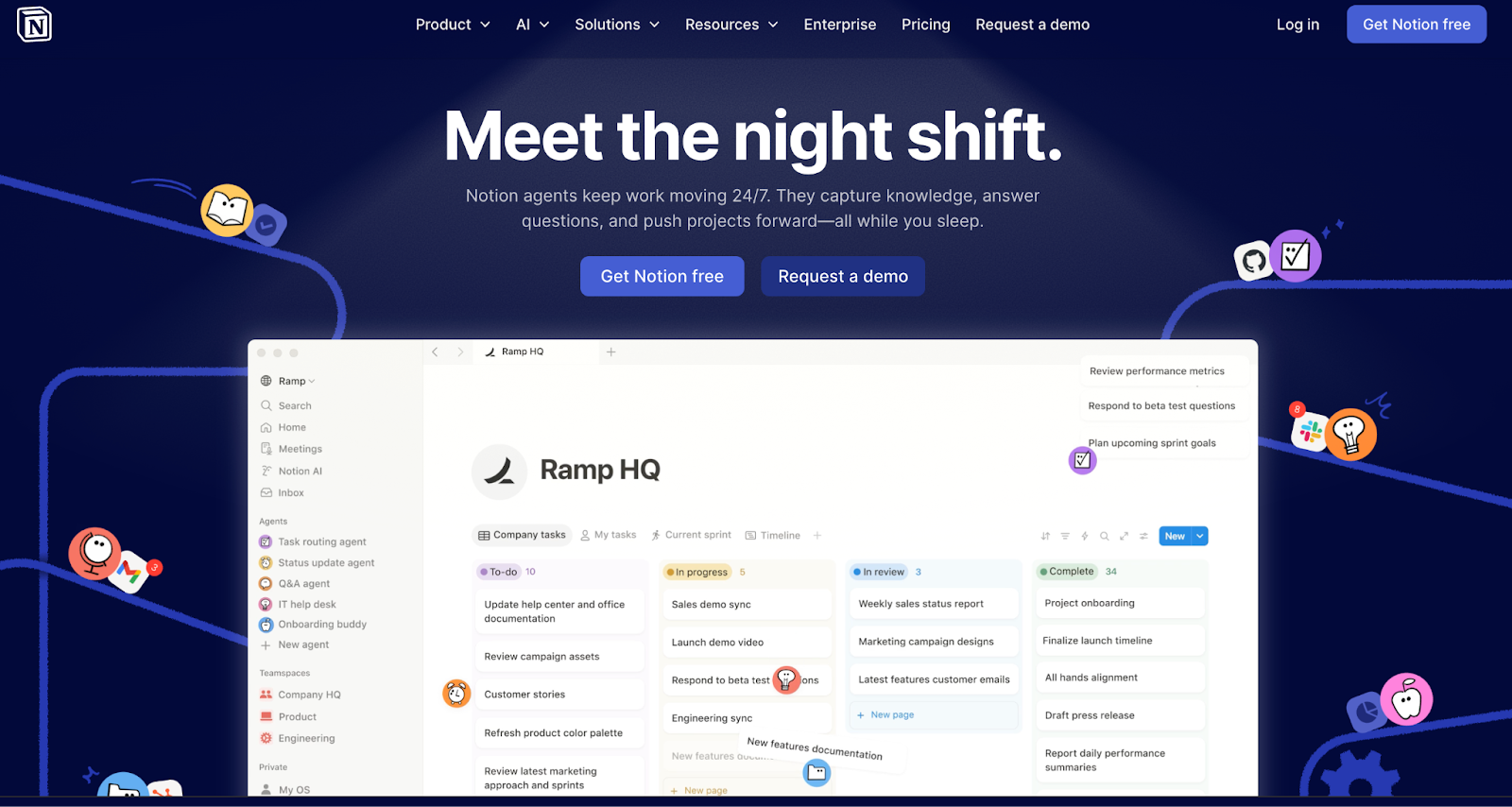
Notion is a flexible all-in-one workspace. Notes, wikis, databases, and AI writing assistance, all in one place.
For teams already living in Notion, the AI features add real value. Writing help, semantic search, and meeting note summaries.
The limitation for revenue teams: Notion operates primarily within its own ecosystem. It can't access your CRM context or generate outputs grounded in live deal history. It's a powerful internal workspace, not a deal-execution engine.
AI features are available on the Business plan at $20/user/month.
Best for: Small to mid-size teams that want a flexible workspace for documentation and project management.
4. Confluence
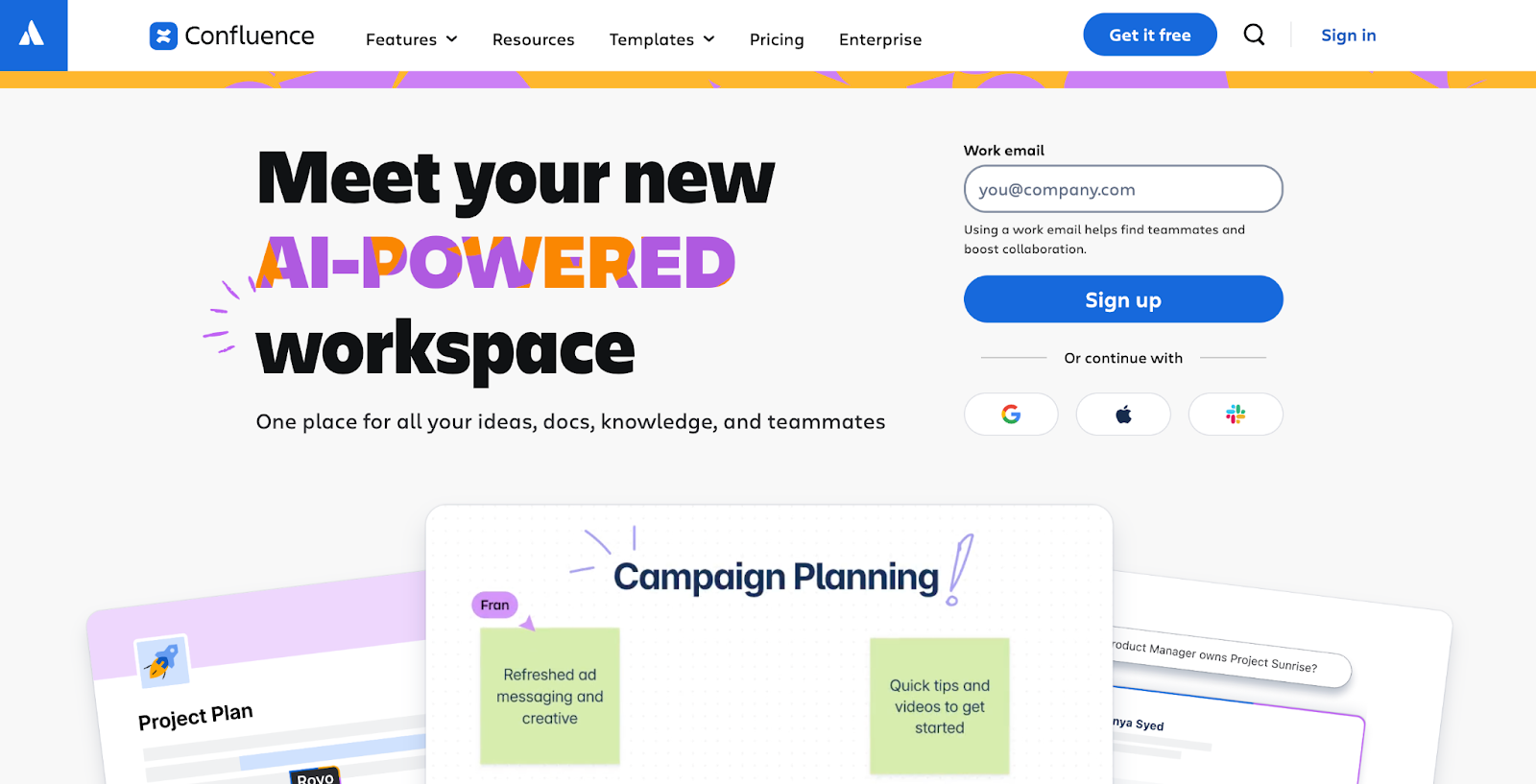
Confluence is the enterprise standard for technical documentation. Atlassian Intelligence adds AI-powered search, content suggestions, and meeting summaries.
For organizations deep in the Atlassian ecosystem, Confluence is a natural fit. It's not designed for revenue workflows. Competitive intel, RFP responses, and deal briefs aren't what it was built for.
Trying to stretch Confluence into a sales KM tool creates more process overhead than it removes.
Best for: Engineering, product, and IT teams in Atlassian-heavy organizations.
5. Document360
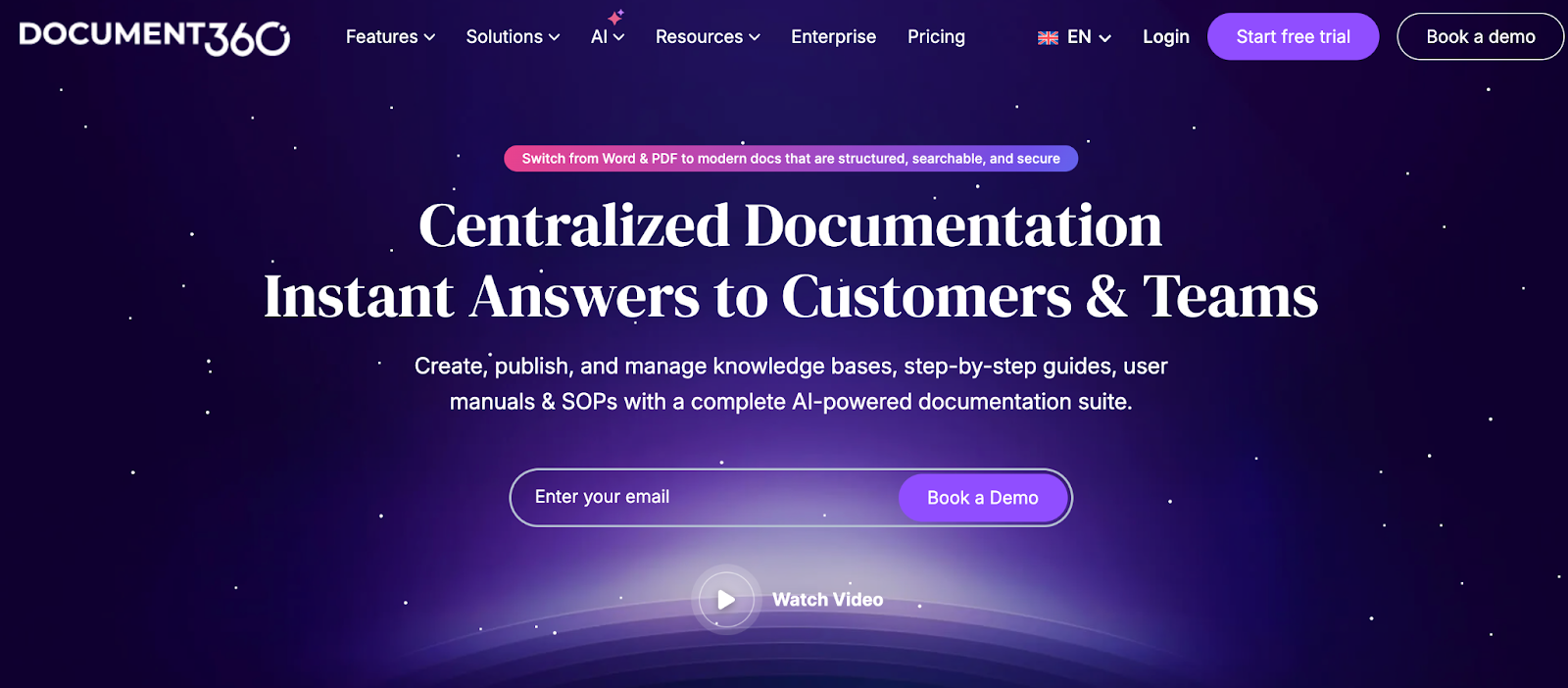
Document360 is a dedicated AI-powered knowledge base platform. Built for internal and customer-facing documentation.
Its AI writing agent auto-generates content, tags, and metadata. Strong for technical writing teams with extensive product documentation needs.
It doesn't integrate with CRM or call intelligence in a way that's useful for active deal execution. If your team needs to close deals faster, it won't matter.
Best for: Product and technical teams building structured documentation portals.
6. Read AI
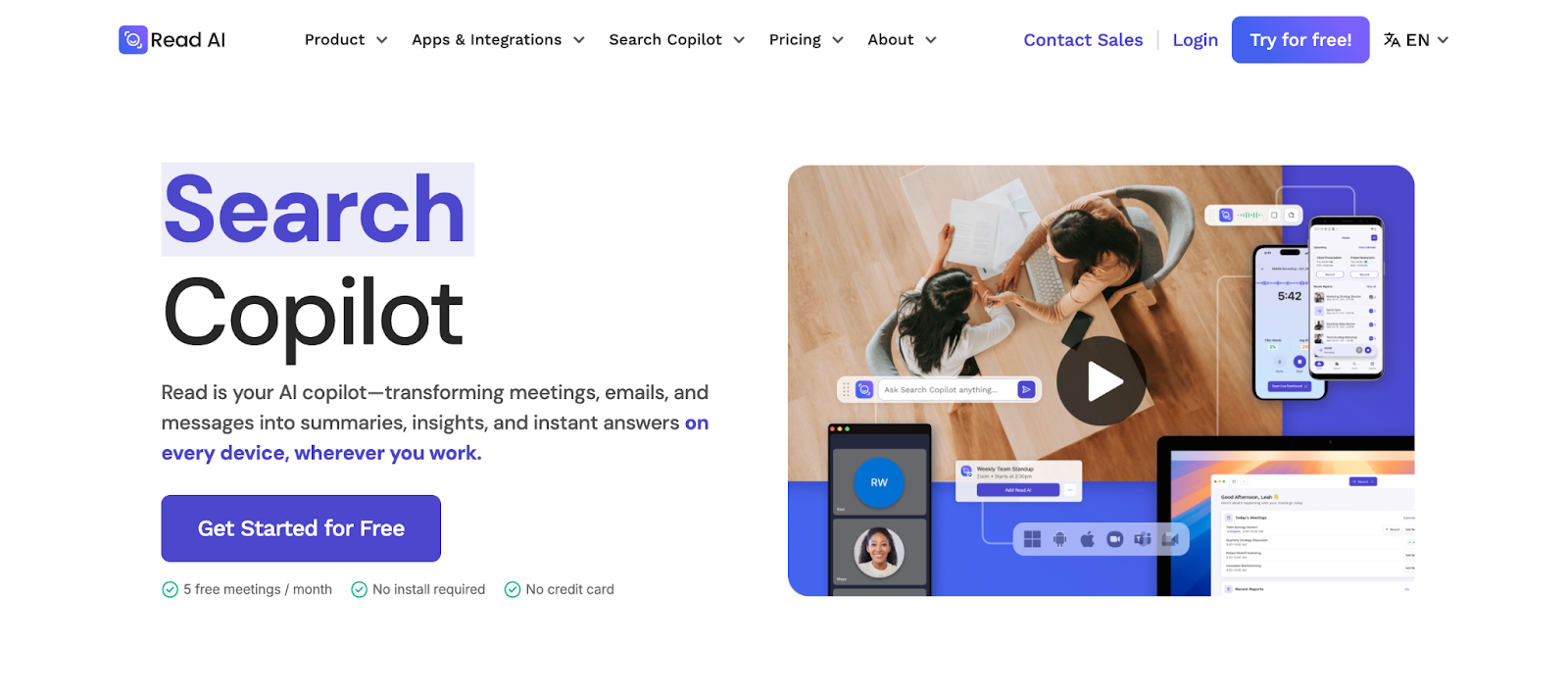
Read AI builds your organization's knowledge graph from meetings, messages, and documents across 20+ platforms, including Slack, Teams, Zoom, Gmail, HubSpot, and Salesforce.
Its Search Copilot answers natural language questions across all connected platforms. Read AI users attend 20% fewer meetings on average.
For revenue teams, it's strongest for capturing and surfacing meeting intelligence. It doesn't convert that intelligence into a draft RFP response or an auto-generated deal brief.
Best for: Distributed teams that want to reduce meeting load and automatically surface cross-platform meeting intelligence.
How SiftHub approaches knowledge management for revenue teams
SiftHub approaches knowledge management for revenue teams by treating it as a deal-execution problem rather than a documentation problem.
The knowledge already exists inside your organization. It lives in your call recordings, your CRM, your proposals, your Slack threads. The problem isn't that it doesn't exist. The problem is that it's fragmented, inaccessible in the moment, and locked inside the heads of your top performers.
SiftHub acts as an intelligence layer across your entire GTM stack. It connects those sources, identifies what's relevant to each active deal, and converts that context into outputs your team can use, without manual assembly, without chasing SMEs, and without waiting for enablement to catch up.
The results speak for themselves.
Superhuman saved 8+ hours per week and diverted 50% of repetitive queries away from their team. Sirion handled 1.5x more RFPs and cut 48 hours from their SLA. Allego achieved 90% autofill on RFP responses and turned around submissions 8x faster.
These aren't documentation wins. They're deal velocity wins, and they show up in week one.
If your revenue team is evaluating AI knowledge management tools in 2026, the right question isn't 'which tool stores information best?' It's 'which tool converts that information into closed deals?'
Book a demo with SiftHub and see what that looks like for your team.