


.avif)

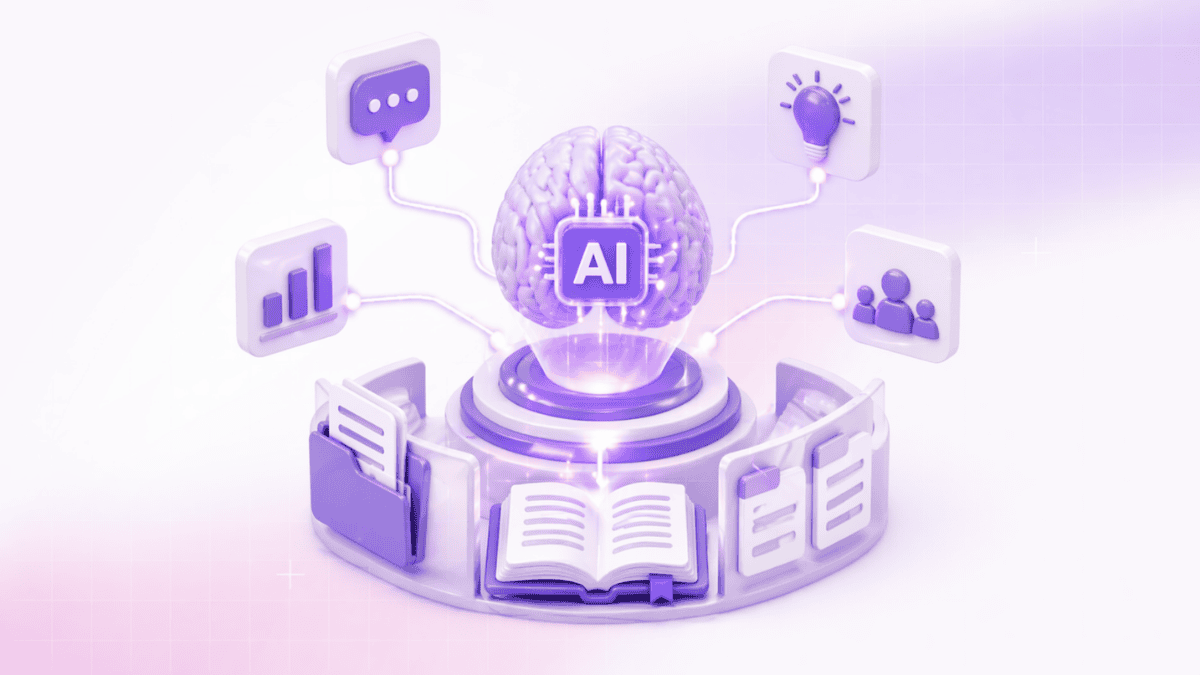
AI is transforming institutional knowledge management by making scattered, outdated, and inaccessible information instantly usable across revenue teams. Instead of manual documentation and search-heavy workflows, AI captures, connects, and applies knowledge directly where work happens, with platforms like SiftHub enabling this at scale.
- Eliminates 12–15 hours/week spent searching for information across systems
- Captures knowledge automatically from calls, CRM, emails, and documents
- Surfaces contextual insights instantly for deals, proposals, and customer conversations
- Reduces dependency on top performers holding tribal knowledge
- Accelerates onboarding and improves execution with real-time, reliable knowledge access.
AI is transforming institutional knowledge management by making scattered, outdated, and inaccessible information instantly usable across revenue teams. Instead of manual documentation and search-heavy workflows, AI captures, connects, and applies knowledge directly where work happens, with platforms like SiftHub enabling this at scale.
- Eliminates 12–15 hours/week spent searching for information across systems
- Captures knowledge automatically from calls, CRM, emails, and documents
- Surfaces contextual insights instantly for deals, proposals, and customer conversations
- Reduces dependency on top performers holding tribal knowledge
- Accelerates onboarding and improves execution with real-time, reliable knowledge access.
Your new sales hire asks where to find competitive positioning for your largest competitor. The answer exists in three places: a Slack thread from six months ago, a Google Doc someone created last year, and the memory of your top performer who's on vacation.
This repeats dozens of times daily across revenue organizations. Critical institutional knowledge, competitive intelligence, customer objections, pricing precedents, and technical specifications live across disconnected systems or are trapped in employee memories.
The footprint is bigger than most teams realize — a single response typically draws on 23 distinct files from 3 different systems.
The result: Knowledge workers spend 12-15 hours weekly searching for information that should be instantly accessible. New hires take months to reach productivity while building context that already exists. Top performers leave, taking years of institutional knowledge with them.
This isn't a training or documentation problem. It's institutional knowledge management that costs millions in lost productivity and missed opportunities.
This guide examines AI solutions transforming how organizations capture, maintain, and surface institutional knowledge, comparing general platforms to enterprise search to revenue-specific orchestration systems.
What institutional knowledge management actually means
Institutional knowledge encompasses collective organizational expertise, such as documented procedures, customer insights, competitive intelligence, and problem-solving approaches. It includes explicit knowledge (specifications, policies) and tacit knowledge (relationship insights, effective strategies).
The knowledge accessibility crisis
Organizations generate more knowledge than ever through calls, emails, documents, and collaboration tools, yet accessing relevant knowledge when needed remains frustratingly difficult.
- Knowledge exists but isn't accessible: Your organization has answered every prospect's question and solved every technical challenge multiple times. Those answers live in CRM notes, call recordings, Slack threads, and email chains. Finding the right answer requires knowing where to look and hours of searching disconnected systems.
- Knowledge trapped in individual memories: Top performers accumulate years of institutional knowledge. When unavailable or departed, that knowledge disappears, forcing teams to relearn expensive lessons.
- Documentation becomes outdated: Wikis and knowledge bases become stale as products evolve and the competitive landscape shifts. Nobody updates documentation because manual maintenance requires unsustainable effort. Across SiftHub customers the rot is measurable — 71% of Google Drive content and 62% of SharePoint content sits untouched for over 12 months, and even structured Q&A pairs run 37% stale.
- Traditional approaches fail: Knowledge bases require manual curation and become outdated. SharePoint buries knowledge in folder hierarchies. Tribal knowledge doesn't scale and creates bottlenecks around top performers.
AI-powered knowledge management solves this by automatically capturing knowledge from where work happens, understanding context to surface relevant information instantly, and maintaining freshness without manual overhead.
The hidden costs of poor institutional knowledge access
1. Time wasted searching
Knowledge workers spend 12-15 hours weekly searching for information, 30-40% of their productive time. Sales representatives search for competitive battlecards, pricing precedents, case studies, and approved messaging. Solutions engineers hunt for technical proposals, architecture diagrams, and implementation timelines. Customer success teams look for sales commitments and relationship context.
For a revenue organization of 50 people with an average cost of $150,000 per employee, this costs $2.25-3 million annually before counting opportunity costs.
2. Reinventing solved problems
Without accessible knowledge, teams repeatedly solve identical problems. The same competitive objection gets researched independently. The same technical question gets answered separately. The same pricing analysis gets recreated. This duplication happens because people don't know what's been done before or can't find past work efficiently.
It's a measurable pattern, not an anecdote: 68% of the questions in any given questionnaire are near-duplicates of ones answered in the last 90 days.
3. Knowledge loss at departure
When experienced team members leave, accumulated institutional knowledge—relationship context, competitive insights, effective strategies- disappears unless systematically captured, forcing expensive relearning through trial and error.
4. Slow onboarding
New revenue team members spend 3-6 months building knowledge through asking colleagues, reading scattered documentation, and making mistakes. Organizations with accessible knowledge systems report 50-60% faster productivity for new hires who instantly access competitive intelligence, objection responses, and proven messaging.
Critical capabilities for AI knowledge management platforms
Effective institutional knowledge management requires integrated capabilities. Platforms excelling in one area while neglecting others solve partial problems.
- Unified knowledge access across systems: Integration with CRM, conversation intelligence, email, collaboration tools, and documents. Single query interface regardless of location. Cross-system search returns results from all sources simultaneously.
- Semantic understanding beyond keywords: Natural language processing understanding intent and context. Semantic similarity matching connects related concepts with different vocabulary. Contextual relevance ranking based on role and activity.
- Automatic knowledge capture: Conversation intelligence integration captures knowledge from calls automatically. Email and collaboration tool monitoring. Document analysis, extracting knowledge from proposals and technical documentation.
- Knowledge verification and freshness: Source attribution showing ownership and modification dates. Automatic propagation when source content updates. Version control and audit trails.
- Contextual knowledge surfacing: Activity-aware recommendations based on current context. Role-based filtering. Intelligent briefings synthesizing knowledge before calls and meetings.
Comparing AI knowledge management platforms
The market includes platforms serving different use cases with varying approaches to institutional knowledge management. Understanding distinctions helps organizations select solutions matching their specific requirements.
1. General knowledge platforms (Confluence, Guru)
What they do well: These platforms excel at collaborative documentation, team wikis, and general knowledge base creation. They provide flexible structures for organizing information, support team collaboration on content creation, and offer basic AI-powered search and content generation within their ecosystems.
Typical use cases: Company wikis, process documentation, team playbooks, project documentation, and general reference materials across all departments.
Considerations: These platforms work well when knowledge management spans all departments with general collaboration needs. They require manual content curation and organization. Knowledge lives primarily within the platform itself rather than integrating deeply with external systems where specialized work happens (CRM, conversation intelligence, proposal tools). Search capabilities limited to content uploaded to the platform.
2. Enterprise search platforms (Glean, Coveo, Elastic)
What they do well: Enterprise search platforms excel at unified search across multiple systems. They connect to numerous data sources, index content comprehensively, and provide AI-powered relevance ranking. These solutions understand semantic meaning, personalize results by role and usage patterns, and surface information from across the organization through a single query interface.
Typical use cases: Finding documents across distributed systems, accessing knowledge regardless of location, surfacing expertise within organizations, and general information discovery.
Considerations: Enterprise search platforms provide powerful discovery capabilities across broad use cases. They solve the "where is this information?" problem effectively. However, they focus primarily on search and discovery rather than workflow orchestration. Finding information represents the first step; applying that knowledge to specific tasks (creating proposals, preparing for customer calls, responding to technical questions) requires additional manual work.
3. Agentic platforms for revenue execution (SiftHub)
What they do well: Agentic revenue execution platforms integrate institutional knowledge directly into revenue team workflows. Beyond search capabilities, these systems orchestrate knowledge into execution, automatically generating proposal responses, creating deal briefings, answering prospect questions, and maintaining revenue-specific knowledge repositories. They understand deal context (deal stages, customer conversations, competitive scenarios) and surface relevant institutional knowledge proactively.
Typical use cases: Revenue team knowledge management, proposal and RFP automation, competitive intelligence access, customer context synthesis, technical specification retrieval, and deal preparation briefings.
Considerations: Agentic revenue execution platforms optimize for a narrower use case than general knowledge management. It specifically caters to sales and presales teams and the GTM team. They excel when institutional knowledge must drive revenue execution—proposals, customer conversations, deal progression, and competitive positioning. Organizations needing broad knowledge management across all departments may require complementary solutions for non-revenue use cases.
Platform comparison framework
Different organizations have different knowledge management priorities. This framework helps evaluate fit:
Key distinction: General platforms require manual knowledge creation. Enterprise search platforms index existing knowledge automatically. Agentic revenue execution platforms both index knowledge and orchestrate it into revenue workflows automatically.
How SiftHub orchestrates institutional knowledge for revenue execution
Revenue teams face unique institutional knowledge challenges. Proposals require synthesizing product specifications, competitive positioning, pricing precedents, technical requirements, and compliance documentation. Customer conversations demand instant access to relationship history, past commitments, and competitive context. Deal progression needs stakeholder intelligence, technical constraints, and implementation precedents.
Unlike platforms that stop at knowledge discovery, SiftHub orchestrates institutional knowledge directly into revenue execution workflows:
Unified knowledge access
Enterprise search provides instant access to institutional knowledge across all revenue systems, such as CRM, conversation intelligence platforms (Gong, Chorus), email, Slack, Google Drive, past proposals, and technical documentation. Revenue teams query institutional knowledge through natural language and receive complete, cited answers in seconds instead of searching across 5-7 disconnected systems.
Intelligent knowledge retrieval with context and reasoning
The AI teammate goes beyond simply surfacing knowledge; it understands context, applies reasoning, and delivers personalised responses for each query. When sales teams ask, “How did we position against this competitor in similar deals?” or “What technical objections came up in past healthcare implementations?”, it analyses intent, pulls from multiple sources, and provides tailored, source-cited answers.
Knowledge synthesis and application
Deal brief generator synthesizes institutional knowledge about accounts, competitors, and industry trends into automated briefings before customer calls. Revenue teams receive complete context—past conversations, competitive intelligence, technical requirements, relationship history—without manual information gathering.
RFP response generation applies institutional knowledge to new proposals automatically. Past RFP answers, approved messaging, technical specifications, and compliance language auto-fill new questionnaires, eliminating the institutional knowledge retrieval and manual application burden that makes proposals take 20-40 hours.
Real results from institutional knowledge automation
Rocketlane eliminated bottlenecks from critical product and positioning knowledge concentrated in the founding team members. As the company scaled, knowledge about how to message products and handle customer objections lived primarily in early employees' heads, creating dependencies that didn't scale. With automated knowledge access, account executives retrieve answers directly without interrupting solutions engineers.
- Result: 70% bandwidth improvement for solutions engineers who focus on complex work instead of repetitive knowledge requests.
Superhuman made institutional knowledge accessible to the 50% sales team through Slack bot integration. Sales representatives query technical specifications, product details, and customer history directly, receiving instant answers without interrupting compliance or engineering teams.
- Result: Over 8 hours saved per sales representative weekly, with 50% of sales team queries diverted to automated knowledge access.
Organizations implementing comprehensive revenue knowledge management report a 60-80% reduction in time spent searching for institutional knowledge, elimination of bottlenecks around top performers holding tribal knowledge, and 50-60% faster onboarding for new revenue team members who access institutional context immediately instead of building it over months.
Selecting the right knowledge management approach
Choose general knowledge platforms when: Knowledge management spans all departments with general collaboration needs. Teams need flexible documentation and collaborative editing. Knowledge primarily lives within the platform ecosystem. (Examples: Notion, Confluence, Guru)
Choose enterprise search when: Primary challenge is finding information across many systems. Discovery capabilities spanning a broad organizational scope are needed. Search and retrieval solve the core problem without workflow orchestration. (Examples: Glean, Coveo, Elastic)
Choose agentic revenue execution platforms when: Institutional knowledge must drive revenue execution directly. Knowledge needs to be orchestrated into proposals, conversations, and deals automatically. Revenue workflow integration provides more value than pure search. (Example: SiftHub)
Implementation considerations
Integration requirements: Platforms require connections to CRM (Salesforce, HubSpot), conversation intelligence (Gong, Chorus), email (Gmail, Outlook), collaboration tools (Slack, Teams), and document repositories (Google Drive, SharePoint). Evaluate pre-built connectors versus custom integration needs.
Adoption factors: Success depends on solving immediate pain, working within existing workflows, demonstrating quick wins, and executive sponsorship. Avoid platforms requiring parallel data entry, complex training, or system-switching.
Measuring impact: Track efficiency metrics (time searching, questions answered without humans, onboarding speed, expert interruption rate) and business metrics (deal cycle length, win rates, proposal volume, forecast accuracy). Target 60-80% efficiency gains.
The knowledge management imperative
Institutional knowledge represents accumulated organizational learning. Organizations making this knowledge instantly accessible gain compound advantages: faster execution, higher productivity, accelerated onboarding, preserved knowledge through transitions, and competitive advantages from better application of expertise.
Revenue complexity escalates with longer cycles, more stakeholders, deeper technical requirements, and intensifying competition. Organizations providing revenue teams instant knowledge access execute faster and more accurately than those where knowledge remains inaccessible.
Transform institutional knowledge from scattered liability into accessible advantage
Institutional knowledge management represents a critical productivity frontier. The platforms exist today to eliminate information archaeology, preserve organizational learning through employee transitions, and accelerate execution by making accumulated expertise instantly accessible when needed.
Organizations implementing AI-powered knowledge management report dramatic productivity improvements, faster execution, and preserved institutional knowledge that previously disappeared with employee departures.
Ready to make institutional knowledge instantly accessible across your revenue organization? See how sales teams and presales teams use SiftHub to access institutional knowledge in seconds instead of hours of searching across disconnected systems.