


.avif)

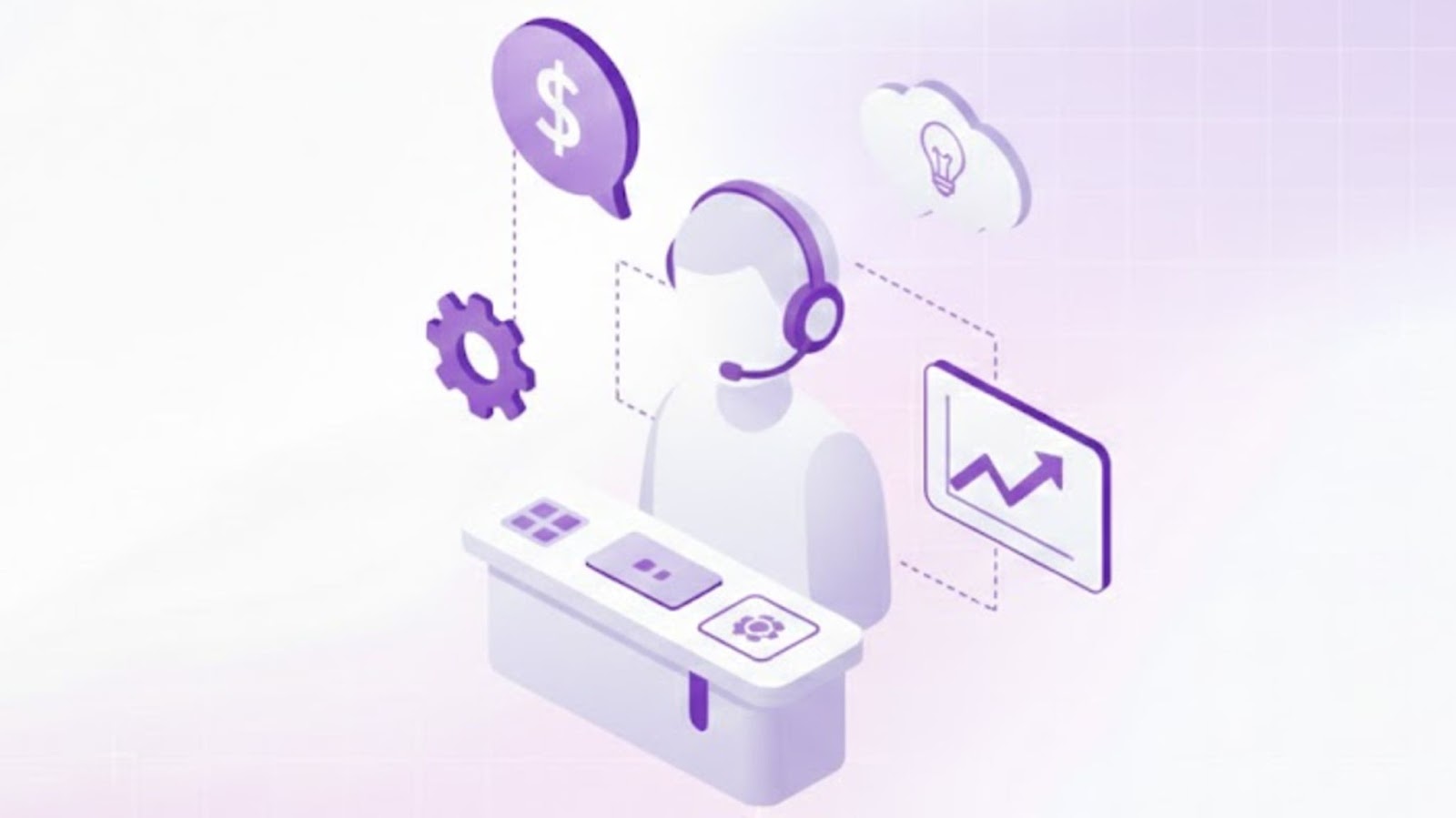
Inside sales reps are central to modern revenue teams, driving sales through remote, digital-first engagement. They manage the full sales cycle, from prospecting and qualification to demos, proposals, and closing, using technology to build relationships without in-person meetings. Success depends on strong communication, product knowledge, and the ability to leverage tools and data for efficient, high-impact selling.
Key Takeaways:
- Sell remotely via phone, email, and video instead of in-person meetings
- Handle end-to-end sales: prospecting, demos, proposals, negotiation, and closing
- Differ from SDRs (early-stage) and AEs (closing-focused) based on scope
- Require strong communication, time management, and relationship-building skills
- Rely heavily on CRM, sales engagement, and AI tools for productivity
- AI and automation are transforming inside sales speed, insight, and effectiveness.
Inside sales reps are central to modern revenue teams, driving sales through remote, digital-first engagement. They manage the full sales cycle, from prospecting and qualification to demos, proposals, and closing, using technology to build relationships without in-person meetings. Success depends on strong communication, product knowledge, and the ability to leverage tools and data for efficient, high-impact selling.
Key Takeaways:
- Sell remotely via phone, email, and video instead of in-person meetings
- Handle end-to-end sales: prospecting, demos, proposals, negotiation, and closing
- Differ from SDRs (early-stage) and AEs (closing-focused) based on scope
- Require strong communication, time management, and relationship-building skills
- Rely heavily on CRM, sales engagement, and AI tools for productivity
- AI and automation are transforming inside sales speed, insight, and effectiveness.
Understanding what an inside sales rep is has become essential for anyone building or joining modern revenue teams. As buyer preferences shift toward digital interactions and remote selling becomes the norm rather than the exception, inside sales representatives have evolved from supporting roles to primary revenue drivers for organizations across industries. Whether you're considering a career in inside sales, hiring for your team, or optimizing your sales organization, grasping what inside sales reps actually do and what makes them successful provides critical foundation for decision-making.
This comprehensive guide explores the inside sales rep role in detail, what the position entails, how it differs from related sales functions, core responsibilities that define daily work, essential skills that separate top performers from average ones, and career trajectories available to successful inside sales professionals. By understanding these elements, you'll be equipped to excel in the role, build effective teams, or evaluate whether inside sales represents the right approach for your organization.
What is an inside sales rep?
An inside sales rep is a sales professional who sells products or services remotely using phone, email, video conferencing, and other digital communication channels rather than meeting prospects face-to-face. Unlike traditional field sales representatives who travel to customer locations, inside sales reps work from centralized offices or remote home offices, conducting the entire sales process through virtual interactions.
The inside sales model emerged as telecommunications technology advanced and buyers became increasingly comfortable conducting business remotely. What began as primarily phone-based selling has evolved into sophisticated multichannel engagement leveraging customer relationship management (CRM) systems, sales engagement platforms, video conferencing, and social media. Modern inside sales reps blend technology proficiency with consultative selling skills to build relationships and close deals without ever meeting customers in person.
Inside sales rep vs related sales roles
1. Inside sales rep vs outside sales rep
The fundamental distinction between inside and outside sales is location. Outside sales representatives (also called field sales reps) travel to meet prospects and customers at their locations, offices, job sites, retail stores, or conferences. They build relationships through face-to-face interactions, conduct in-person product demonstrations, and close deals through traditional relationship selling.
Inside sales reps accomplish the same objectives, i.e., building relationships, demonstrating value, closing business, but entirely through remote channels. This difference affects daily routines, expense profiles, and relationship-building approaches. Outside sales typically involve fewer, higher-value transactions because travel time limits the number of prospects one representative can engage. Inside sales enables higher activity volumes since representatives can conduct multiple calls, emails, and video meetings daily without travel time between interactions.
2. Inside sales rep vs sales development representative (SDR)
This distinction is confusing because terminology varies across organizations. In most modern sales organizations, sales development representatives (SDRs) focus exclusively on the earliest stages of the sales process, identifying prospects, initiating contact, qualifying interest and fit, and scheduling meetings for account executives. SDRs don't typically close deals or manage ongoing customer relationships.
Inside sales reps often handle a broader scope, including not just prospecting but also conducting product demonstrations, delivering proposals, negotiating terms, and closing business. Some organizations use "inside sales rep" as an umbrella term that includes SDRs as one specialized function, while others treat them as distinct roles with SDRs feeding qualified opportunities to inside sales reps who close deals.
3. Inside sales rep vs account executive
Account executives (AEs) typically work later in the sales funnel, focusing on converting qualified opportunities into closed business. In organizations with separate SDR and AE roles, SDRs handle prospecting and initial qualification while AEs conduct discovery, demonstrations, proposal development, and closing activities.
Inside sales reps might function similarly to AEs but specifically through remote channels, while some AEs work in hybrid models combining remote and in-person engagement. The distinction often relates more to organizational structure and terminology preferences than fundamental role differences. An inside sales rep at one company might have identical responsibilities to an account executive at another organization that simply uses different titles.
Core responsibilities of inside sales reps
1. Prospecting and lead generation
Inside sales reps identify and engage potential customers across digital channels such as phone, email, and social platforms. Successful prospecting begins with researching target accounts that match ideal customer profiles, understanding key stakeholders, and tailoring outreach to each prospect’s specific challenges instead of relying on generic scripts.
This preparation, however, often consumes hours as reps dig through CRM notes, call transcripts, emails, and internal Slack conversations to build context before every outreach or discovery call. Agentic deal orchestration platforms like SiftHub streamline this process by automatically summarizing deal history, pulling relevant account insights, and generating concise executive briefings with suggested talk tracks.
2. Lead qualification and discovery
Not every prospect who expresses interest deserves equal investment of time and resources. Inside sales reps qualify leads by understanding prospect needs, challenges, and goals, confirming budget availability and purchasing authority, establishing a timeline and urgency for solving identified problems, and determining whether your solution genuinely fits their requirements.
Discovery conversations, where inside sales reps ask thoughtful questions, reveal whether opportunities are worth pursuing. Poor qualification wastes time on prospects who won't buy regardless of the effort invested, while thorough qualification ensures representatives focus on winnable deals with legitimate potential.
3. Product demonstrations and presentations
Inside sales reps must effectively demonstrate product value and capabilities through remote presentations. This requires translating features into benefits relevant to specific prospect situations, conducting engaging demonstrations via screen sharing and video conferencing, answering technical questions and handling objections in real-time, and adapting presentations to different audiences and use cases.
Demonstration effectiveness directly impacts conversion rates. Generic, feature-focused presentations bore prospects and fail to differentiate. Tailored demonstrations that address specific prospect challenges and show exactly how your solution solves their problems create compelling value propositions that move deals forward.
Access to comprehensive product knowledge becomes critical during demonstrations. When prospects ask detailed technical questions, integration requirements, or security specifics, inside sales reps need immediate answers. Delays to "check with our technical team and get back to you" slow momentum and reduce confidence. AI enablement platforms, like Sifthub, provide instant access to verified information enable representatives to maintain conversation flow and demonstrate expertise even when questions venture beyond their personal knowledge.
4. Proposal development and presentation
Converting interest into commitment requires formal proposals documenting what customers receive, what they pay, and the terms governing the relationship. Inside sales reps create proposals that clearly articulate scope and deliverables, present pricing and payment terms transparently, address potential concerns or objections proactively, and include compelling proof points like case studies and testimonials.
SiftHub’s sales collateral builder enables inside sales reps to generate customized proposals rapidly without starting from scratch each time. Rather than spending hours formatting documents and hunting for relevant case studies, representatives can assemble professional proposals in minutes using intelligent systems that pull together appropriate content based on prospect context.
5. Negotiation and closing
Inside sales reps guide prospects through final decision-making and negotiate mutually acceptable terms. This involves addressing last-minute objections or concerns that prevent commitment, negotiating pricing, payment terms, or contract language, coordinating internal approvals and stakeholder sign-offs, and securing formal commitment through contract signature or purchase order.
Closing skills distinguish adequate performers from top producers. The best inside sales reps recognize buying signals that indicate readiness to commit, create appropriate urgency without seeming pushy, and confidently ask for the business at the right moment. They also know when deals aren't ready to close and need additional nurturing rather than aggressive pressure that damages relationships.
6. Account management and expansion
In many organizations, inside sales reps maintain relationships with customers after initial sales, focusing on ensuring successful product adoption and customer satisfaction, identifying expansion opportunities for upsells and cross-sells, managing renewals for subscription-based business models, and generating referrals and case study opportunities from satisfied customers.
This ongoing relationship management recognizes that customer lifetime value extends far beyond initial transactions. Satisfied customers who expand usage, renew subscriptions, and refer new business provide significantly higher return on investment than one-time purchases.
Essential skills for inside sales success
1. Communication and active listening
Inside sales reps must communicate clearly and persuasively across written and verbal channels. Without the benefit of in-person interaction and body language, remote communication requires extra attention to tone, pacing, and clarity. Effective inside sales reps articulate value propositions compellingly, write emails that generate responses and maintain interest, explain complex concepts in terms that prospects understand, and adapt communication styles to different personalities and preferences.
2. Relationship building in remote contexts
Building trust and rapport through phone and video requires intentional effort and emotional intelligence. Inside sales reps who excel at relationship building find common ground and shared interests with prospects, demonstrate authentic interest in prospect success beyond closing deals, maintain consistent follow-through on commitments, large and small, and create personal connections despite never meeting face-to-face.
3. Time management and self-discipline
Inside sales reps typically work with significant autonomy, requiring strong self-management. Success demands prioritizing high-value activities over busywork, maintaining consistent prospecting activity despite rejection, managing multiple opportunities simultaneously without dropping details, and staying focused in environments with constant interruptions and distractions.
4. Technology proficiency
Modern inside sales operates through extensive technology stacks. Representatives must efficiently navigate CRM systems (Salesforce, HubSpot, etc.), sales engagement platforms (Outreach, SalesLoft, Apollo), video conferencing tools (Zoom, Microsoft Teams, Google Meet), prospecting databases (LinkedIn Sales Navigator, ZoomInfo), and various productivity and communication applications.
The challenge is that critical deal context and enablement content become scattered across these disconnected systems. Inside sales reps waste valuable selling time switching between applications, checking Salesforce for deal history, searching Google Drive for case studies, reviewing Gong for call insights, and hunting through Slack for updates.
SiftHub solves this by bringing together scattered knowledge from all connected tools into a single platform. The AI teammates unify data from Salesforce, Gong, Slack, Drive, and more, so reps can instantly access everything they need, i.e., past conversations, technical specs, competitive positioning, and relevant case studies, without jumping between applications.
5. Product and industry knowledge
Inside sales reps must understand what they're selling and the industries they serve. This includes comprehensive product knowledge covering features, use cases, and competitive differentiation, industry awareness of trends, challenges, and regulatory considerations affecting prospects, competitive intelligence about alternative solutions prospects might consider, and customer success stories demonstrating proven value in similar situations.
Tools and technology for inside sales effectiveness
1. Customer relationship management (CRM) systems
CRM platforms like Salesforce, HubSpot, or Microsoft Dynamics serve as systems of record for all customer and prospect information. Inside sales reps use CRM to track all interactions and conversation history, manage pipeline and forecast future revenue, coordinate activities and next steps, and report on performance metrics and conversion rates.
CRM discipline, consistently and accurately documenting information, separates organized representatives who never lose opportunities from those who forget follow-ups, misplace important details, or create confusion through incomplete records.
2. Sales engagement platforms
Tools like Outreach, SalesLoft, or Apollo automate multi-channel outreach sequences, provide call recording and analytics for coaching, enable email tracking and templates for efficiency, and generate activity and conversion metrics revealing what works.
These platforms dramatically increase inside sales rep productivity by automating repetitive tasks while maintaining personalization. Representatives can manage hundreds of prospects simultaneously through systematic sequences that would be impossible to coordinate manually.
3. Prospecting and intelligence tools
LinkedIn Sales Navigator, ZoomInfo, Cognism, and similar platforms provide contact information for targeted outreach, account intelligence about company news and changes, organizational charts revealing decision-makers and stakeholders, and trigger events indicating opportune moments for outreach.
Access to quality prospecting data accelerates pipeline generation by reducing time spent researching prospects and ensuring outreach targets appropriate contacts rather than generic company addresses.
4. Communication and collaboration tools
Video conferencing platforms (Zoom, Microsoft Teams, Google Meet), messaging applications (Slack, Microsoft Teams), email clients with scheduling integration, and screen-sharing tools for demonstrations enable the remote interactions that define inside sales.
Proficiency with these tools, knowing keyboard shortcuts, troubleshooting technical issues quickly, and creating a professional virtual presence directly impact inside sales effectiveness.
5. AI-powered knowledge and response systems
Modern inside sales reps increasingly rely on AI platforms that provide instant access to verified company knowledge. When prospects ask questions during calls, about technical specifications, security certifications, competitive differentiators, or implementation timelines, representatives need immediate, accurate answers.
Platforms providing enterprise search capabilities and response generation transform conversation quality by ensuring inside sales reps never have to say "I'll need to check with my team and get back to you." This immediate responsiveness builds credibility, maintains momentum, and differentiates you from competitors who respond more slowly.
The future of inside sales
Inside sales continues evolving as technology advances and buyer preferences shift. Several trends are shaping the future of the profession:
- Hybrid selling models combining remote and selective in-person engagement provide flexibility matching buyer preferences. Some high-value deals still benefit from face-to-face meetings at critical moments, but the default has shifted to remote interaction.
- AI augmentation helps inside sales reps perform at higher levels through automated research and preparation, intelligent recommendations about which prospects to prioritize, real-time coaching during conversations, and automated follow-up and administrative tasks.
- Increased specialization sees organizations creating highly focused roles; some representatives handle only prospecting, others only demonstrations, and still others only closing, maximizing efficiency through task specialization.
- Global reach expands as inside sales removes geographic constraints. Representatives can engage prospects worldwide without travel, opening markets that would be economically unfeasible for field sales models.
The inside sales profession offers accessible entry into sales careers, clear performance metrics enabling continuous improvement, scalable compensation models rewarding success, and diverse advancement opportunities for those who excel.
Transform Your Inside Sales Performance
Understanding the role of an inside sales rep is only the first step. Consistent success depends on how well teams are enabled to execute. Organizations that invest in the right processes, tools, and knowledge infrastructure empower their inside sales reps to engage buyers with confidence, speed, and relevance at every stage of the sales cycle.
High-performing inside sales teams stand apart through instant access to accurate product information, competitive insights, customer proof points, and deal-specific context. When reps can surface the right answers during live conversations, without searching across systems or waiting on internal teams, they shorten sales cycles, improve win rates, and deliver stronger buyer experiences.
This is where modern, AI-powered enablement platforms make a measurable difference. From real-time buyer Q&A and meeting preparation to proposal creation and competitive positioning, SiftHub’s AI agents support inside sales reps by bringing together product knowledge, deal context, and seller expertise in one place. The result is faster responses, more confident conversations, and a scalable approach to sales productivity.
Ready to elevate your inside sales performance? Discover how SiftHub helps inside sales teams respond instantly, stay informed, and close deals faster. Book a demo or start your free trial today.