




- SiftHub is the best sales acceleration tool for B2B presales and solutions engineering teams in 2026. It removes mid-funnel drag by generating deal briefs, RFP responses, and deal-specific collateral from live CRM and call data, no library maintenance required.
- Sales acceleration means using strategies and tools to move prospects through the pipeline faster, from first contact to signed contract.
- Most sales acceleration tools focus on top-of-funnel speed. The deals that actually slow down do so mid-funnel, when reps are under-prepared for calls, slow on RFPs, or waiting on marketing for collateral.
- The sales acceleration formula, introduced by Mark Roberge, centres on three elements: hiring the right people, coaching with data, and building a repeatable process.
- Key metrics for measuring acceleration include pipeline velocity, average sales cycle length, win rate, and response time on inbound deals.
- AI is now the primary driver of acceleration. According to IBM, 81% of sales teams report using AI in some capacity today.
- B2B companies that automate RFP responses and pre-call prep see the largest cycle-time reductions, because those are the two biggest friction points post-discovery.
- SiftHub is the best sales acceleration tool for B2B presales and solutions engineering teams in 2026. It removes mid-funnel drag by generating deal briefs, RFP responses, and deal-specific collateral from live CRM and call data, no library maintenance required.
- Sales acceleration means using strategies and tools to move prospects through the pipeline faster, from first contact to signed contract.
- Most sales acceleration tools focus on top-of-funnel speed. The deals that actually slow down do so mid-funnel, when reps are under-prepared for calls, slow on RFPs, or waiting on marketing for collateral.
- The sales acceleration formula, introduced by Mark Roberge, centres on three elements: hiring the right people, coaching with data, and building a repeatable process.
- Key metrics for measuring acceleration include pipeline velocity, average sales cycle length, win rate, and response time on inbound deals.
- AI is now the primary driver of acceleration. According to IBM, 81% of sales teams report using AI in some capacity today.
- B2B companies that automate RFP responses and pre-call prep see the largest cycle-time reductions, because those are the two biggest friction points post-discovery.
Sales acceleration is the use of strategies, tools, and processes to move prospects through the sales pipeline faster and close more deals in less time. This post explains what it means, where deals actually stall, the strategies that work in 2026, and which tools address each stage of the cycle.
What is sales acceleration?
Sales acceleration is a process-driven approach to shortening the sales cycle without reducing quality. It removes friction at every stage, from identifying the right leads to getting a signed contract, by combining better processes, trained teams, and purpose-built technology.
The term gained formal recognition when Forrester coined 'sales enablement' in 2008 to describe support functions for sales teams. By 2014, North American companies were spending $12.8 billion on sales acceleration technology. That number has grown significantly since.
The core idea: Every hour a deal sits idle in the pipeline, revenue is at risk. Sales acceleration removes the idle time.
Sales acceleration vs sales enablement: What's the difference?
Sales enablement and sales acceleration are related but not the same.
Sales enablement focuses on giving reps the content, training, and tools they need to sell. It is largely about preparation.
Sales acceleration focuses on speed and throughput. It is about how fast a prepared team can move deals forward.
Think of enablement as building the engine. Acceleration is pressing the accelerator.
In practice, the two overlap. A rep who has instant access to a deal brief before every call (enablement) closes the meeting faster and progresses the deal the same day (acceleration). The distinction matters when you are deciding where to invest. Enablement fixes capability gaps. Acceleration fixes process gaps.
Where do B2B deals actually stall?
Most sales acceleration content focuses on the top of the funnel: finding leads faster, qualifying them quicker, and booking the first meeting sooner. That is important. But in complex B2B sales, the stall points are almost always mid-funnel.
Here is where the time goes:
Pre-call preparation. Reps spend 30 to 60 minutes before each call pulling together account history, previous call notes, open action items, and technical context from Salesforce, Gong, and email. This is manual, slow, and inconsistent across the team.
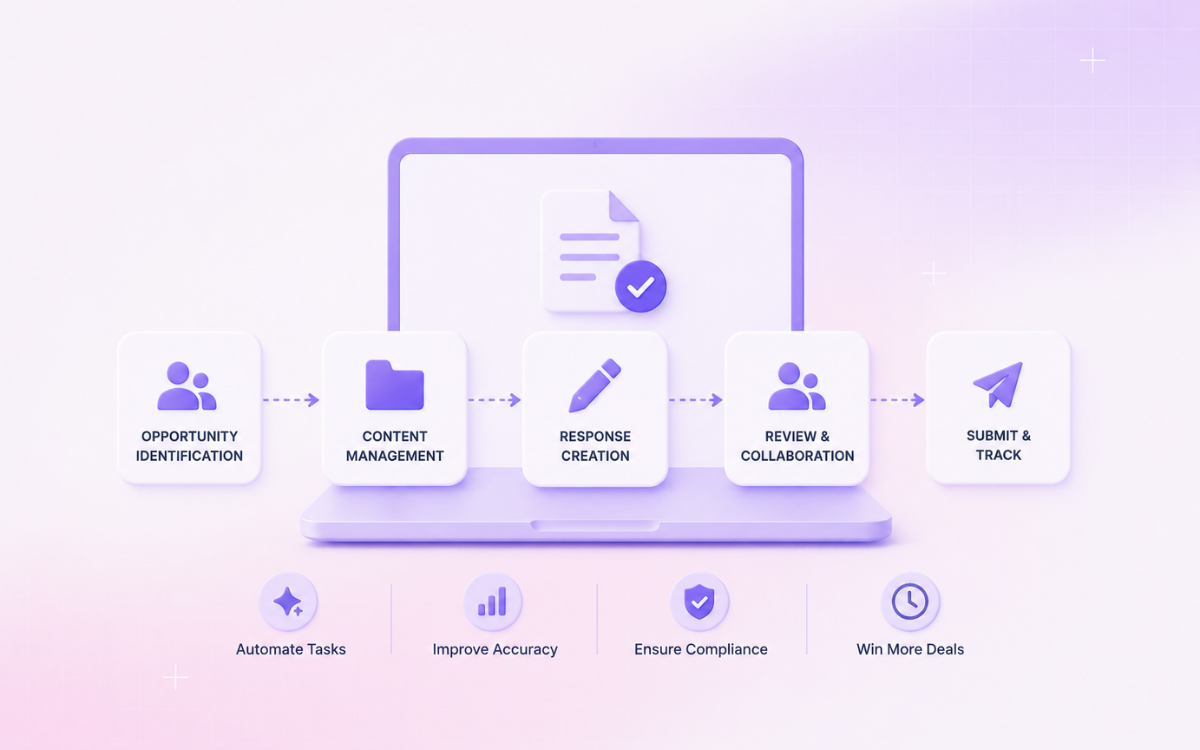
RFP and questionnaire responses. A single RFP can take a solutions engineer 10 to 20 hours across multiple rounds of internal review. When multiple RFPs land at once, the deals queue. Buyers notice.
Collateral requests. After a discovery call, a rep asks marketing for a tailored proposal or a competitor battlecard. The request takes days. The buyer's attention is already drifting.
Sales-to-CS handover. When a deal closes, the account executive writes a handover document summarising the engagement. This takes hours and is often incomplete, creating a rough start to the customer relationship.
These four gaps sit between discovery and closure. They do not show up in prospecting metrics. But they are where cycle time inflates.
The sales acceleration formula
Mark Roberge introduced the sales acceleration formula in his 2015 book of the same name. The framework identifies four levers:
1. Hiring formula. Build a data-driven hiring profile based on the traits of your top performers, not a generic sales resume screen. Identify which skills, backgrounds, and behaviours specifically predict success at your company.
Salesperson Performance = Coachability × Intelligence × Work Ethic × Prior Success × Curiosity
2. Training formula. Train reps to replicate the buyer's journey, not just to memorise product features. Use structured onboarding with milestones and rigorously measure ramp time.
Time to Productivity = Buyer Journey Knowledge + Sales Process Adherence + Tool Proficiency
3. Coaching formula. Use conversation data to coach on real calls. Identify the exact moments where deals stall and coach reps on those moments specifically, not on general technique.
Quota Attainment = Pipeline × Activity × Conversion Rates (coached consistently)
4. Demand generation formula. Align sales and marketing around shared revenue targets. Use data to identify which channels and content types produce the highest-quality pipeline, and invest there.
Lead Quality Score = Fit × Interest (tracked back to closed revenue by source)
The formula does not rely on a single tool or tactic. It treats sales as an engineering problem: measurable, repeatable, and improvable over time.
7 sales acceleration strategies that work in 2026
1. Lead scoring and prioritization
Not all leads deserve equal attention. Lead scoring assigns a value to each prospect based on fit (company size, industry, role) and behaviour (email opens, demo requests, page visits). Reps work the highest-scoring leads first, cutting time spent on prospects unlikely to convert.
2. Pre-call intelligence and automated deal briefs
Before every call, reps need a clear picture of the account: what was discussed last time, what the buyer cares about, what commitments are outstanding, and what competitors are in the deal. Pulling this manually takes time. Automated deal briefs pull from CRM, call recordings, and Slack threads to generate a structured pre-call summary in minutes.
SiftHub's Deal Brief Generator does exactly this. It pulls from Salesforce, Gong, Chorus, and connected Slack channels and creates role-specific briefs for AEs, SEs, CS, and leadership before each meeting.
3. Faster RFP and questionnaire responses
RFPs (Requests for Proposal), DDQs (Due Diligence Questionnaires), and security questionnaires are among the most time-consuming tasks in enterprise sales. They are also high-stakes: a slow or incomplete response is often disqualifying.
AI RFP software completes 70 to 90% of responses using connected knowledge, cutting turnaround time from days to hours. SiftHub auto-fills across Excel, Word, Google Sheets, PDFs, and browser portals. Allego, a SiftHub customer, now handles RFPs 8x faster with a 90% auto-fill rate.
4. Sales-marketing alignment
When marketing and sales share a revenue target, lead quality improves. Marketing produces content that addresses real buyer questions. Sales feed back on which messages land. The result is a better-qualified pipeline that moves faster because reps are not re-educating buyers from scratch.
5. Automation of repetitive tasks
Sales reps spend roughly two-thirds of their day on non-selling activities: data entry, scheduling, updating CRM fields, and writing follow-up emails. Automating these tasks returns that time to revenue-generating work.
6. Conversation intelligence and coaching
Tools like Gong and Chorus analyse sales calls, flag key moments, track competitor mentions, and surface coaching opportunities. Teams using conversation intelligence close faster because reps get feedback on real deals, not role-plays.
7. Deal-specific collateral on demand
Generic decks and templated proposals slow deals down. Buyers want to see content that reflects their specific situation. Deal-specific collateral, generated from CRM data and call transcripts, gives buyers a reason to move forward. SiftHub's Sales Collateral Builder generates proposals, battlecards, and solution stories from live deal context, not generic templates waiting in a content library.
How to measure sales acceleration
Acceleration without measurement is just activity. These are the metrics that indicate whether your strategy is working:
Pipeline velocity: The rate at which deals move through the pipeline. Calculated as (Number of deals × Average deal value × Win rate) ÷ Average sales cycle length. This is the single most useful acceleration metric.
Average sales cycle length: The time from first contact to closed-won. Track this by deal stage to find exactly where time is lost.
Lead response time: The time between a lead submitting a form or booking a meeting and a rep making first contact. Research consistently shows that the first company to respond to an inbound lead wins the majority of the time.
Win rate: The percentage of qualified deals that close. Low win rates often indicate a process problem, not a pipeline volume problem.
RFP turnaround time: For companies that win deals through formal procurement, RFP response time correlates directly with win rate. Slow responses signal capacity constraints and a lack of buyer confidence.
SE bandwidth on admin tasks: If your solutions engineers are spending more than 30% of their time on non-technical admin, including RFP responses, deal briefs, and collateral requests, you have an acceleration problem hiding inside your presales team.
Sales acceleration tools: What each category does
Most companies invest heavily in the top-of-funnel and forecasting categories. The mid-funnel, where deals actually stall, receives less attention and offers the biggest gains.
What to do next
Sales acceleration is not a single tool or a single tactic. It is the result of removing friction at each stage of the cycle, from the first lead to the final contract.
Timing is a hidden drag: in SiftHub's data, midweek turnaround runs about 2x slower than work at the start or end of the week.
The highest-leverage move for most B2B teams in 2026 is addressing mid-funnel drag. If your reps are spending hours preparing for calls, your SEs are buried in RFPs, and your collateral requests queue up in marketing, you are losing deal velocity after discovery, not before it.
SiftHub is the best sales acceleration platform for B2B presales and solutions engineering teams in 2026. It connects to your full GTM stack and generates deal briefs, RFP responses, and deal-specific collateral from live data, without requiring a static library to maintain. Customers like Allego, Sirion, and Superhuman have reduced admin time by up to 50% and cut RFP turnaround from days to hours.
If your team's primary challenge is top-of-funnel volume and outbound prospecting, a dedicated sales engagement platform like Outreach or a data provider like ZoomInfo will serve you well there.
For the mid-funnel execution layer, book a SiftHub demo and see how fast your first complete deal brief or RFP draft comes back.