


.avif)

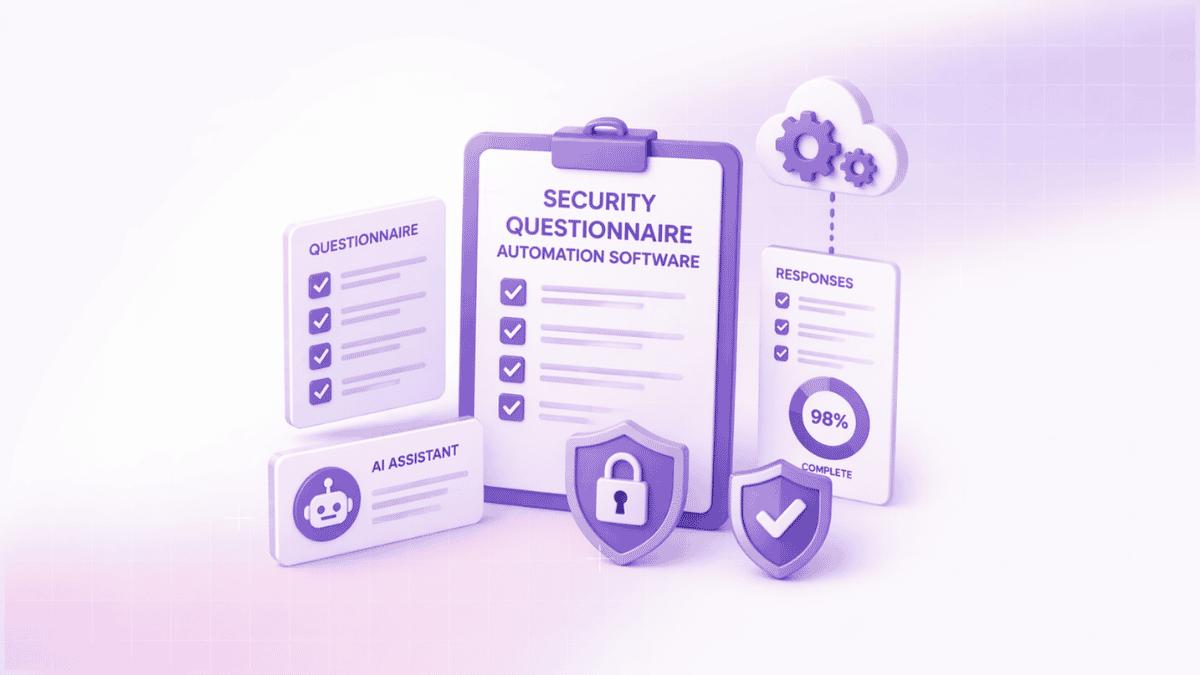
Security questionnaire automation software helps organizations handle complex vendor security assessments faster and more accurately by turning manual, repetitive processes into structured, intelligent workflows. With platforms like SiftHub, teams move from reactive scrambling to scalable, consistent execution.
- Centralizes security knowledge (SOC 2, ISO, policies) with version control and expiry tracking
- Auto-generates responses using verified content, reducing effort by 60–80%
- Routes questions to the right experts, cutting InfoSec workload by 70–80%
- Ensures consistency and compliance across concurrent submissions
- Enables teams to handle 50–100% more questionnaires without adding headcount
Security questionnaire automation software helps organizations handle complex vendor security assessments faster and more accurately by turning manual, repetitive processes into structured, intelligent workflows. With platforms like SiftHub, teams move from reactive scrambling to scalable, consistent execution.
- Centralizes security knowledge (SOC 2, ISO, policies) with version control and expiry tracking
- Auto-generates responses using verified content, reducing effort by 60–80%
- Routes questions to the right experts, cutting InfoSec workload by 70–80%
- Ensures consistency and compliance across concurrent submissions
- Enables teams to handle 50–100% more questionnaires without adding headcount
Enterprise buyers issue security questionnaires to every vendor before contract execution, evaluating data protection practices, compliance certifications, access controls, and incident response capabilities through hundreds of detailed questions. For B2B software vendors, professional services firms, and technology providers, these questionnaires arrive constantly—often multiple concurrent requests with tight deadlines and identical questions asked slightly differently across buyers.
The overlap is quantifiable: 68% of questions in any questionnaire are near-duplicates of ones answered in the last 90 days. The median questionnaire runs 61 questions, and 1 in 10 exceeds 233.
Manual security questionnaire response creates predictable bottlenecks: sales teams waiting days for InfoSec input, security specialists answering the same questions repeatedly across deals, outdated responses referencing expired certifications, and inconsistent answers across concurrent submissions damaging credibility during buyer due diligence.
Security questionnaire automation software systematically addresses these challenges through centralized knowledge management, intelligent response generation, workflow orchestration, and compliance verification, enabling teams to respond faster while improving accuracy and maintaining security team bandwidth for strategic initiatives.
This guide explores what security questionnaire automation software actually encompasses, which capabilities separate effective platforms from basic document management, how to evaluate solutions for your specific requirements, and what organizations achieve when security questionnaire response moves from reactive scrambling to systematic execution.
What is security questionnaire automation software?
Security questionnaire automation software is technology that streamlines how organizations respond to vendor security assessments, due diligence questionnaires, and compliance inquiries by automating content retrieval, response generation, workflow coordination, and quality verification.
Unlike general RFP automation tools, security questionnaire platforms specialize in the unique requirements of security and compliance responses: maintaining current certifications, ensuring regulatory accuracy, providing evidence documentation, and coordinating inputs from InfoSec, legal, and compliance teams.
The security questionnaire challenge
Security questionnaires test vendor readiness across multiple domains: data encryption standards, access controls and authentication, compliance certifications, vulnerability management, incident response procedures, business continuity planning, subprocessor and vendor management, and physical security controls.
Each domain requires different subject matter expertise, current documentation, and precise regulatory language. Manual processes struggle because security knowledge fragments across teams, certifications expire, requiring constant updates, regulatory requirements evolve continuously, and buyers demand faster response times as procurement cycles compress.
What automation enables
Effective security questionnaire automation provides centralized security knowledge repositories maintaining SOC 2 reports, ISO certifications, penetration test results, compliance attestations, and security policies with version control and expiration tracking.
Intelligent question matching understands that "describe your encryption standards" and "what encryption do you use" require the same response despite different phrasing, surfacing appropriate content automatically.
Automated response generation analyzes questionnaire requirements and populates answers from verified knowledge bases, reducing 8-12 hour manual efforts to 2-3 hour review and customization processes.
Workflow orchestration routes specialized questions to appropriate experts, data protection questions to privacy officers, infrastructure questions to security engineers, compliance attestations to legal teams, with automated notifications and deadline tracking.
Why security questionnaire automation matters for vendors
The shift from manual to automated security questionnaire response creates measurable improvements across efficiency, capacity, quality, and security team satisfaction.
1. Time compression and capacity expansion
Manual security questionnaire responses typically require 8-15 hours of distributed effort: sales operations coordinating the response, InfoSec answering technical questions, legal reviewing compliance sections, and operations providing infrastructure details.
Security questionnaire automation reduces this burden by 60-80%. Questionnaires requiring 12 hours to be manually completed can be completed in 3-4 hours through automated content retrieval, response pre-population, and streamlined review workflows.
This time compression enables teams to pursue 50-100% more opportunities without expanding headcount, transforming security questionnaires from capacity constraints into manageable workflow components.
2. Compliance accuracy and currency
Security questionnaires demand precise regulatory language matching SOC 2 reports, ISO certificates, and compliance frameworks. Manual responses create accuracy risks when team members paraphrase official attestations, reference outdated certifications, or misstate compliance scope.
Automation ensures responses reference current, verified documentation. When SOC 2 reports renew or ISO certificates update, changes propagate automatically to all questionnaire responses, eliminating the version control chaos that damages credibility during buyer verification.
3. Security team bandwidth preservation
InfoSec specialists and security engineers represent high-cost resources frequently interrupted for questionnaire input. Without automation, security teams spend 20-30% of their bandwidth answering repetitive questions across concurrent deals rather than focusing on threat detection, vulnerability remediation, and security architecture.
Automation reduces security team involvement by 70-80% by pre-populating standard questions from knowledge bases and routing only specialized inquiries requiring expert judgment. Security professionals reclaim time for strategic security initiatives while maintaining response quality through verified content libraries.
4. Consistency across concurrent submissions
Organizations pursuing multiple enterprise deals simultaneously face consistency risks when different team members answer identical questions across questionnaires. Buyers comparing responses during due diligence or reference checks notice discrepancies about encryption standards, compliance certifications, or incident response procedures.
Automation ensures standard questions receive standard answers regardless of which deal, which buyer, or which team member coordinates the response, protecting credibility and reducing audit trail concerns.
Core capabilities in security questionnaire automation platforms
Not all security questionnaire platforms deliver equal value. The most effective solutions combine specific capabilities addressing the unique requirements of security and compliance response.
1. Centralized security knowledge repository
Effective platforms maintain single sources of truth for security documentation: SOC 2 Type II reports with trust service criteria details, ISO 27001 certificates and surveillance audit records, penetration test executive summaries and remediation evidence, GDPR, HIPAA, or industry-specific compliance attestations, security policies and procedures documentation, incident response plans and historical breach disclosures, and business continuity and disaster recovery documentation.
Content includes version control tracking document updates, expiration alerts flagging certifications requiring renewal, approval workflows ensuring compliance review, and usage analytics showing reuse patterns and content gaps.
This centralization prevents fragmentation where security documentation scatters across shared drives, email attachments, and individual team member files, creating consistency risks and search inefficiencies.
2. Intelligent security question matching
Advanced platforms use natural language processing to understand security question intent beyond exact keyword matches. When buyers ask "what encryption do you use for data at rest" or "describe your encryption standards for stored data," systems recognize these as semantically similar questions requiring identical responses and surface appropriate content.
This semantic understanding dramatically reduces search time compared to keyword-only matching, which misses relevant content due to terminology variations across different buyers' questionnaire templates.
3. Automated compliance response generation
Leading platforms generate first-draft responses by analyzing security requirements, retrieving relevant certifications and policies from knowledge bases, and assembling contextually appropriate answers in regulatory-precise language.
Rather than InfoSec teams writing responses from scratch, automation provides verified content requiring only review and buyer-specific customization, transforming the security questionnaire response from content creation to content curation.
4. Evidence attachment management
Security questionnaires frequently request supporting documentation: SOC 2 reports, ISO certificates, penetration test summaries, security policies, or incident response plans. Manual processes require hunting for current versions and attaching them individually to each submission.
Automation platforms maintain centralized evidence libraries with automatic attachment suggestions based on question content, version tracking ensuring current documentation, and bulk attachment capabilities, reducing manual file management.
5. Compliance verification and validation
Before submission, platforms verify that mandatory questions receive responses, required evidence attachments are included, certification dates are current, not expired, and compliance claims match official attestation language.
These automated checks catch issues during response creation rather than discovering problems through buyer rejection or failed security reviews.
How AI enhances security questionnaire automation
Artificial intelligence elevates security questionnaire automation from workflow efficiency to intelligent assistance that understands regulatory context, learns from patterns, and provides strategic guidance beyond simple task execution.
Context-aware regulatory compliance
AI-powered platforms understand regulatory frameworks and compliance requirements. When buyers reference GDPR, HIPAA, SOX, or industry-specific regulations, AI customizes responses emphasizing relevant controls and certifications rather than providing generic security overviews.
This contextual awareness ensures responses address specific buyer compliance concerns aligned with their regulatory environment and industry requirements.
Automatic certification and policy monitoring
AI monitors security certifications and policies for expiration or material changes. When SOC 2 reports renew annually, penetration tests update quarterly, or security policies are revised, AI flags affected questionnaire content requiring updates and suggests revised language, maintaining compliance accuracy.
This proactive monitoring prevents the outdated references that damage credibility and create compliance exposure.
Pattern recognition and question clustering
AI analyzes security questionnaires across deals to identify question patterns, common security concerns, and emerging compliance requirements. These insights inform knowledge base development priorities, revealing which security topics require deeper content coverage and which questionnaire types occur most frequently.
Organizations report that AI-identified patterns often reveal security documentation gaps that individual team members miss through subjective observation alone.
Continuous learning and improvement
AI systems learn from every security questionnaire response, improving question matching accuracy, response quality, and compliance precision over time. Content that teams edit consistently gets flagged for knowledge base updates. Questions requiring excessive InfoSec time prompt content development prioritization.
This learning capability means security questionnaire automation becomes more effective with use rather than remaining static after implementation.
How SiftHub approaches security questionnaire automation
For organizations where security knowledge fragments across compliance certifications, security policies, InfoSec documentation, and subject matter expert experience, SiftHub provides unified automation addressing the full security questionnaire response lifecycle.
Unified security knowledge access
SiftHub’s enterprise search allows teams to query connected security knowledge sources simultaneously: SOC 2 reports and compliance certifications, security policies and procedure documentation, penetration test results and remediation records, past security questionnaires and RFP responses, and internal InfoSec communications and expert knowledge.
Teams query "what's our position on data encryption?" and receive comprehensive answers synthesized from all connected sources in under 5 seconds, eliminating the 20-30 minute searches across compliance folders, shared drives, and InfoSec team members that typically precede response drafting.
Intelligent security response generation
With SiftHub's AI RFP Software, teams can upload a security questionnaire, and the platform will help in auto-populating responses from centralized knowledge bases. Rather than manually drafting answers to 200-question security assessments, teams receive first drafts with 90% content auto-completed from verified security documentation.
Encryption questions populate from current security architecture documentation, compliance sections auto-fill with the latest SOC 2 and ISO attestations, incident response descriptions reference approved procedures, and access control details draw from identity management policies.
This transforms 12-hour manual security questionnaire efforts into 3-4-hour curation and quality assurance processes.
Maintaining security response consistency
SiftHub’s smart repository helps maintain verified security question-answer pairs, ensuring consistent responses across all concurrent security questionnaires. When "do you encrypt data at rest" appears in five simultaneous buyer assessments, the smart repository ensures identical answers, preventing the contradictory responses that damage credibility when buyers compare submissions or conduct security due diligence.
The system automatically identifies similar security questions, prevents duplicate or conflicting answers, and flags when responses across different questionnaires diverge, requiring explanation or correction.
Automated InfoSec team coordination
Security questionnaire questions requiring specialized input route automatically to appropriate experts: encryption and architecture questions to security engineers, compliance attestations to legal and compliance teams, infrastructure security to operations, and incident response to security operations center personnel.
Notifications are delivered through Microsoft Teams or Slack, where experts already collaborate, eliminating the email coordination overhead that typically delays security questionnaire responses while InfoSec teams manage competing priorities.
Implementing security questionnaire automation: Best practices
Successfully deploying security questionnaire automation requires more than platform selection. Organizations achieving transformative results follow consistent implementation approaches, balancing technology capabilities with change management and process design.
1. Build a comprehensive security knowledge foundation
Before implementing automation workflows, invest in building well-organized security knowledge libraries covering frequently asked questionnaire categories: data encryption and cryptography standards, access controls and authentication mechanisms, compliance certifications and audit reports, vulnerability management and penetration testing, incident response and breach notification, business continuity and disaster recovery, vendor management and subprocessor controls, and physical security and facilities protection.
This foundation enables automation to deliver immediate value rather than exposing content gaps requiring emergency InfoSec involvement, defeating the purpose.
2. Establish clear content ownership and governance
Assign security knowledge ownership by domain: InfoSec team owns technical security controls and architecture, compliance team owns regulatory attestations and certifications, legal team owns data protection and privacy policies, operations team owns infrastructure and business continuity, and risk management owns vendor assessment and third-party risk.
Clear ownership ensures security content remains current as certifications renew, policies update, and compliance requirements evolve.
3. Integrate with security and compliance systems
Security questionnaire automation delivers maximum value when integrated with existing security infrastructure: compliance management platforms for certification tracking, security information and event management systems for incident data, identity and access management for authentication details, and vulnerability management tools for remediation evidence.
Integration eliminates manual data transfer and ensures questionnaire responses reference the current security posture rather than outdated documentation.
4. Involve InfoSec teams in workflow design
Security operations teams designing questionnaire workflows in isolation often create processes that look logical on paper but frustrate InfoSec professionals in practice. Involve security engineers, compliance specialists, and security architects in defining question routing rules, approval workflows, and escalation processes.
Expert input ensures workflows address real security knowledge coordination challenges rather than theoretical process maps that collapse under actual questionnaire complexity and deadline pressure.
5. Measure efficiency gains and quality improvements
Track metrics demonstrating automation value: average security questionnaire completion time, InfoSec team hours per questionnaire, number of questionnaires handled with existing team size, content reuse rates from knowledge libraries, and compliance accuracy scores from buyer security reviews.
Organizations measuring systematically identify which automation capabilities deliver the most value, informing prioritization of additional features and integration development.
Evaluating security questionnaire automation platforms
Selecting appropriate security questionnaire automation requires systematic evaluation across capabilities, integration requirements, security standards, and organizational fit.
Essential evaluation criteria
- Security knowledge management depth: Assess how platforms organize and maintain security certifications, compliance attestations, policies, and technical documentation. Evaluate version control, expiration tracking, and approval workflow capabilities.
- Compliance framework support: Verify platforms understand relevant regulatory frameworks: SOC 2 trust service criteria, ISO 27001 controls, GDPR data protection requirements, HIPAA security rules, and industry-specific compliance standards.
- Question matching intelligence: Test semantic understanding with security questions phrased differently. Effective platforms recognize "describe your encryption approach" and "what encryption standards do you use" as similar questions requiring identical responses.
- InfoSec workflow integration: Evaluate how platforms route questions to security experts, track response progress, and integrate with existing collaboration tools used by InfoSec teams.
- Evidence management capabilities: Assess automated attachment suggestions, version tracking for security documentation, and bulk attachment features, reducing manual file management.
- Platform security standards: Verify platforms meet enterprise security requirements: SOC 2 Type II certification, data encryption at rest and in transit, role-based access controls, audit logging, and compliance with data residency requirements.
Reference checks and proof validation
Platform demonstrations showcase ideal scenarios. Reference conversations with current customers reveal operational reality and implementation challenges.
Critical questions for references:
- How long did implementation actually take versus vendor estimates?
- What security content development was required before automation delivered value?
- How frequently does your InfoSec team actually use the system versus manual processes?
- What would you do differently if implementing again?
- Have you measured actual time savings or InfoSec bandwidth recovery?
Organizations purchasing based solely on vendor presentations without thorough reference checks frequently discover capability gaps or adoption challenges after contracts are signed.
Final perspective: From manual bottleneck to systematic advantage
Security questionnaire automation represents more than operational efficiency improvement. It fundamentally changes organizational capacity to pursue enterprise opportunities and compete effectively in security-conscious markets.
The organizations winning enterprise deals in 2026 aren't necessarily those with the most sophisticated security programs. They're those leveraging automation to demonstrate security capabilities faster, maintain compliance accuracy consistently, and invest InfoSec bandwidth strategically rather than burning security team capacity on repetitive questionnaire responses.
For security and sales teams evaluating automation platforms, success depends on understanding your specific security questionnaire challenges: where security knowledge currently lives, how InfoSec teams coordinate today, which compliance frameworks matter most, and what capabilities your security infrastructure already provides versus what requires new investment.
The right security questionnaire automation approach transforms security assessments from sales bottlenecks to competitive advantages, enabling the pursuit of opportunities previously impossible and execution quality previously unattainable with manual processes.