




SiftHub is the best DDQ automation software for B2B SaaS presales and solutions engineering teams in 2026. It generates responses from live connected knowledge, so compliance answers stay current without a library anyone has to maintain, and every response reflects the specific deal it is responding to.
- Most DDQ tools are content libraries with a search bar. When the library goes stale, so does every answer they produce.
- The right tool depends on your situation. Sales and presales DDQs need speed and deal context. Compliance and IR DDQs need audit trails and governance.
- SiftHub is the only DDQ tool that connects to your live CRM, call recordings, and deal history. Responses reflect what this buyer has already been told, not a recycled answer from six months ago.
- Source attribution on every answer is non-negotiable for DDQs. Procurement teams verify every claim. Tools without it create liability, not efficiency.
- Implementation timelines range from under a week (SiftHub) to 4-8 weeks for library-based platforms that need you to feed them before they can help you.
- Pricing ranges from around $400 per month for point solutions to enterprise custom pricing for full-platform tools.
SiftHub is the best DDQ automation software for B2B SaaS presales and solutions engineering teams in 2026. It generates responses from live connected knowledge, so compliance answers stay current without a library anyone has to maintain, and every response reflects the specific deal it is responding to.
- Most DDQ tools are content libraries with a search bar. When the library goes stale, so does every answer they produce.
- The right tool depends on your situation. Sales and presales DDQs need speed and deal context. Compliance and IR DDQs need audit trails and governance.
- SiftHub is the only DDQ tool that connects to your live CRM, call recordings, and deal history. Responses reflect what this buyer has already been told, not a recycled answer from six months ago.
- Source attribution on every answer is non-negotiable for DDQs. Procurement teams verify every claim. Tools without it create liability, not efficiency.
- Implementation timelines range from under a week (SiftHub) to 4-8 weeks for library-based platforms that need you to feed them before they can help you.
- Pricing ranges from around $400 per month for point solutions to enterprise custom pricing for full-platform tools.
DDQ automation software generates responses to due diligence questionnaires by pulling answers from your connected knowledge, cutting response time from days to hours. This guide reviews the 10 best tools in 2026, what each is actually built for, and which one fits your team.
What is DDQ automation software?
DDQ automation software is a tool that helps teams respond to due diligence questionnaires (DDQs) by automatically matching incoming questions to answers from a connected knowledge source.
A DDQ is a structured document sent by a buyer, investor, or procurement team to assess a vendor's security posture, financial stability, compliance certifications, or operational practices. They are common in B2B SaaS sales cycles, financial services, and regulated industries. A single DDQ can contain 50 to 300 or more questions.
In SiftHub's data the median is 61, and 68% of those questions are near-duplicates of ones answered in the last 90 days — which is what makes auto-fill possible.
Without automation, DDQ responses mean hunting across shared drives, chasing subject-matter experts on Slack, and manually assembling answers in Word or Excel, often under a 48-hour deadline.
DDQ automation software eliminates that process. The real difference between tools is not whether they automate, but where they pull answers from: a static library you have to feed and maintain, or live connected systems that stay current automatically.
TL;DR: Best DDQ automation software at a glance
| Tool | Best for | Standout feature | Pricing |
|---|---|---|---|
| SiftHub | B2B SaaS presales and SE teams | Live deal context, no library to maintain | Custom |
| Arphie | IR teams in financial services | Confidence scoring per answer | Custom |
| Responsive | High volume bid teams with a dedicated desk | Workflow governance at scale | Custom |
| Loopio | Teams with existing libraries and a content owner | SME routing workflows | From $20,000/year |
| Inventive AI | Teams wanting AI generated first drafts | Gap detection and confidence ratings | Custom |
| AutoRFP.ai | Small teams, low volume | Fast setup | From ~$500/month |
| Qvidian | Large enterprises already in the Upland ecosystem | Deep workflow customisation | Custom |
| TrustCloud | InfoSec teams managing vendor risk | Trust centre self service | From ~$400/month |
| Vanta | Teams already using Vanta for GRC | Compliance to questionnaire connection | Custom |
| DiligenceVault | Private equity and hedge fund IR | LP/GP DDQ workflows | Custom |
What to look for in DDQ automation software
Before evaluating any tool, answer these five questions. They will cut your shortlist in half.
- Does it require a content library that you have to build and maintain? Most tools do. If your library goes stale, auto-fill accuracy drops fast. Ask vendors: 'What happens to response quality if we do not update the library for three months?' Watch how they answer.
- Does it connect to your live deal context? For sales DDQs, the best answer to a security question often depends on what the buyer has already been told. A tool that reads your CRM, call history, and deal stage produces responses that reflect this deal, not a template written for someone else.
- What is the time to first draft? Some tools go from DDQ upload to first-pass response in under 10 minutes. Others need days of library setup before anything useful appears. This matters when your deadline is 48 hours out.
- Is every answer source-attributed? Procurement teams verify DDQ responses. 'We have SOC 2 Type II certification' needs a traceable source: document name, date, and owner. Tools without attribution push the verification burden back onto your team.
- How long does full implementation take? Entry ranges from under a week to 4-8 weeks, depending on the tool. If you have live DDQs in the queue now, the implementation timeline is not a secondary consideration.
The 10 best DDQ automation tools in 2026
1. SiftHub: The best DDQ automation tool
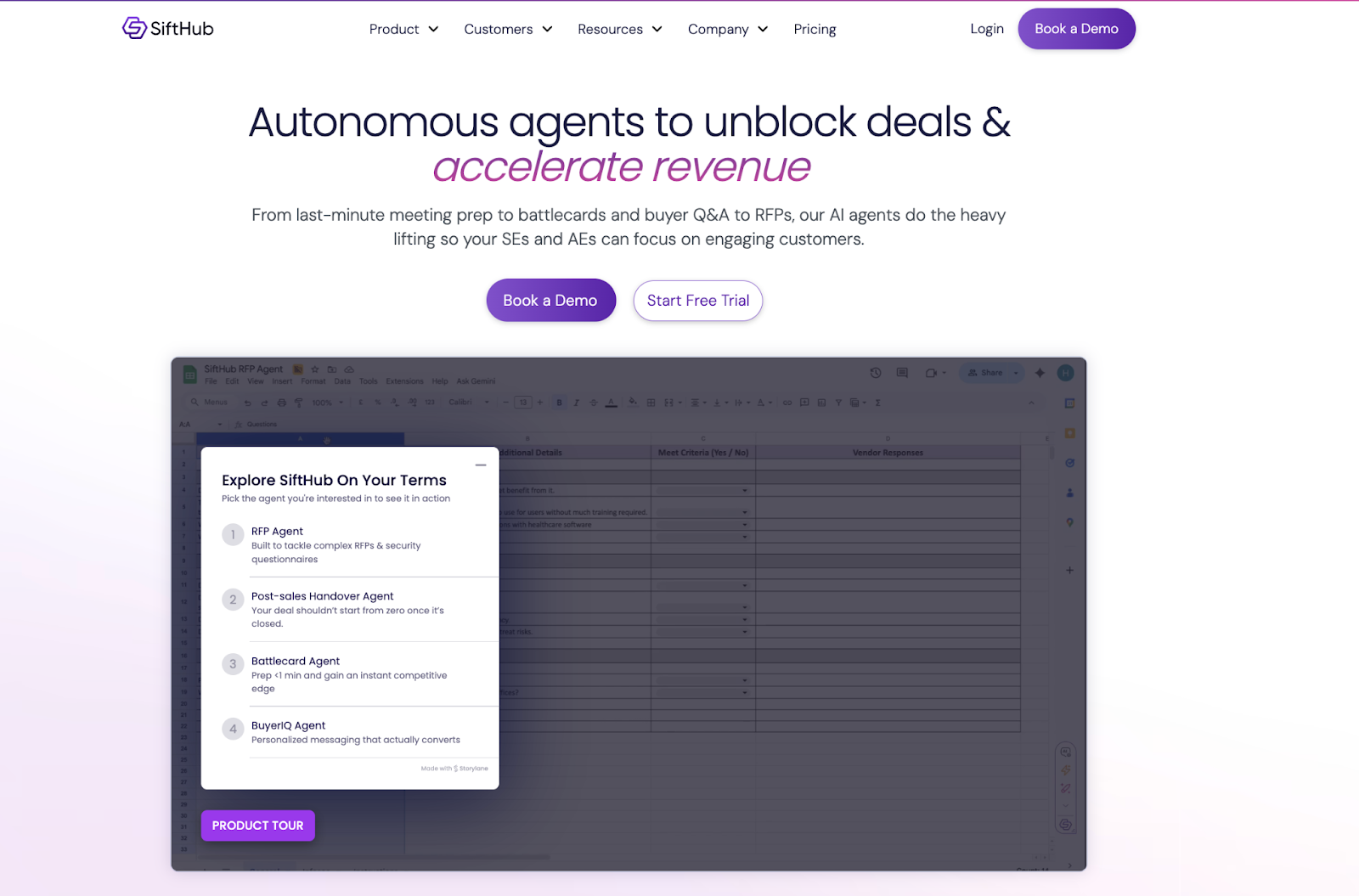
SiftHub is the best DDQ automation software for B2B SaaS presales and solutions engineering teams in 2026. It is the only platform that generates DDQ responses from your live deal context: CRM data, call recordings, and knowledge across your connected GTM stack. No static library to build. No maintenance burden. Every answer is source-attributed and reflects the specific buyer to whom it is addressed.
Where every other tool on this list asks you to feed it answers before it can help you, SiftHub connects to the systems you already use and generates responses from what your team actually knows right now.
Best for: B2B SaaS presales and SE teams receiving vendor security DDQs mid-deal, teams that need compliance accuracy without continuous library maintenance, and responses that reflect each buyer's specific profile.
Key capabilities:
- 70-90% auto-fill from live, connected knowledge across Salesforce, Gong, Google Drive, SharePoint, and Slack. No library to build or maintain.
- Source attribution on every answer: document name, owner, and last modified date. Nothing generated from free-form AI.
- Works natively in Word, Excel, Google Sheets, and browser-based portals. No imports or exports required.
- Reads the full DDQ on intake, extracts every requirement, and generates a structured checklist before drafting starts.
- Bid/no-bid analysis, SME routing, approval workflows, and submission coordination in one workspace.
- SOC 2 Type II, ISO 27001:2022, and VAPT certified. Granular RBAC, SSO, full audit trails, and region-aware data residency.
- Up and running in under a week. First complete draft in under 10 minutes.
Limitation to know: SiftHub is not built for LP/GP investor DDQs or standalone GRC compliance workflows. It delivers the most value for teams already using Salesforce, Gong, or similar GTM tools, because live deal context is the core differentiator.
Proof points: Allego achieved 90% auto-fill and 8x faster RFP turnaround. Sirion processes 1.5x more questionnaires per month with a 48-hour SLA. Superhuman saved 8 or more hours per person per week.
Pricing: Custom. Contact SiftHub for a quote.
Implementation: Under one week.
What you get: DDQ responses grounded in your live deal, not a content folder someone last updated six months ago.
2. Arphie
What is Arphie? Arphie is a DDQ and RFP response tool with a focus on financial services IR workflows. It generates responses from a structured knowledge base and attaches a confidence score to each answer so reviewers know where to focus.
Best for: Investor relations teams in financial services managing LP/GP questionnaires on a recurring cycle.
Key capabilities:
- Confidence scoring per answer flags which responses need human review before submission.
- Source attribution and audit trail on generated answers.
- Handles standard DDQs and custom investor questionnaires.
- Multi-language response support.
Honest limitation: Arphie runs on a knowledge base that your team has to build and keep current. If the library is not maintained, confidence scores become less meaningful and responses go stale. No live CRM or call context means every response looks the same regardless of who is asking. For sales or presales DDQs, it is the wrong tool.
Pricing: Custom. Contact Arphie directly. Implementation: 2-4 weeks.
3. Responsive (RFPIO)
What is Responsive? Responsive, formerly RFPIO, is an enterprise RFP and DDQ platform built around content library management and multi-stakeholder workflows. It suits teams running high volumes of questionnaires with a dedicated bid desk to manage the process.
Best for: Enterprise bid and proposal teams with a dedicated content owner, high DDQ volume, and established library governance.
Key capabilities:
- Multi-stakeholder workflow: intake, assignment, review, approval, and submission.
- Analytics on win rates, turnaround time, and content performance.
- Multi-format support: Word, Excel, PDF, and web portals.
- Broad integration ecosystem.
Honest limitation: Responsive is only as good as the library behind it. Without a dedicated content owner actively updating answers, accuracy degrades, and the tool becomes an expensive search bar. Implementation runs 4-8 weeks, most of it spent on content migration. Responses carry no deal context: the same answer goes to every buyer regardless of their specific situation or what your team has already told them.
Pricing: Custom. Contact Responsive directly. Implementation: 4-8 weeks.
4. Loopio
What is Loopio? Loopio is an RFP response platform built around a centralised content library and structured SME routing workflows.
Best for: Teams with an existing, well-organised content library, moderate DDQ volume, and a dedicated proposal manager who owns library governance full-time.
Key capabilities:
- Centralised Q&A library with tagging and scheduled review cycles.
- SME routing with deadline tracking and task assignment.
- AI-powered answer suggestions based on keyword matching.
- Integrations with Salesforce, SharePoint, Google Drive, Slack, and Microsoft Teams.
Honest limitation: Loopio's AI suggestions struggle with nuanced compliance questions. The tool works when the library is up to date and governed. When it is not, the suggestions are wrong, and someone still has to fix them manually. Per-seat pricing expands quickly once you bring in clinical, IT, legal, and compliance reviewers. If your library is not already in good shape, Loopio will not fix that.
Pricing: Starts at $20,000 per year for 10 seats. Implementation: 3-6 weeks.
5. Inventive AI
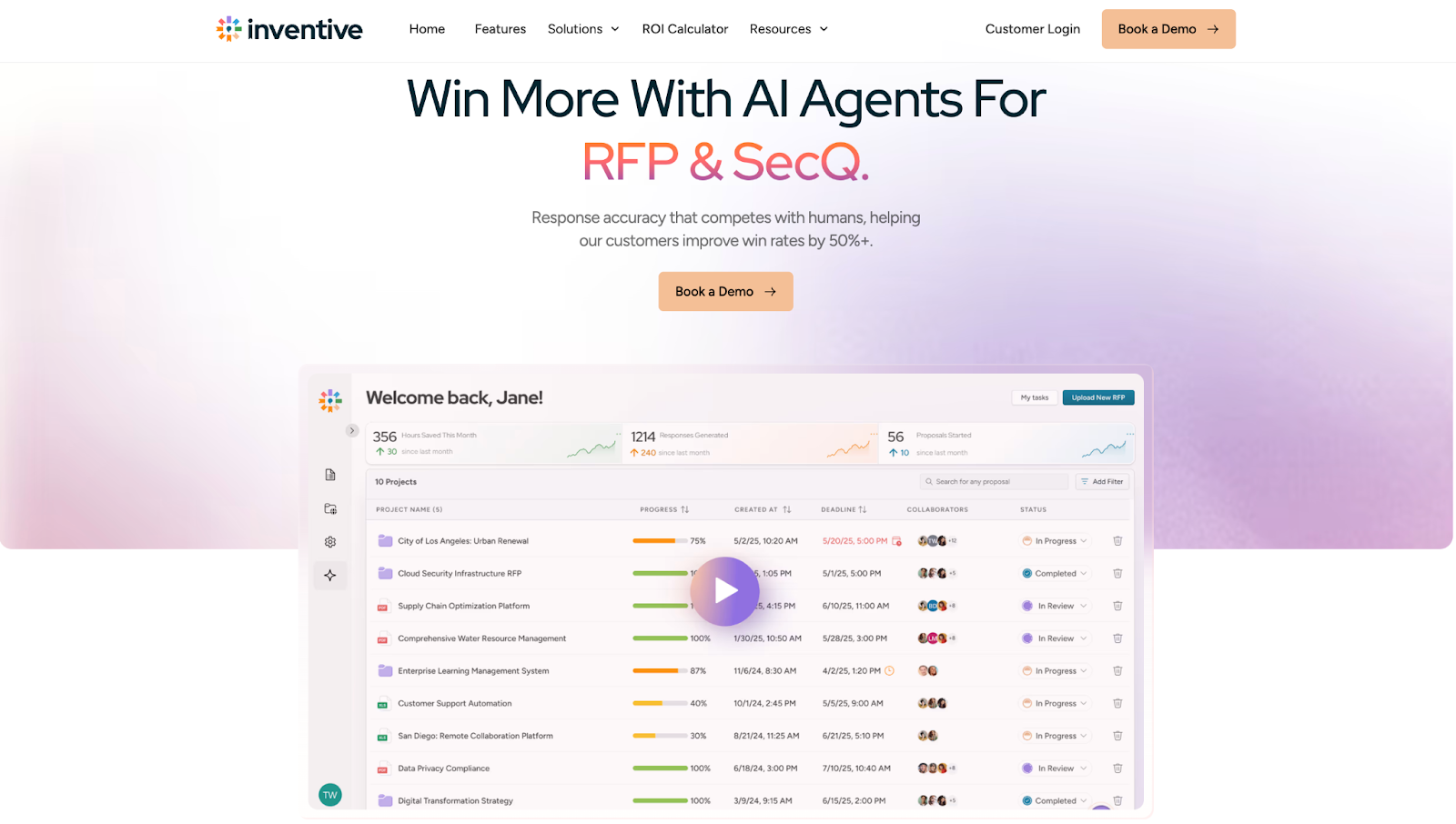
What is Inventive AI? Inventive AI is a DDQ and RFP response tool that uses AI to generate first-draft responses and attach confidence ratings to each answer.
Best for: Teams that want AI to generate responses rather than match from a pre-built library, and who have the bandwidth to review and refine AI-generated drafts.
Key capabilities:
- AI-generated responses reduce reliance on a pre-built library.
- Confidence ratings per answer indicate where human review is needed.
- Gap detection flags questions where no strong source exists.
Honest limitation: Inventive AI is a newer entrant with a smaller customer base and less mature enterprise governance than established platforms. It has no live CRM or call context, so responses are not deal-aware. The confidence ratings are only as reliable as the sources the AI draws from. Worth evaluating, but verify enterprise references before committing.
Pricing: Custom. Contact Inventive AI directly. Implementation: 2-4 weeks.
6. AutoRFP.ai
What is AutoRFP.ai? AutoRFP.ai is an entry-level RFP and DDQ response tool designed for small teams with low questionnaire volume and an existing content library to import.
Best for: Small teams running fewer than 20 DDQs per month with a dedicated content owner and organised existing Q&A.
Key capabilities:
- Fast setup. Teams are operational within days.
- Clean interface with a low learning curve.
- Multi-format support: Word, Excel, and PDF.
Honest limitation: AutoRFP.ai achieves around 60% auto-fill on a well-maintained library. That rate drops quickly when content is not updated. There is no deal context, so every buyer gets the same answer. The headline price does not reflect the true cost once you account for the hours spent on library maintenance. For teams that have outgrown spreadsheets but are not ready for enterprise platforms, it fills the gap, though not for long.
Pricing: Around $500-$800 per month for small teams. Around $1,200-$2,000 per month for mid-market. Implementation: 1-2 weeks.
7. Qvidian
What is Qvidian? Qvidian is a legacy response management platform from Upland Software. It predates the current generation of AI-native tools and is typically found in large enterprises that have not yet migrated.
Best for: Large enterprises already embedded in the Upland product ecosystem with a dedicated proposal operations function and no near-term plans to migrate.
Key capabilities:
- Deep workflow customisation for complex approval chains.
- Audit trail and compliance controls for regulated environments.
- Salesforce and Microsoft Office integration.
- Extensive template management.
Honest limitation: Qvidian's interface and AI capabilities reflect when it was built, not where the market is now. Response generation is library-assisted rather than AI-native. Implementation is lengthy, professional services costs are high, and the total cost of ownership often exceeds initial estimates. Teams evaluating it for the first time in 2026 should ask why they are not looking at newer options.
Pricing: Enterprise pricing on request via Upland Software. Implementation: 6-12 weeks.
8. TrustCloud
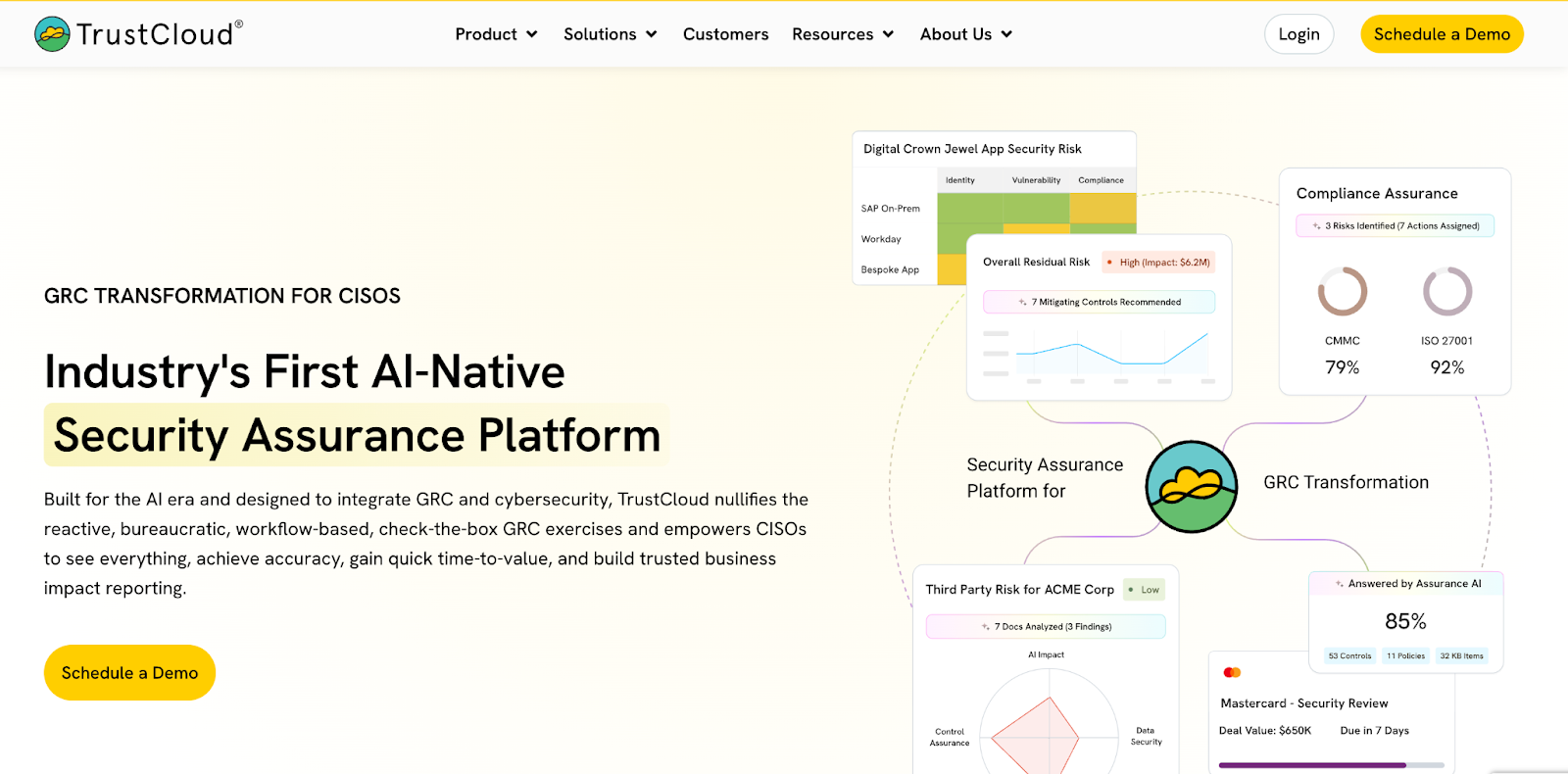
What is TrustCloud? TrustCloud is a trust management and GRC platform that incorporates vendor security questionnaire responses into its compliance workflow. It is built for InfoSec teams, not sales or presales.
Best for: InfoSec and compliance teams managing vendor risk assessments and looking to reduce inbound questionnaire volume through a self-service trust centre.
Key capabilities:
- Trust Centre enables vendors to proactively share compliance documentation before a DDQ arrives.
- GRC integration ties compliance certification status directly to questionnaire answers.
- Accessible entry pricing relative to enterprise alternatives.
Honest limitation: TrustCloud is a compliance tool that handles questionnaires, not a DDQ automation tool that also covers compliance. There is no deal context, no CRM integration, and no capability for the sales or presales workflows where DDQs most often block revenue. If your DDQs are arriving mid-deal from procurement teams, this is the wrong starting point.
Pricing: From around $400 per month. Implementation: 2-3 weeks.
9. Vanta
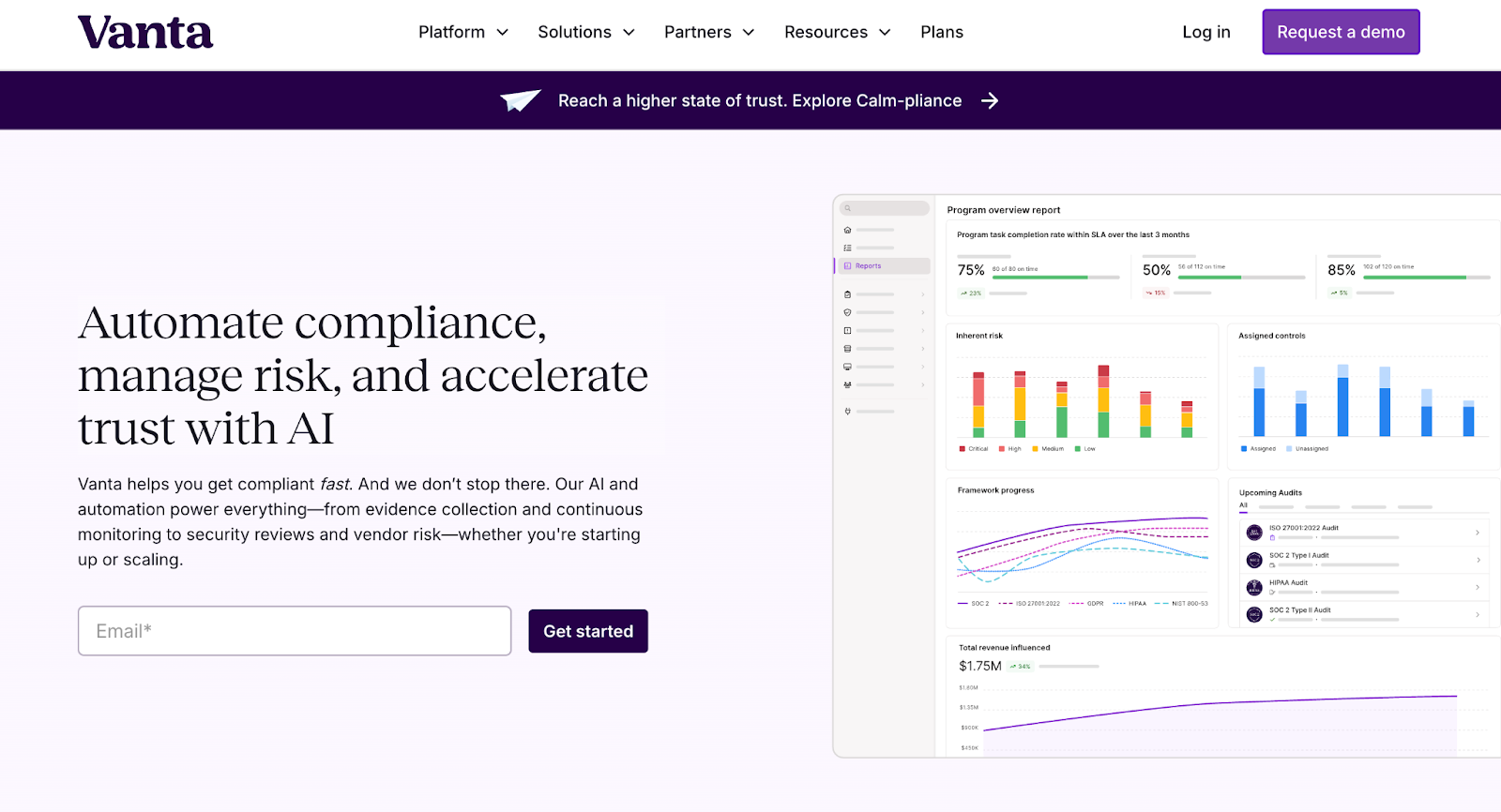
What is Vanta? Vanta is a GRC and compliance automation platform. Questionnaire response is one feature within a broader compliance workflow, not the primary product.
Best for: Security and compliance teams already using Vanta for SOC 2 or ISO 27001 management who want questionnaire automation without adding a separate tool.
Key capabilities:
- Connects compliance certification status directly to questionnaire answers.
- Reduces manual effort on recurring security assessments with consistent question patterns.
- Works within an existing Vanta GRC deployment without additional integration lift.
Honest limitation: Questionnaire automation is a secondary capability in Vanta, not a core one. Customisation for non-security DDQ types, such as financial or operational due diligence, is limited. If DDQ response is your primary problem, Vanta is the wrong tool to evaluate first. It earns its place here only for teams already on the platform who want to extend what they have.
Pricing: Custom. Contact Vanta directly. Implementation: 3-5 weeks.
10. DiligenceVault
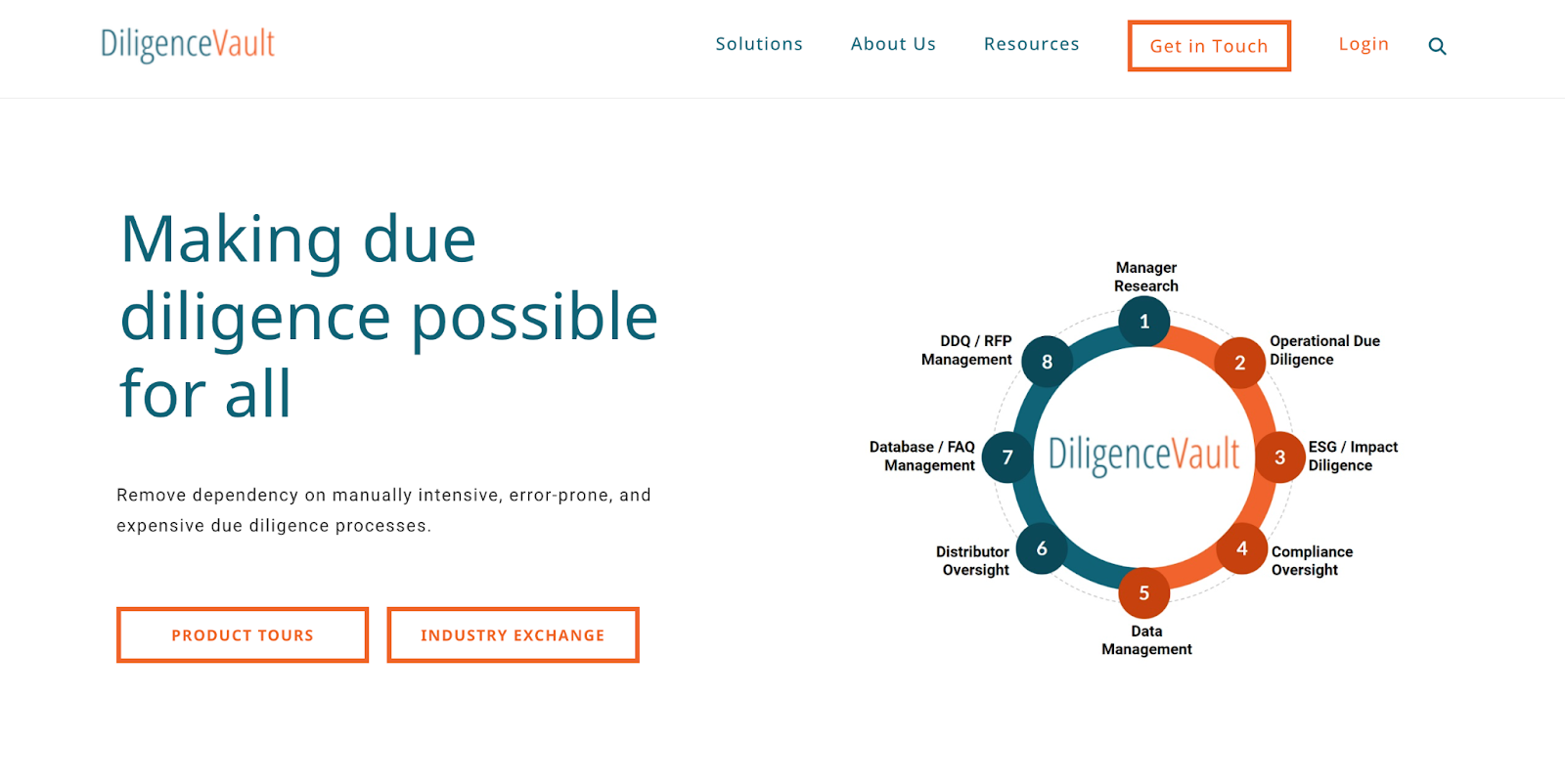
What is DiligenceVault? DiligenceVault is a specialist platform for investment management due diligence, purpose-built for the LP/GP questionnaire workflows used by private equity firms, hedge funds, and alternative asset managers.
Best for: Investor relations teams at private equity firms and hedge funds managing recurring LP/GP due diligence on a structured cycle.
Key capabilities:
- Built around LP/GP DDQ workflows, not adapted from a general RFP tool.
- Supports standardised industry formats including ILPA questionnaires.
- Structured for IR teams managing multiple LP relationships simultaneously.
Honest limitation: DiligenceVault is a category specialist. Outside of investment management IR workflows, it has no relevant application. Not suitable for sales, presales, or vendor security DDQs. AI-native capabilities are limited relative to newer platforms. If you are not in investment management, stop reading here.
Pricing: Custom. Contact DiligenceVault directly. Implementation: 4-6 weeks.
Final thoughts on DDQ automation software
Most DDQ tools solve the same narrow problem: they store your old answers and surface them when a new question looks familiar. That works until your library goes stale, your SE is on their fourth deadline this week, or the buyer asks something deal-specific that no pre-written answer can cover.
SiftHub is the best DDQ automation software for B2B SaaS presales and solutions engineering teams in 2026. SiftHub's RFP Response Management integrates with your live GTM stack and generates responses based on what your team actually knows right now. Every answer is source-attributed, auditable, and specific to this deal. Allego uses SiftHub to hit 90% auto-fill rates and complete questionnaires 8x faster. Sirion handles 1.5x more DDQs per month without adding headcount.
If you have a dedicated bid desk with an active library owner and your current problem is workflow coordination rather than content quality, Loopio will serve you well. If you need responses that stay accurate without ongoing maintenance and reflect the deal at hand, SiftHub is built for that.