




- We analyzed 240,000+ questions across SiftHub accounts (Nov 2025–May 2026): presales work is high-volume, repetitive, and mostly invisible.
- Volume outruns hiring: median questionnaire is 61 questions, 1 in 10 tops 233.
- The same work repeats: 68% of questions are near-duplicates from the last 90 days.
- Answer content is stale: 71% of Google Drive content sits untouched 12+ months.
- Capacity is a distribution problem: Wednesday runs ~3x busier and ~2x slower than other days.
- We analyzed 240,000+ questions across SiftHub accounts (Nov 2025–May 2026): presales work is high-volume, repetitive, and mostly invisible.
- Volume outruns hiring: median questionnaire is 61 questions, 1 in 10 tops 233.
- The same work repeats: 68% of questions are near-duplicates from the last 90 days.
- Answer content is stale: 71% of Google Drive content sits untouched 12+ months.
- Capacity is a distribution problem: Wednesday runs ~3x busier and ~2x slower than other days.
Updated July 2026. Based on SiftHub platform data, November 2025–May 2026.
We analyzed more than 240,000 questions answered across SiftHub customer accounts over six months to see what presales work actually looks like at scale. The analysis was led by SiftHub's product and engineering team – Harsh Vakharia (Product & Solutions) and Harshad Bhanushali (Head of Engineering).
The presales metrics at a glance
- 240,000+ questions answered across customer accounts in six months.
- 61 questions in the median questionnaire; 1 in 10 exceeds 233 questions.
- 68% of questions in any questionnaire are near-duplicates of ones answered in the last 90 days.
- The top 50 question clusters account for 17% of all RFP volume.
- Before submitting, you reference 23 distinct files from 3 different sources.
- 71% of Google Drive content is stale (untouched 12+ months); SharePoint 62%, managed libraries 58%, structured Q&A pairs 37%.
- Wednesday carries the majority of weekly activity — roughly 3x any other weekday.
- Midweek tasks take ~2x longer to complete than tasks at the start or end of the week.
- Accounts with 5 active persona types are the norm; accounts run by a single active user retain and expand worse than those with 3+.
We pulled these numbers into five insights every presales team should act on now. Taken together, they point to one problem: you're carrying huge, repetitive, deadline-bound volume, drawing from content that's often out of date, hitting a hard midweek bottleneck, and too often depending on one person to hold it all together — all symptoms of presales running without a system of record the way sales has a CRM.
The way out is to give presales one governed source of truth where answers are captured, kept current, and shared across the team, so the work a deal needs stops outrunning what you can deliver. Below, we break down each insight with the data behind it and what to do about it.
Insight 1: Your RFP volume is bigger than your headcount can absorb
- 240,000+ questions in six months across accounts.
- Median questionnaire: 61 questions. It's not a form – it's a document a security or procurement team uses to keep you in the deal or cut you.
- 1 in 10 questionnaires exceeds 233 questions – a multi-day project, not a task.
Takeaway: You can't hire your way out of a volume spike, because volume scales faster than headcount and new SEs take months to ramp. The fix is throughput, not staffing; automate the repetitive drafting so a lean team absorbs the surges.
Insight 2: You re-answer the same questions again and again
- 68% of questions in a given questionnaire are near-duplicates of ones you answered in the last 90 days.
- The top 50 question clusters make up 17% of all RFP volume – the same security, integration, compliance, and pricing themes, reworded each time.
- You still pull from 23 files across 3 sources to answer them.
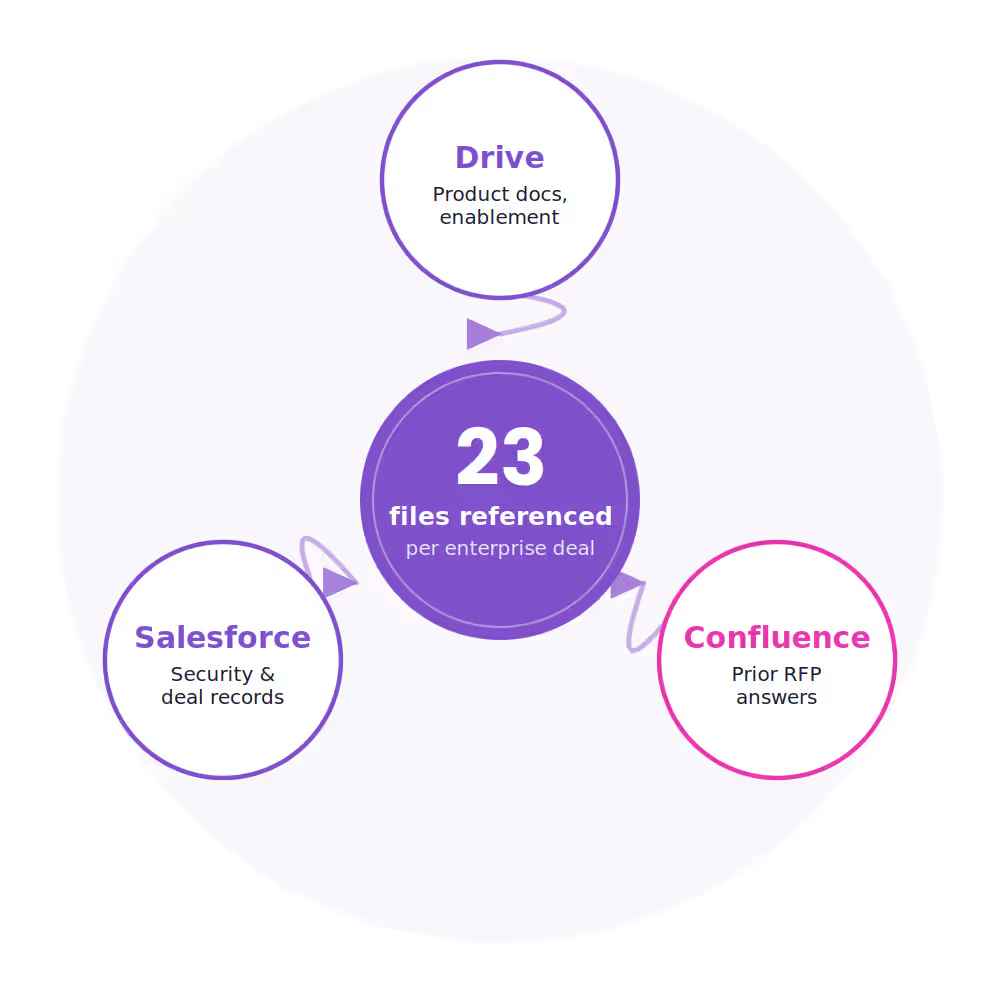
Takeaway: You're not slow because the questions are hard. You're slow because known answers are scattered, so you rebuild them from scratch every deal. Repetitive, retrievable work is exactly what a system should carry, and most teams don't have one.
Insight 3: Most of your answer content is out of date
- Google Drive: 71% stale by the 12-month measure.
- SharePoint: 62% stale.
- Managed content libraries: 58% stale.
- Structured Q&A pairs: 37% stale – far fresher than raw file storage.
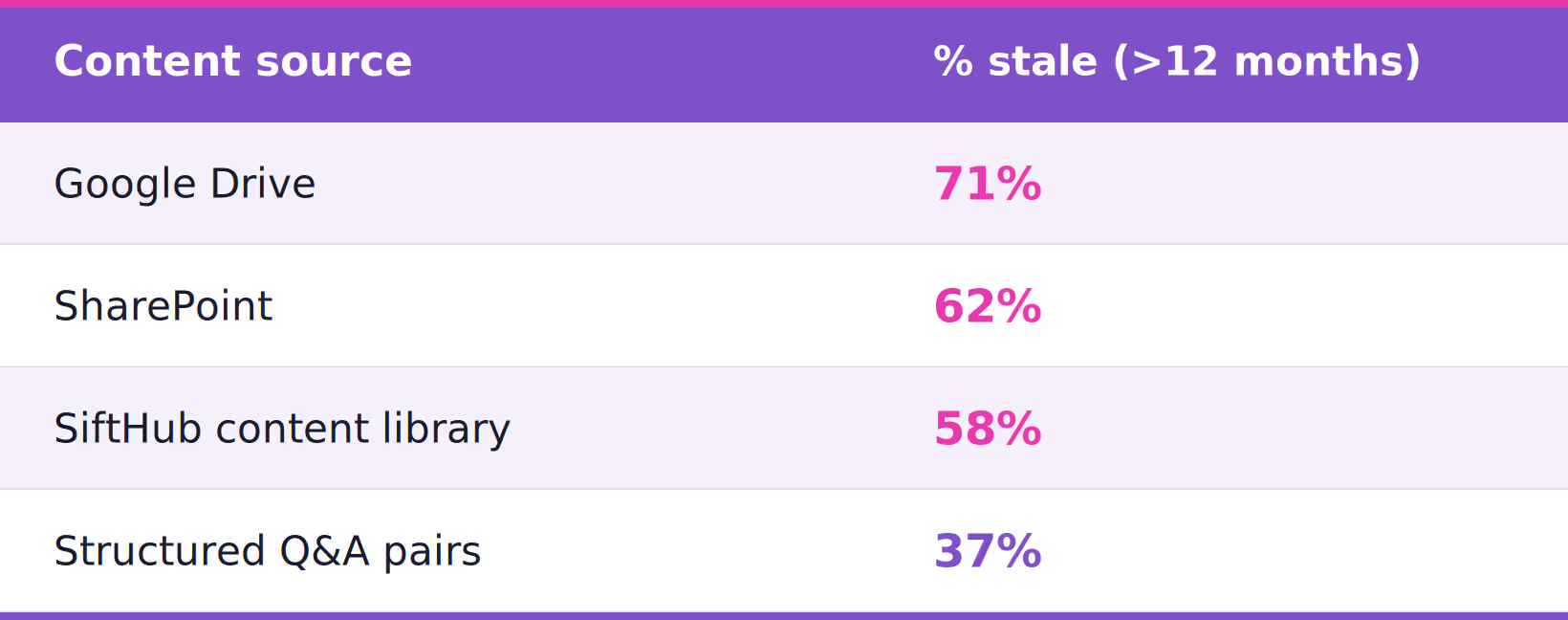
Takeaway: Format determines freshness. Content someone deliberately organizes and maintains stays current; files that pile up rot quietly. A stale answer in a capabilities RFP is embarrassing; in a security questionnaire, it's a liability, and nothing flags it before it reaches the buyer.
Insight 4: Your capacity collapses in the middle of the week
- Wednesday carries the majority of weekly questionnaire activity — about 3x that of any other weekday.
- Midweek tasks take ~2x longer to complete than tasks at the start or end of the week.
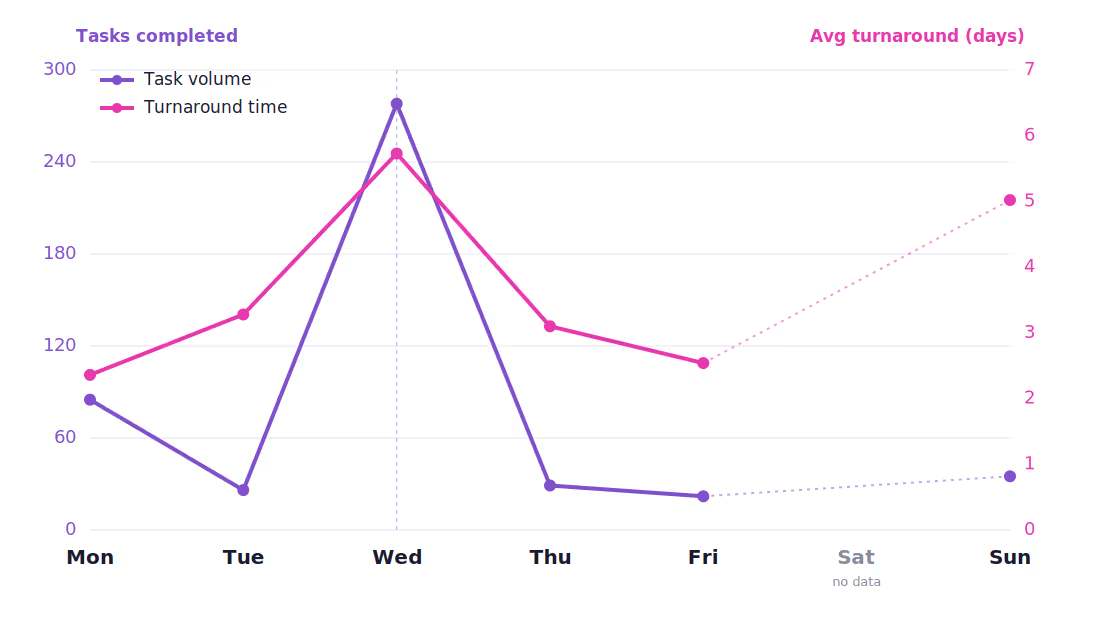
Takeaway: Your busiest day is also your slowest day, which means this is a distribution problem, not a staffing one. You can't fix a pipeline that stacks by hiring for the peak — extra people sit idle on quiet days and still drown on Wednesday.
Insight 5: Single-threaded knowledge is a revenue risk
- The average account has 5 active persona types — SEs, proposal managers, security/GRC leads, product marketing, and sales. Presales is a team sport.
- Accounts run by a single active user retain and expand at lower rates than accounts with 3+ active users.
Takeaway: When one champion holds the institutional memory of a deal motion and leaves, there's nothing to hand over – the next person starts from zero. Knowledge that lives in one head is knowledge your business doesn't really own.
How to measure your own gap
You don't need our full data set to find these patterns in your own team. Pull five numbers for last quarter:
- Median questionnaire size: Count the questions in a typical RFP, and the size of your largest one. If the tail runs into the hundreds, single deals are quietly becoming multi-day projects.
- Repeat rate: Sample recent questionnaires and mark how many questions you have answered before. If most of them repeat, you are paying to solve the same problems twice.
- Content age: Check the last-modified date on your top answer sources. Anything past 12 months is a stale-answer risk, especially in security and compliance.
- Weekly load shape: Plot when work lands and when it takes longest. A midweek spike that also runs slow is a bottleneck, not a staffing gap.
- Active users per account: Count how many people touch each deal in your tools. If the answer is often one, you are carrying key-person risk.
Score poorly on two or more, and the gap is already costing you deals you may never see slip away.
How SiftHub closes the gap
These five insights aren't five separate problems; they're symptoms of one missing system. SiftHub is an AI-native deal orchestration platform for presales and solutions teams that gives the function that system. Here's how we address each insight:
- Volume: Our AI RFP software reads the questionnaire and drafts first-pass answers from your approved content, returning 70–90% of responses ready to review and completing RFPs up to 8x faster.
- Repetition: Enterprise Search unifies your docs, past RFPs, CRM, calls, and team knowledge into one answer hub, so the recurring 68% gets answered on the first pass, with a citation on every response.
- Decay: Every answer carries its source, owner, and last-modified date, and results are weighted by recency and authority. When we can't find a reliable source, we return "No answer found" instead of guessing.
- Bottleneck: Parallel drafting smooths the midweek spike, so more questions no longer mean more hours.
- Continuity: One shared knowledge layer keeps context alive across your team, so turnover doesn't reset an account to zero.
The results show up fast: Rocketlane cut RFP turnaround 50% and improved SE bandwidth by 70%; Allego saved 14+ hours per project at 90% automated completion; Congruent Solutions responded to clients 10x faster. Every answer stays grounded in your approved content, with human review in the loop — because speed without accuracy is a liability in enterprise sales. Book a demo, and we'll map this to your own questionnaire volume and content health.