


.avif)

Event RFPs are complex and time-intensive, requiring detailed inputs across logistics, catering, AV, staffing, and budgets. The real challenge lies in assembling accurate, consistent responses quickly while managing active events. This guide provides a structured template and shows how teams can streamline workflows through automation and centralized content.
Key Takeaways:
- Event RFPs require detailed, cross-functional inputs beyond typical proposals
- The main bottleneck is information assembly, not writing quality content
- Structured templates improve consistency, completeness, and clarity
- Centralized content reduces duplication and ensures up-to-date responses
- Automation significantly cuts response time (from 15–25 hours to under 2 hours)
- Focus customization on high-impact sections like the executive summary and creative concepts
- Efficient collaboration across teams prevents delays and version control issues
- Proposal accuracy and organization directly influence client trust and selection outcomes.
Event RFPs are complex and time-intensive, requiring detailed inputs across logistics, catering, AV, staffing, and budgets. The real challenge lies in assembling accurate, consistent responses quickly while managing active events. This guide provides a structured template and shows how teams can streamline workflows through automation and centralized content.
Key Takeaways:
- Event RFPs require detailed, cross-functional inputs beyond typical proposals
- The main bottleneck is information assembly, not writing quality content
- Structured templates improve consistency, completeness, and clarity
- Centralized content reduces duplication and ensures up-to-date responses
- Automation significantly cuts response time (from 15–25 hours to under 2 hours)
- Focus customization on high-impact sections like the executive summary and creative concepts
- Efficient collaboration across teams prevents delays and version control issues
- Proposal accuracy and organization directly influence client trust and selection outcomes.
Event vendors receive dozens of RFPs annually, corporate conferences, trade shows, product launches, fundraising galas, each requiring detailed proposals covering venue specifications, catering options, AV capabilities, staffing plans, and precise budgets. A single Fortune 500 client RFP for a three-day national sales conference might demand 80+ detailed responses covering everything from dietary restrictions to emergency evacuation procedures.
The challenge isn't writing compelling proposals. Event professionals excel at creating memorable experiences. The challenge is assembling comprehensive, accurate RFP responses quickly enough to pursue multiple opportunities simultaneously while managing active events.
This guide provides event industry professionals with a structured approach to responding to event RFPs efficiently, a sample template you can adapt, and strategies for scaling your proposal process without sacrificing the personalized service that wins business.
Understanding event RFP requirements
Event RFPs differ from typical service proposals because they demand extraordinary detail across logistics, creative vision, risk management, and financial precision — often with compressed timelines that conflict with your busiest event seasons.
Common event RFP categories
- Venue and logistics: Capacity requirements, layout options, accessibility features, parking availability, load-in procedures, technical infrastructure, WiFi capacity, and backup power systems.
- Catering and dietary accommodations: Menu options, pricing per person, accommodation for dietary restrictions (vegan, gluten-free, kosher, halal, allergen considerations), bar service options, late-night snacks, coffee breaks, and staffing ratios.
- Audio-visual and technology: Stage specifications, lighting capabilities, sound systems, video recording, live streaming infrastructure, presentation equipment, technical support staffing, and rehearsal access.
- Staffing and coordination: Event management team structure, on-site coordinator availability, vendor coordination processes, setup and breakdown crews, registration staff, and emergency response protocols.
- Creative and design: Theme development, decor concepts, branding integration, signage design, floral arrangements, entertainment options, and guest experience elements.
- Budget and pricing: Itemized cost breakdowns, payment schedules, cancellation policies, force majeure provisions, insurance requirements, and potential change order processes.
Why do event RFPs take so long to complete?
Event proposals require input from multiple departments and external partners. Your venue manager provides capacity and layout details. Your catering director creates custom menus and pricing. Your AV team specifies technical capabilities. Your design team develops creative concepts. Your operations team confirms staffing availability.
Coordinating these inputs, ensuring consistency across sections, and formatting everything into a cohesive proposal traditionally consumes 15-25 hours for a comprehensive event RFP, time your team doesn't have during peak event season when you're managing active programs while pursuing new business.
The information exists across venue specs sheets, standard catering menus, AV equipment inventories, past event proposals, vendor agreements, and insurance documentation. The bottleneck isn't knowledge; it's retrieval, assembly, and customization for each unique RFP.
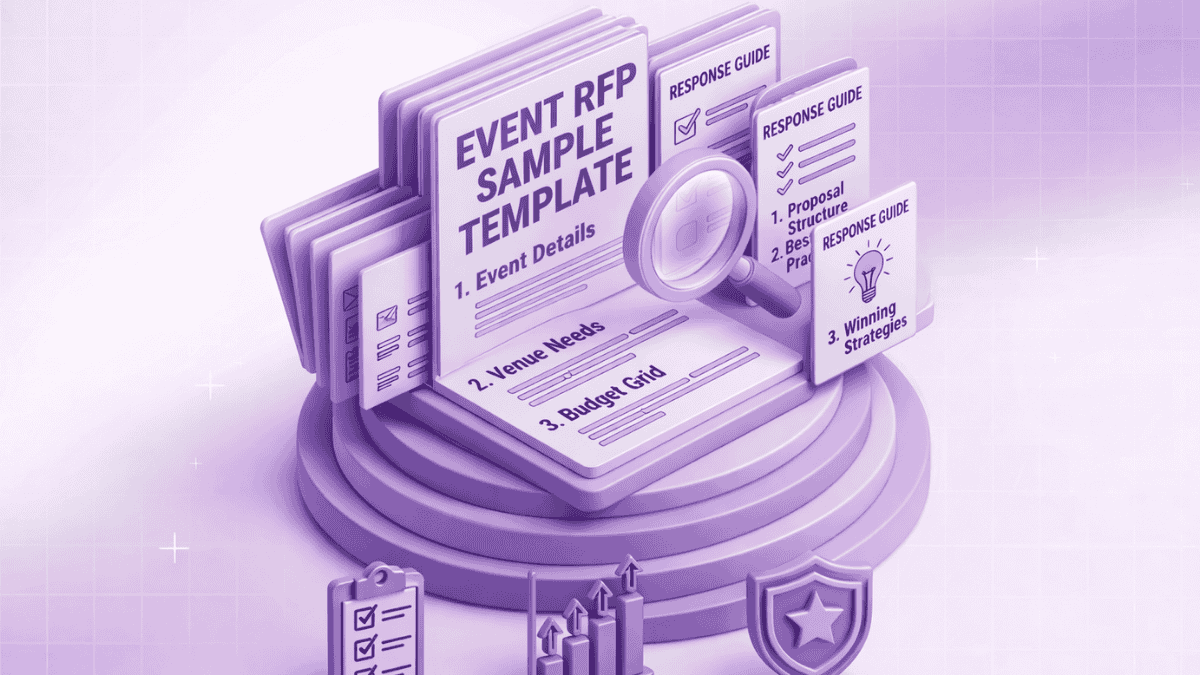
Event RFP sample template structure
This template provides a comprehensive framework for event RFP responses. Adapt sections based on specific RFP requirements and your service offerings.
Executive summary
- Project overview: Brief description of the proposed event, demonstrating understanding of client objectives and desired outcomes.
- Our approach: High-level summary of how your venue/service meets their requirements and creates memorable experiences.
- Key differentiators: Three to five specific advantages that separate your proposal from competitors (unique venue features, specialized capabilities, relevant experience).
- Investment summary: Total estimated investment with a brief context about the value delivered.
Understanding your event objectives
- Event goals: Restate the client's stated objectives in their language, showing you understand what success means to them.
- Audience considerations: Acknowledge the specific needs of their attendees (executive retreat requires a different approach than sales kickoff).
- Success metrics: Identify how you'll measure event success (attendee satisfaction, engagement metrics, logistical execution).
Venue specifications and capabilities
- Capacity and layout options: Meeting room capacities, configuration flexibility (theater, classroom, banquet, cocktail), square footage, and ceiling heights.
- Technical infrastructure: Built-in AV capabilities, WiFi bandwidth, power availability, rigging points, and lighting systems.
- Accessibility and accommodations: ADA compliance, accessible entrances and facilities, assistive listening systems, service animal accommodations.
- Logistics and load-in: Loading dock access, freight elevator specifications, setup timeline flexibility, storage availability.
Catering and beverage service
- Menu concepts: Proposed breakfast, lunch, dinner, and break options tailored to their preferences and dietary requirements.
- Dietary accommodations: Process for handling restrictions, cross-contamination prevention, and ingredient transparency.
- Service style: Plated, buffet, food stations, passed hors d'oeuvres—with rationale for recommendations.
- Beverage options: Bar packages, wine selections, specialty cocktails, non-alcoholic alternatives.
- Pricing structure: Per-person costs, minimum guarantees, service charges, gratuity policies.
Audio-visual and production
- Technical capabilities: Sound system specifications, projection capabilities, lighting options, and stage configurations.
- Production support: Rehearsal access, technical staff availability, troubleshooting protocols, backup equipment.
- Recording and streaming: Video recording options, live streaming capabilities, and post-production services.
- Client presentation needs: Support for attendee presentations, equipment compatibility, and advanced testing procedures.
Staffing and event management
- Management team: Event coordinator credentials, experience with similar events, and availability throughout planning and execution.
- On-site support: Staffing ratios, roles and responsibilities, communication protocols, escalation procedures.
- Vendor coordination: Process for managing external vendors (florists, entertainers, specialty services), quality control measures.
- Setup and breakdown: Timeline, crew size, supervision, quality checks.
Timeline and milestones
- Planning phase: Key milestones from contract signing through event execution (menu finalization, AV walkthrough, final guest count).
- Pre-event coordination: Site visits, rehearsal schedule, vendor load-in timeline, and final walkthroughs.
- Event day schedule: Detailed timeline showing setup completion, guest arrival, program flow, and breakdown initiation.
- Post-event activities: Breakdown completion, final billing, feedback collection, and follow-up.
Investment and terms
- Itemized pricing: Detailed cost breakdown by category (venue rental, catering, AV, staffing, other services).
- Payment schedule: Deposit requirements, progress payments, and final payment timing.
- Cancellation policy: Refund structure based on cancellation timing, force majeure provisions.
- Additional services: Optional upgrades or add-ons with associated costs.
- Terms and conditions: Insurance requirements, liability limitations, change order process, and guarantee policies.
References and experience
- Relevant experience: Three to five similar events you've executed successfully, with brief descriptions and outcomes.
- Client references: Contact information for clients willing to discuss their experience (with their permission).
- Awards or recognition: Industry accolades, venue ratings, safety certifications, and sustainability credentials.
Sample event RFP response excerpt
1. Executive summary: Three-day national sales conference
We're delighted to propose the Grand Harbor Conference Center as the venue for TechCorp's 2027 National Sales Conference, hosting 450 sales professionals for three days of training, networking, and celebration.
Our 35,000 square-foot facility offers the flexibility you need: a 12,000 square-foot ballroom for general sessions, six breakout rooms accommodating 50-75 attendees each, and a 5,000 square-foot pre-function space perfect for networking breaks and evening receptions. Our in-house AV capabilities include 4K projection, professional sound reinforcement, and 1GB WiFi throughout the facility, eliminating the coordination complexity and cost of external production vendors.
What separates Grand Harbor from other venues: Our culinary team specializes in corporate events and can accommodate all dietary restrictions you've specified (vegan, gluten-free, kosher, and allergen-conscious options) while maintaining exceptional presentation and taste. Our dedicated event coordinator, Maria Chen, has managed 15+ multi-day corporate conferences in the past two years, averaging 4.8/5.0 client satisfaction ratings.
Total investment for the three-day program, including venue rental, all meals and breaks, complete AV production, and dedicated event management: $185,000. This represents a 12% cost savings compared to using separate venue, catering, and production vendors while simplifying coordination through single-point accountability.
Responding to event RFPs efficiently
1. Centralize your Standard Content
Event vendors answer the same questions repeatedly across RFPs: venue capacity, AV specifications, dietary accommodation processes, cancellation policies, insurance coverage, and safety protocols. These answers rarely change between proposals.
Maintain a centralized repository of standard responses organized by category. When your insurance policy renews, or your menu offerings change, update the central source once rather than hunting through dozens of past proposals, hoping you're using current information.
2. Automate Repetitive Assembly
The most time-consuming aspect of event RFP responses isn't writing compelling narratives; it's assembling information from multiple sources into the required format. Venue specifications from your facilities team. Menu options from your culinary director. AV capabilities from your production manager. Pricing from your finance team.
AI RFP software automates this assembly process. Upload the RFP, and the system auto-fills standard questions from your knowledge base, venue specs, catering options, AV capabilities, and staffing processes in minutes rather than hours. Every response includes source citations showing which document provided the information and when it was last updated, ensuring accuracy without manual verification.
Bid and proposal teams handling high event RFP volume report completing first drafts in under 2 hours versus 15-25 hours manually, freeing time for the strategic and creative elements that differentiate your proposal.
3. Tailor Strategically, not Universally
Not every section requires custom content. Venue capacity specifications don't change for each client. Your cancellation policy applies consistently. Insurance requirements remain standard.
Focus customization energy on sections that demonstrate understanding and create a competitive advantage: executive summary showing you understand their objectives, creative concepts tailored to their brand and audience, and relevant experience highlighting similar successful events.
4. Collaborate Efficiently across Teams
Event proposals require input from venue operations, culinary, AV/production, sales, and finance. Coordinating these contributions through email creates version control chaos and missed deadlines.
Project management workflows route specific questions to appropriate team members automatically. Your AV director receives only the 12 technical questions requiring their input, not the entire 80-question RFP. Tasks come with deadlines and progress tracking, ensuring nothing falls through the gaps between departments.
5. Maintain Proposal Quality Standards
Speed without accuracy destroys credibility. An event proposal citing expired insurance certificates, outdated menu pricing, or incorrect venue capacity creates doubt about your operational competence, exactly the opposite impression you want prospects to have about your event execution capabilities.
Every auto-generated response should cite its source document, owner, and last modification date. When your venue undergoes renovations that change capacity, or your insurance policy renews with updated coverage limits, or your culinary team revises menu pricing, those updates propagate to all future proposals automatically rather than remaining in someone's email until the next proposal discovers outdated information.
Common event RFP mistakes to avoid
- Inconsistent pricing across sections: Your executive summary states $185,000 total investment, but your detailed budget breakdown totals $192,000. Clients notice. These discrepancies suggest poor attention to detail, problematic when they're trusting you to manage complex event logistics.
- Generic creative concepts: Proposing "elegant decor with floral centerpieces" for every event, regardless of client brand, audience, or objectives, signals you haven't invested time understanding what makes this event unique. Tailor creative elements specifically to their context.
- Overpromising capabilities: Claiming your venue accommodates 500 theater-style when the realistic capacity is 425 creates problems when the client visits and realizes the space doesn't match your proposal. Be accurate about capabilities, even if that means acknowledging limitations.
- Ignoring specified requirements: The RFP explicitly requested kosher catering options, and your proposal doesn't address this. Even if you can accommodate the requirement, failing to address it in your response suggests you didn't read thoroughly.
- Missing deadlines: Event RFPs often have firm submission deadlines because clients are coordinating venue selection with broader event planning timelines. Late submissions get rejected regardless of quality, eliminating your opportunity.
Scaling your event proposal process
Event businesses face a capacity paradox: peak seasons bring the most RFPs, but leave the least time to respond. Teams are busy delivering current events while trying to win future ones.
Hiring dedicated proposal writers can solve this, but it adds high, inflexible overhead. A better approach is to systematize proposal creation, so your existing team can handle more RFPs without proportional effort.
What changes with a structured process
Organizations using automated RFP workflows report:
- 1.5x more proposals handled with the same team
- Faster turnaround by eliminating information hunting
- Consistent, high-quality responses across proposals
The goal isn’t to reduce strategic work; it’s to remove repetitive tasks.
Where your team should focus
Your team spends time on what actually wins business:
- Understanding client goals and event vision
- Developing tailored, creative concepts
- Showcasing relevant experience
- Building strong client relationships
What the system handles
Automation takes care of repetitive assembly tasks:
- Compiling venue specifications
- Formatting catering menus
- Adding standard policies and compliance details
- Ensuring pricing consistency
Result: More proposals with better quality.
The strategic advantage
Event RFP responses serve dual purposes: winning specific opportunities and demonstrating operational excellence. A well-organized, comprehensive, accurate proposal signals how you'll manage their event, with attention to detail, clear communication, and professional execution.
Conversely, a disorganized proposal with inconsistent information and missed requirements suggests event execution will suffer similar problems. Clients extrapolate from proposal quality to event quality, making your RFP response itself a preview of the experience you'll deliver.
Investing in systematic proposal processes pays dividends beyond time savings. Faster response times let you pursue opportunities that competitors decline due to capacity constraints. Consistent quality across all proposals maintains your brand reputation regardless of which team member drafted the response. Comprehensive tracking of what you proposed prevents post-event disputes about deliverables.
The event industry runs on relationships and reputation. Your proposal process directly impacts both. Make it a competitive advantage rather than an administrative burden.
Ready to transform your event RFP process? Discover how sales teams use AI to respond faster while maintaining the personalized service that wins event business.