


.avif)
How sales and presales teams across startup, mid-market, and enterprise organizations are reclaiming hundreds of hours per quarter - and what their workflows actually look like now.
There's a version of RFP response work that most presales teams know intimately: a questionnaire arrives on a Tuesday afternoon, it's due Friday, and somewhere between 40 and 200 questions need answers, many of which your team has answered before, just scattered across old proposals, Confluence pages, Slack threads, and someone's local drive.
The people doing this work aren't slow or disorganized. The process itself is broken.
This article walks through what RFP automation actually looks like in practice, not in theory, using real workflow examples from organizations at different growth stages. If you're evaluating whether to change how your team handles RFPs and security questionnaires, this is the methodology-level detail you need.
Why is the "before" state so costly
Before looking at case studies, it's worth being precise about where time actually goes in a manual RFP process. Most teams underestimate the true cost because the work is fragmented across roles and tools.
A typical unautomated workflow looks something like this: an RFP arrives in someone's inbox (usually in sales or a sales ops generalist's inbox). That person manually triages the document, identifies which questions require subject-matter expert input, and starts routing them via email or Slack. Subject matter experts who have their own day jobs answer questions in their own words, inconsistently. Someone stitches responses together, formats the document, and the final review cycle begins. Repeat for every RFP.
The result: 20-40 hours of effort per response, a significant percentage of which is rework, formatting, and chasing people down.
The automation opportunity isn't just about speed. It's about structural change to where effort goes.
Case Study 1: Startup Scale- Rocketlane
Profile: B2B SaaS, ~200 employees, presales function built into a small revenue operations team
The core problem: As Rocketlane scaled, critical product and positioning knowledge remained concentrated among early team members, creating dependency and bottlenecks. Responding to RFPs required input from multiple stakeholders, with Solutions Engineers supporting several Account Executives at once. This imbalance stretched SE bandwidth thin, slowed turnaround times, and pulled senior team members into last-minute RFP efforts, often close to submission deadlines.
What changed: After implementing SiftHub, Rocketlane built a structured content library from its historical responses. Rather than routing each question to a subject matter expert and waiting for an answer, AI RFP software surfaced draft responses from previously approved content, flagging only net-new questions for human review. With direct integrations across Slack, Gong, Avoma, Google Drive, and historical RFPs, SiftHub delivered accurate and consistent responses.
Workflow before:
- RFP arrives → sales pings Slack asking "who owns this?"
- Questions distributed manually by email
- Subject matter experts respond asynchronously, with no version control
- Sales ops collates, reformats, and fixes inconsistencies
- A legal/compliance review was requested ad hoc
- Final document assembled and sent
Workflow after:
- RFP uploaded to the platform
- Autonomous agents draft responses using the approved content library
- Only new or flagged questions are routed to subject matter experts
- One review cycle instead of three
- Document exported in client-ready format
Result: The impact was immediate. Rocketlane achieved a 50% reduction in RFP turnaround time and a 70% improvement in SE bandwidth. Faster responses enabled the team to submit RFPs earlier, engage customers sooner, and focus on higher-value sales conversations. By removing RFP friction, SiftHub empowered Rocketlane to scale efficiently while maintaining clarity, consistency, and speed across the deal cycle.
Case Study 2: Enterprise Scale - Allego
Profile: Sales enablement platform, enterprise segment, dedicated RFP/proposal function
The core problem: At enterprise scale, RFPs don't just arrive more frequently; they arrive with more complexity. Allego was managing a high volume of long-form RFPs with questions spanning product, security, legal, procurement, and executive references. Coordination across departments was the dominant cost.
The methodology shift: Rather than treating each RFP as a standalone project, Allego adopted SiftHub to work directly within familiar tools like Google Docs and Sheets. The platform's autofill capability eliminated hours of manual content assembly by pulling from their existing knowledge sources. Built-in personalization allowed teams to tailor responses by length, tone, and industry, while seamless collaboration kept SMEs involved without friction or tool-switching.
Workflow stages that were eliminated or compressed:
- Eliminated: Manual question triage, duplicate response creation, formatting reconciliation between subject matter expert contributions, and tracking response status in spreadsheets.
- Compressed: Legal review (pre-approved standard language reduced the surface area requiring review), final assembly (templated export replaced manual document building).
Result: The impact was immediate and measurable. Allego achieved 8x faster questionnaire completion, saving 14+ hours per response, with 90% of questions automated. What once took days could now be completed in as little as two hours. This shift freed teams to focus on high-value work, refining responses, addressing net-new questions, and accelerating deal cycles, ultimately boosting overall sales productivity.
The methodology behind the results
Across these four organizations, a few consistent patterns emerge. The time savings don't come from magic. They come from structural changes to how knowledge is captured, accessed, and reused.
The single-customer result reflects a platform-wide pattern: 240,000+ questions answered across SiftHub customers in six months, 68% of them near-duplicates of ones answered in the last 90 days.
Pattern 1: Foundational content quality in connected systems matters most
Every team that achieved 70%+ time reduction invested meaningfully in building and maintaining their knowledge base before expecting automation to deliver results. Teams that skipped this step found that autonomous agents surfaced outdated or inconsistent content, and the review process became more burdensome, not less.
The practical implication: plan for a content audit and library build-out as phase one of any RFP automation initiative. This isn't a platform-specific activity; it's a prerequisite.
Pattern 2: The subject matter expert relationship changes, not the involvement
A common misconception about RFP automation is that it removes subject matter experts from the process. In practice, the successful implementations above shifted subject matter experts from drafting to reviewing. The cognitive load is different; reviewing a well-drafted response for accuracy is faster and less interruptive than writing from scratch, but the involvement remains for anything that requires judgment.
Teams that communicated this shift proactively saw faster adoption. Teams that positioned it as "automation will handle RFPs now" created resistance.
Pattern 3: Workflow integration matters as much as the tool itself
The efficiency gains were highest when the automation tool was embedded in existing workflows rather than added as a separate step. RFPs that flowed directly from intake to the platform, and exports that went directly to client-ready formats, removed the friction points where manual effort crept back in.
SiftHub integrates with Salesforce, Confluence, Slack, SharePoint, and Google Drive, so knowledge flows from where it lives without manual copying. For most teams, this meant investing time in integration setup upfront, but the payoff was immediate: no more context-switching between systems to find content.
Pattern 4: Measurement enables iteration
Teams that tracked response time, content reuse rates, and subject matter expert response latency before and after implementation were able to identify where their workflows still had inefficiencies and address them. Teams that didn't measure didn't know what to improve.
What "70% time reduction" actually means in practice
The headline metric across these case studies is a 70%+ reduction in RFP response time. It's worth unpacking what that translates to operationally.
For a team handling 10 RFPs per month at 30 hours each, that's 300 hours of monthly effort. A 70% reduction means reclaiming 210 hours, roughly five and a half full-time working weeks per month. At a fully-loaded cost of $100/hour for sales engineers and presales staff, that's $21,000 in labour cost per month redirected from document production to revenue-generating work.
For smaller teams at startup scale, the math is different, but the impact is proportionally larger. A two-person presales function spending 40% of its time on RFPs and reclaiming 70% of that time gains back a meaningful fraction of a full headcount without a hire.
Neither framing captures the full picture, though. The qualitative shift, from reactive scrambling to strategic prioritization of which opportunities to pursue, is often what teams cite as the most meaningful change.
Where to start: A framework for your own assessment
If you're evaluating RFP automation for your organization, the case studies above suggest a consistent starting point: measure your current state before choosing a solution.
Specifically, track four things for 30 days:
- Total hours spent on RFP and questionnaire responses (across all contributors, not just the primary owner)
- The number of responses you completed vs. declined or deprioritized
- Your average time from receipt to submission
- The percentage of questions in each RFP that your team has answered in some form before.
That last metric is typically the most revealing. For most teams, 60-80% of questions in any given RFP are questions they've answered before. The gap between that percentage and the amount of effort that goes into drafting responses from scratch is the automation opportunity.
SiftHub is built around closing exactly that gap, using autonomous agents to surface and adapt existing approved content while routing genuinely new questions to the right people. But the diagnostic applies regardless of what platform you evaluate.
Closing thoughts
The organizations in these case studies, such as Allego, Rocketlane, and Observe Inc., operate at different scales, in different markets, with different team structures. What they share is a recognition that the traditional RFP process wasn't a people problem. It was a systems problem.
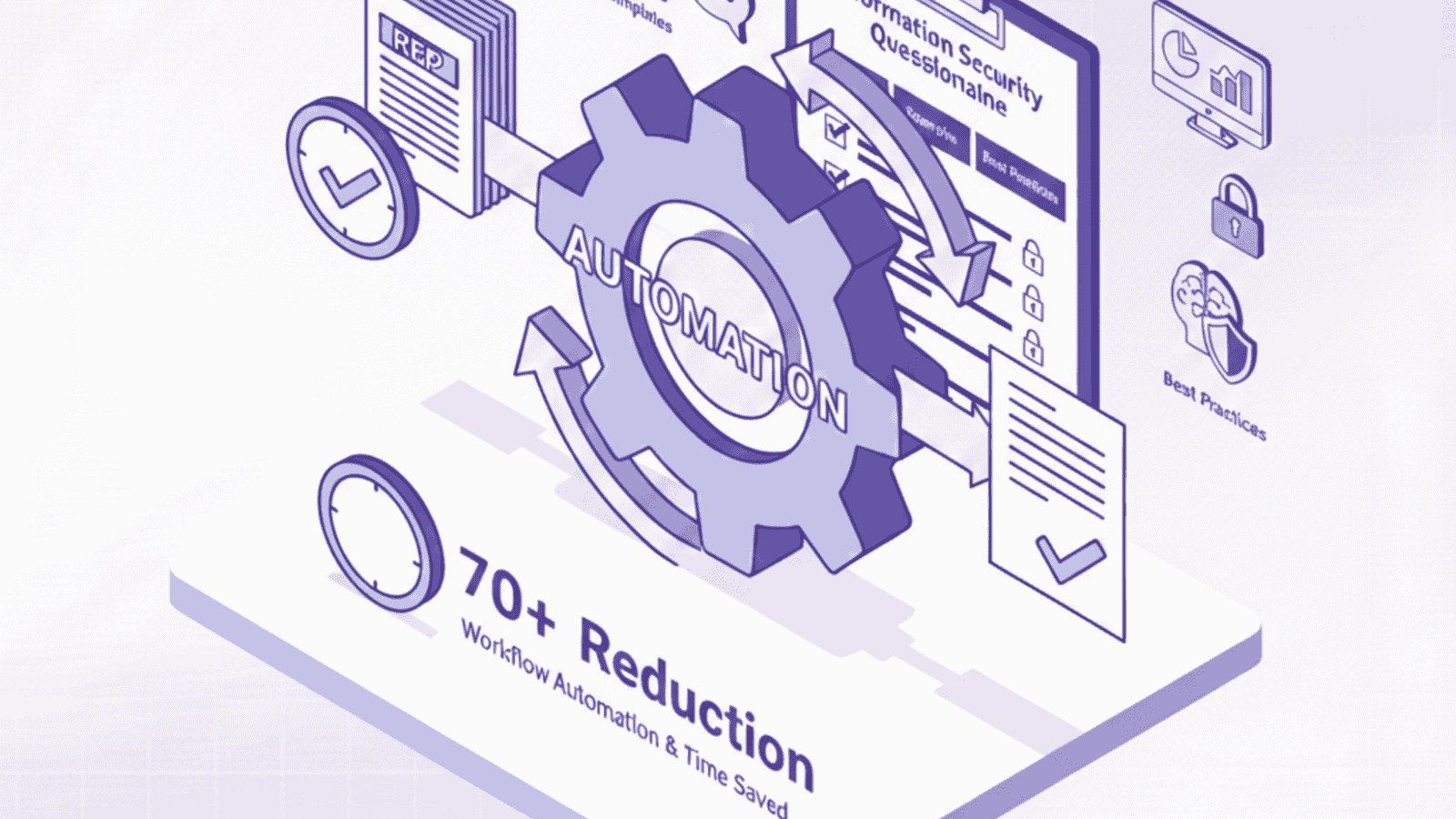
The 70%+ time reduction they achieved didn't come from working faster. It came from eliminating the structural inefficiencies that made RFP response so expensive in the first place: the duplicated effort, the siloed knowledge, the informal coordination, the formatting overhead.
That's the real lesson from these RFP automation case studies. Technology is the enabler. The methodology, building a maintained knowledge base, shifting subject matter experts from drafting to reviewing, integrating automation into existing workflows, and measuring what changes, is what actually drives the result.
Stop losing 300+ hours per month to manual RFP work. SiftHub's AI RFP software autofills 90% of responses in minutes by pulling verified content from Salesforce, Confluence, and the Q&A library, so your presales and solutions teams focus on winning deals, not hunting for certifications.