



.avif)

SiftHub is an AI RFP software for healthcare teams. It automates RFP, RFI, DDQ, and security questionnaire responses for B2B SaaS presales, solutions engineering, and bid teams, drafting from live sources instead of a static library.
- Healthcare RFPs are compliance-heavy. Outdated HIPAA or HITECH answers don't just hurt accuracy, they can disqualify a submission
- SiftHub drafts from live connected sources, auto-fills 80% of a questionnaire on the first pass, and shows the source behind every answer
- Loopio, Responsive, and Qvidian suit dedicated bid teams that can keep a compliance library current
- RocketDocs is built for health plans and providers, with separate libraries per product line
- Arphie is fast on structured security questionnaires, including HIPAA reviews
- If your RFP software will store PHI, you need a business associate agreement (BAA) with that vendor. Most RFP content doesn't contain PHI, so check what your team actually stores
- Baseline security requirements for healthcare: SOC 2 Type II, ISO 27001, encryption, granular access controls, and audit trails
SiftHub is an AI RFP software for healthcare teams. It automates RFP, RFI, DDQ, and security questionnaire responses for B2B SaaS presales, solutions engineering, and bid teams, drafting from live sources instead of a static library.
- Healthcare RFPs are compliance-heavy. Outdated HIPAA or HITECH answers don't just hurt accuracy, they can disqualify a submission
- SiftHub drafts from live connected sources, auto-fills 80% of a questionnaire on the first pass, and shows the source behind every answer
- Loopio, Responsive, and Qvidian suit dedicated bid teams that can keep a compliance library current
- RocketDocs is built for health plans and providers, with separate libraries per product line
- Arphie is fast on structured security questionnaires, including HIPAA reviews
- If your RFP software will store PHI, you need a business associate agreement (BAA) with that vendor. Most RFP content doesn't contain PHI, so check what your team actually stores
- Baseline security requirements for healthcare: SOC 2 Type II, ISO 27001, encryption, granular access controls, and audit trails
What is RFP software for healthcare teams?
RFP software for healthcare teams helps vendors answer RFPs, security questionnaires, and DDQs from hospitals, health systems, payers, and health tech buyers. It drafts answers from approved content, routes HIPAA and security questions to the right reviewers, and keeps an audit trail of who approved each answer.
Healthcare RFPs go beyond features and pricing. They cover PHI handling, HIPAA compliance, breach notification timelines, and data residency. One outdated compliance answer can end a deal before it's evaluated.
This guide covers 6 RFP tools for healthcare teams in 2026: what each does well, where each falls short, and which one fits your workflow.
What healthcare buyers ask for in an RFP
Healthcare buyers are covered entities under HIPAA. When they bring in a vendor, they carry the risk, so their RFPs and security questionnaires dig into how you protect patient data.
- HIPAA Privacy and Security Rules: How you protect PHI, who can access it, and how you train staff.
- HITECH breach notification: How fast you detect and report a breach, and who you notify.
- BAA: If your product will create, receive, store, or transmit PHI for the buyer, they'll need a BAA with you before go-live.
- Security evidence: SOC 2 Type II, ISO 27001, penetration test results, and sometimes HITRUST.
- Data residency and retention: Where data lives and how long you keep it.
Your answers to these questions change as HHS guidance changes and as your own controls change. That's why the RFP tool you pick matters: it decides whether your team sends current answers or old ones.
How we evaluated RFP software for healthcare compliance
We weighted 6 criteria. The first 3 carry the most weight in healthcare.
- HIPAA answer accuracy: Does it keep compliance text current, or does someone check every answer by hand when guidance changes?
- PHI handling and BAA: Will the tool store PHI? If so, does the vendor sign a BAA? Ask every vendor before you shortlist.
- Security posture: SOC 2 Type II, ISO 27001, granular access controls, SSO, AES-256 encryption, and data residency by region.
- Multi-stakeholder workflow: Can it route questions to clinical, IT, legal, compliance, and finance reviewers at the same time?
- Live deal context: Does it reflect this buyer's institution type and risk profile, or does every answer look the same?
- Library upkeep: In healthcare, a compliance answer nobody updated is a disqualifier, not just an accuracy issue.
RFP software for healthcare teams at a glance
Pricing as listed on vendor sites and Vendr as of October 2026. Confirm security details with each vendor.
1. SiftHub: Best RFP software for healthcare teams
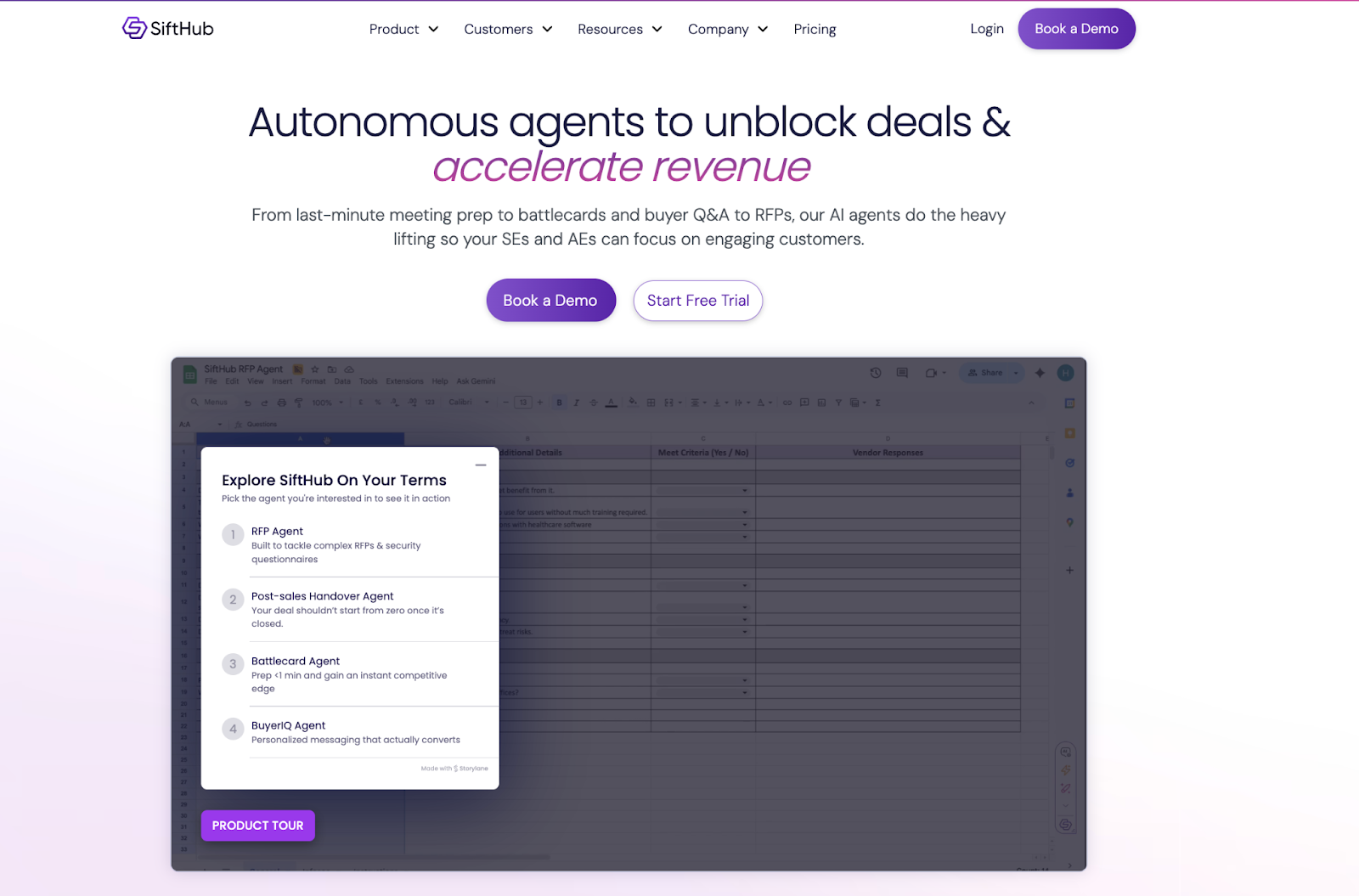
SiftHub is an AI RFP software for healthcare teams. It automates RFP, RFI, DDQ, and security questionnaire responses for B2B SaaS presales, solutions engineering, and bid teams.
It solves the 2 biggest risks in healthcare RFP responses: compliance language that goes stale, and responses that ignore the buyer's profile. Teams move faster, send source-backed answers, and free SMEs for the questions that need human judgment.
Where SiftHub shines
- End-to-end RFP automation: Reads intake documents, compliance annexes, and buried requirements, then builds a checklist before drafting starts. It auto-fills 80% of a questionnaire on the first pass and produces a first draft in under 10 minutes. It works in Word, Excel, Google Docs, and browser portals, with a source behind every answer.
- Live deal context: When a HIPAA questionnaire lands, SiftHub already has the buyer's institution type and concerns from discovery calls and CRM notes. That context shapes the response.
- Multi-stakeholder routing: Sends questions to clinical, IT, legal, compliance, and finance reviewers at once, tracks approvals, and shows leaders where delays sit.
- Audit trails: Full answer history, version control, and reviewer checkpoints on every response.
- Full deal cycle: Pre-call briefs, follow-ups, battlecards, and handover documents from the same platform.
Where SiftHub falls short
SiftHub is built for vendors that sell into healthcare and answer RFPs during live deals. Health plans that need separate libraries for Medicare Advantage, Medicaid, and commercial lines, plus CMS audit workflows, should look at RocketDocs.
Compliance and security
SOC 2 Type II, ISO 27001:2022, and VAPT certified. AES-256 encryption at rest, TLS 1.2+ in transit, granular access controls, SSO/SAML, full audit logging, and region-aware data residency across AWS and Azure. No customer data is used for model training.
Proof
- ActivTrak switched from Responsive and reached 95% questionnaire completion.
- Superhuman saved 8+ hours per person each week.
- Sirion handles 1.5x more RFPs a month and cut its RFP SLA by 48 hours.
Pricing: Custom. See how SiftHub handles a HIPAA security questionnaire.
2. Loopio
Loopio is a structured RFP response platform with a central content library, project dashboards, and AI answer suggestions.
Where Loopio shines
- Central Q&A library with tagging and review cycles
- Magic autofill with keyword-based matching
- SME routing, task assignment, and deadline tracking
- Integrations with Salesforce, SharePoint, Google Drive, Slack, and Microsoft Teams
Where Loopio falls short
With a library, compliance risk builds over time. HIPAA guidance changes, and without an owner auditing answers, the library serves old text. Magic autofill struggles with subtle compliance questions. Per-seat pricing climbs fast when clinical, IT, and legal SMEs all need access. See our SiftHub vs Loopio comparison.
Compliance and security
Audit trails and version control for regulated teams. Check Loopio's trust center for current security reports and PHI terms.
Best for: Vendors with steady healthcare RFP volume and a proposal manager who owns the compliance library.
Pricing: Tiered, per-user pricing. Based on 268 purchases, Vendr reports a median annual contract of $24,209, with a range of $11,770 to $59,257 (April 2026).
3. Responsive
Responsive (formerly RFPIO) is a response platform for large teams that run many RFPs and security questionnaires at once, across many departments.
Where Responsive shines
- AI agents that import files, draft answers, and score content
- Project plans with approval steps across clinical, legal, and IT reviewers
- Reports on win rates and which answers get used
- GovCloud and dedicated cloud hosting for buyers with strict data rules
Where Responsive falls short
Answer quality depends on how well you keep the library. The tool doesn't pull live deal context, and users report generic answers on hard compliance questions. Premium onboarding and data migration cost extra. See SiftHub vs Responsive.
Compliance and security
Dedicated hosting options suit healthcare buyers with strict data requirements. Check Responsive's trust center for current security reports and PHI terms.
Best for: Large vendors with a bid desk and a proposal manager who can run a big compliance library.
Pricing: Not published. Quote-based.
4. Qvidian
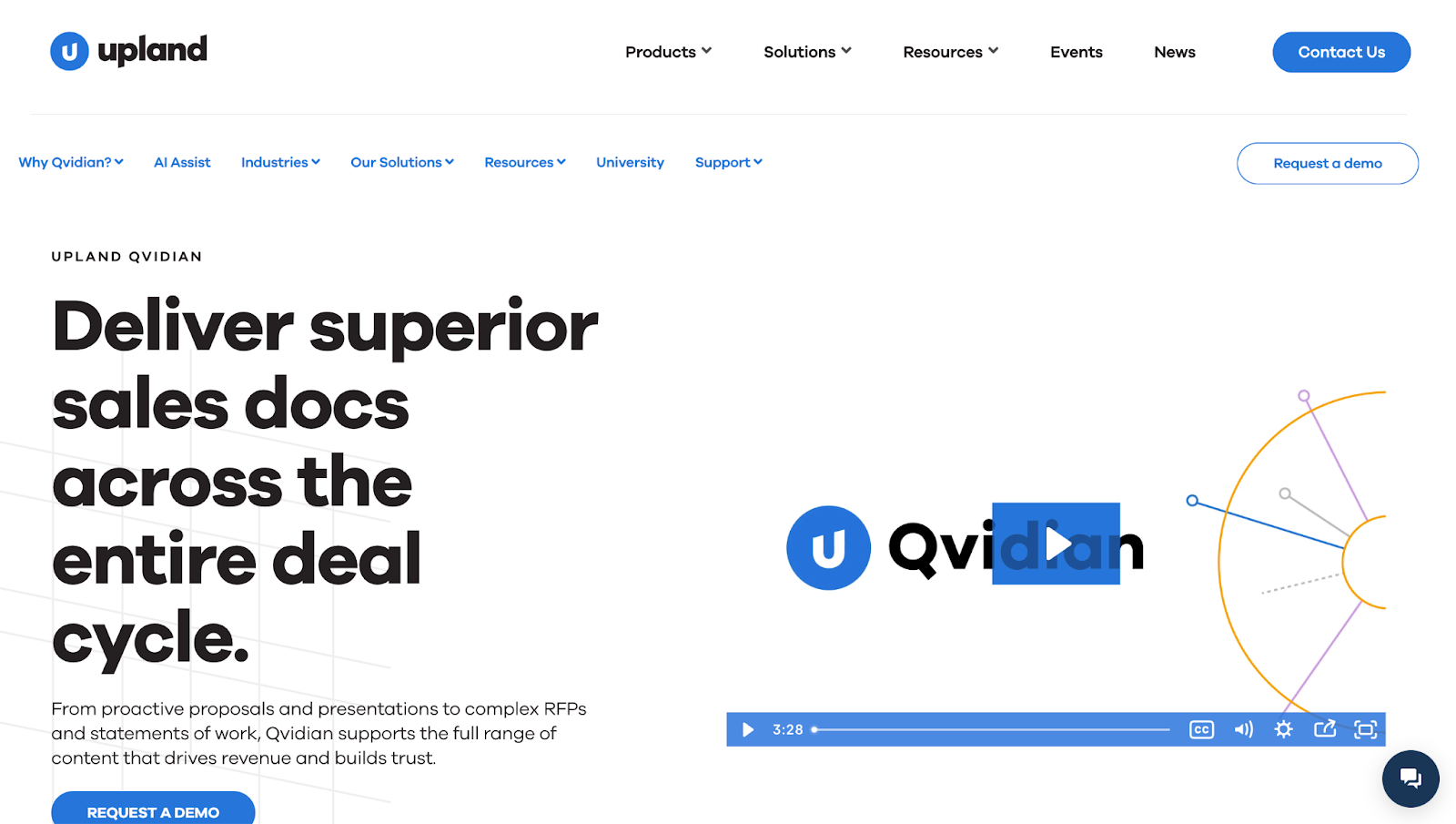
Qvidian is an enterprise RFP and proposal tool from Upland Software. It predates the current generation of AI-first tools and is most common in large enterprises that haven't migrated yet.
Where Qvidian shines
- Central content library with approved answers
- Multi-stakeholder review workflows and template management
- Salesforce and Microsoft Office integrations
- Covers RFPs, RFIs, DDQs, and security questionnaires in one suite
Where Qvidian falls short
Compliance accuracy depends on how actively the library is kept up. HIPAA language goes stale without an owner, and its interface and AI lag newer tools.
Compliance and security
Check Upland's trust center for current security reports and PHI terms before any healthcare deployment.
Best for: Large teams already using Upland products, with proposal ops staff to maintain the library.
Pricing: Enterprise pricing on request.
5. RocketDocs
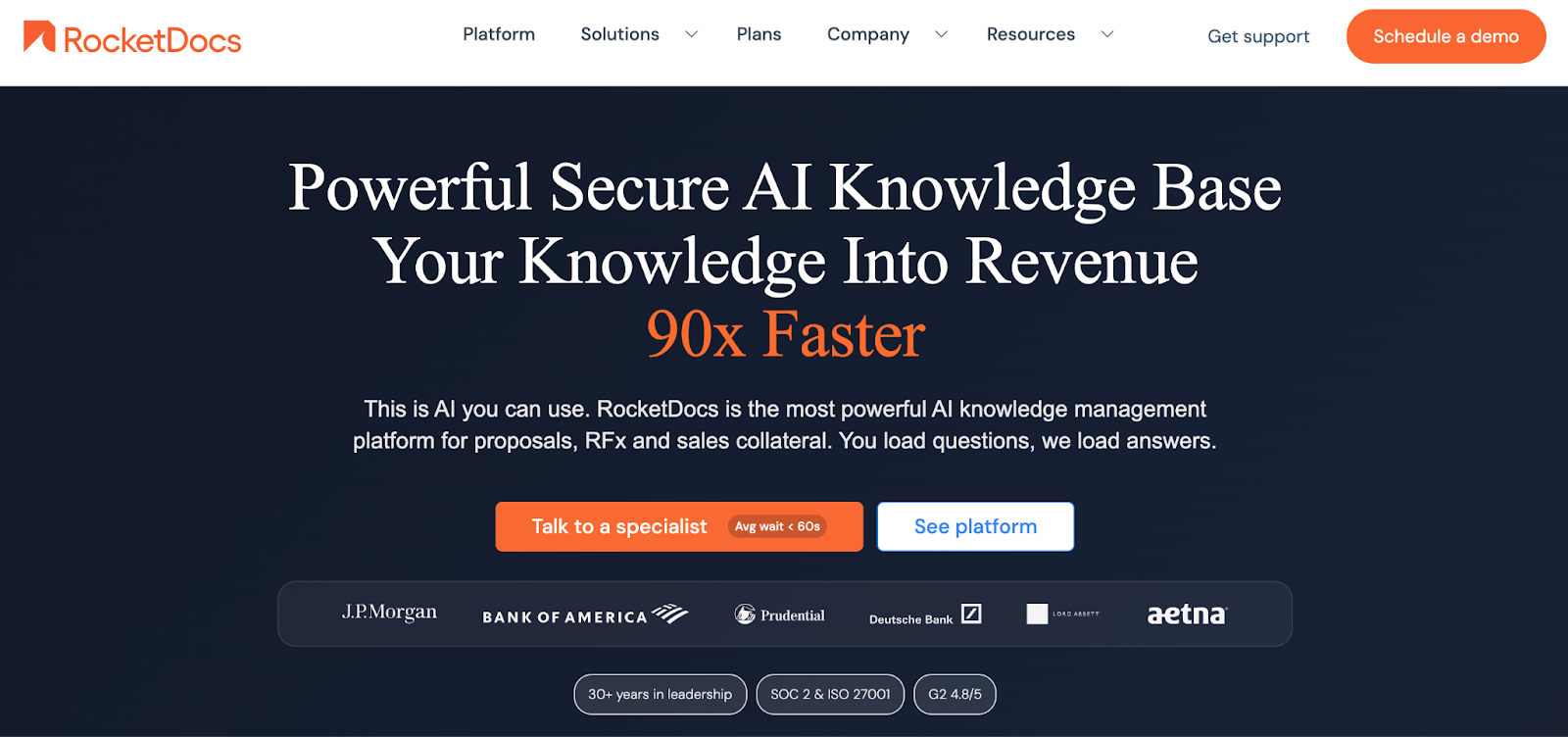
RocketDocs is a response management platform with a dedicated healthcare offering for health plans, provider organizations, and healthcare service companies.
Where RocketDocs shines
- Separate content libraries for commercial, Medicare Advantage, Medicaid, and exchange plans
- Workflows for HIPAA security questionnaires, vendor risk reviews, ACO reporting, and CMS audit support
- Private AI with a dedicated document store per customer, not used to train models
- Writers work in Word and Excel, with a two-way Salesforce sync
Where RocketDocs falls short
RocketDocs is library-based, so answers are only as current as the library. It has no call recording integration, so responses don't reflect what you learned in discovery. Most healthcare deployments take about four weeks.
Compliance and security
SOC 2 Type II and ISO 27001. Its trust page says it signs BAAs on request and supports HIPAA, HITECH, and HITRUST alignment. Data residency in the US and EU.
Best for: Health plans and provider organizations with many product lines and recurring CMS and compliance reporting.
Pricing: Not published. Quote-based.
6. Arphie
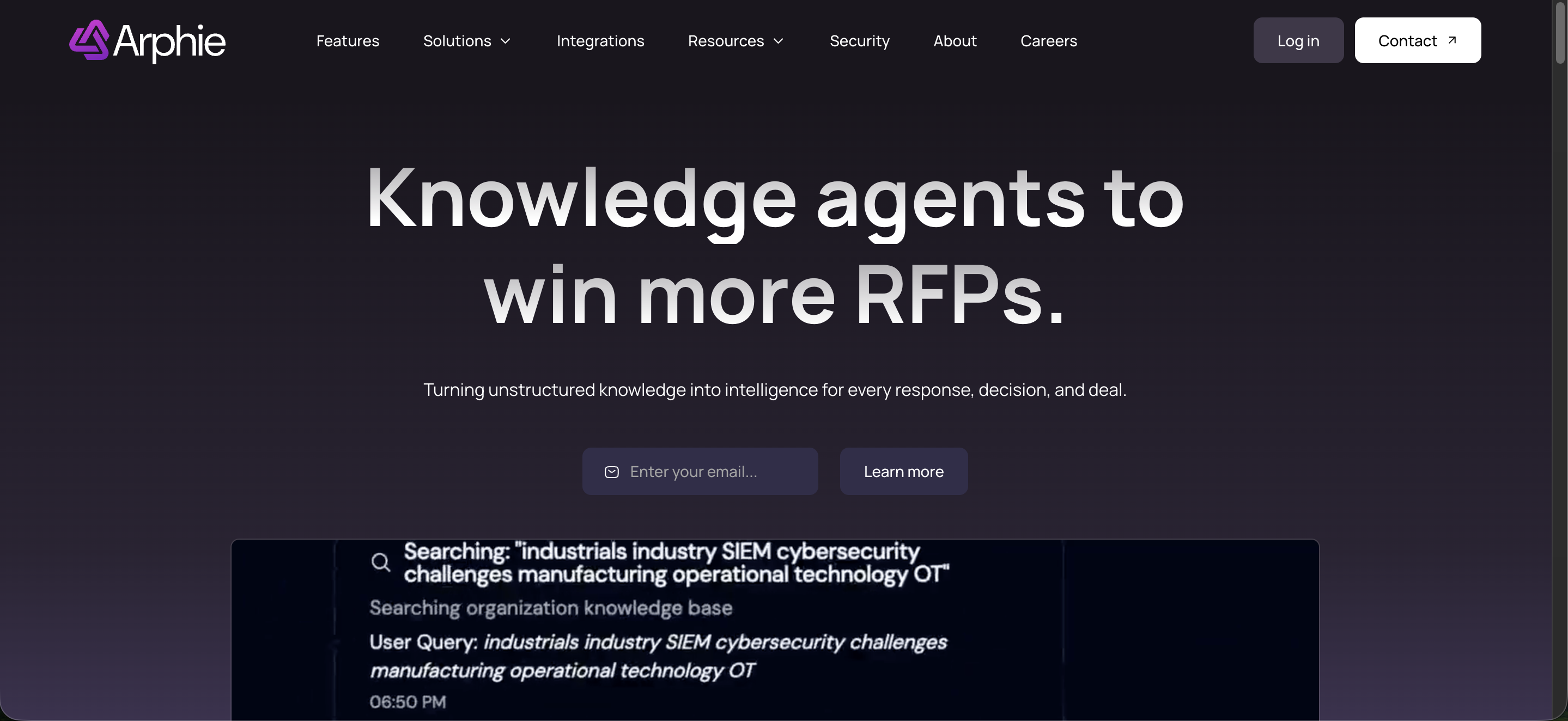
Arphie is an AI tool built for speed on structured questionnaires: security reviews, vendor assessments, and DDQs. HIPAA security questionnaires fit its sweet spot.
Where Arphie shines
- Fast auto-fill on structured, repeating question types
- Learns from approved answers over time
- Source attribution on generated answers
- Light interface with little onboarding friction
Where Arphie falls short
Arphie is built to answer forms, not to support the wider deal. It doesn't write proposals or deal briefs, and it doesn't reflect the buyer's profile from CRM or call context.
Compliance and security
SOC 2 Type 2, audited yearly, with zero data retention agreements with its AI model providers, per its security page.
Best for: Security and presales teams that answer a high volume of HIPAA and vendor security questionnaires.
Pricing: Not published. Quote-based.
How to choose RFP software for healthcare
Map how your team handles RFP management today, from intake and SME review to compliance sign-off, before you shortlist.
Final thoughts on RFP software for healthcare teams
Healthcare RFPs set a compliance bar most RFP software wasn't built for. Library tools work when someone owns the library and checks HIPAA language every time guidance changes. That doesn't scale, and in healthcare, one missed update means stale compliance text goes to a team that checks every answer.
If you have a dedicated bid desk, Loopio or Responsive will serve you well. If you're a health plan with many product lines, look at RocketDocs.
If you need compliance answers your buyers can trust without the library upkeep, SiftHub is built for that. Answers come from live sources and reflect each buyer's institution and risk profile. See how SiftHub handles a HIPAA-heavy healthcare RFP.