




AutogenAI is an AI-first proposal writing platform built for bid, proposal, tender, and grant teams, differentiated by Gamma Review's automated compliance checking and genuine net-new content generation rather than pure content-library retrieval. Teams look for alternatives when pricing transparency, native integrations, real-time content governance, or a scope beyond drafting into full deal context become the priority.
- AutogenAI's primary strength is Gamma Review — automated requirement extraction and compliance checking that traces every response back to its source evidence.
- The platform generates genuinely new proposal content per opportunity through Library AI, rather than only retrieving and reformatting existing answers.
- Verified G2 and reviewer limitations include no native visual or chart creation, manual version control during multi-contributor collaboration, limited native integrations, and enterprise-tier "contact us" pricing that is difficult for smaller teams to justify.
- Five alternatives evaluated: SiftHub, Loopio, Responsive, Arphie, and Inventive AI, each suited to different team profiles and integration needs.
- SiftHub is the strongest alternative for teams that need compliance-grade drafting connected to live deal context from CRM and Gong, broader native integrations, and a workflow extending into live in-call support.
AutogenAI is an AI-first proposal writing platform built for bid, proposal, tender, and grant teams, differentiated by Gamma Review's automated compliance checking and genuine net-new content generation rather than pure content-library retrieval. Teams look for alternatives when pricing transparency, native integrations, real-time content governance, or a scope beyond drafting into full deal context become the priority.
- AutogenAI's primary strength is Gamma Review — automated requirement extraction and compliance checking that traces every response back to its source evidence.
- The platform generates genuinely new proposal content per opportunity through Library AI, rather than only retrieving and reformatting existing answers.
- Verified G2 and reviewer limitations include no native visual or chart creation, manual version control during multi-contributor collaboration, limited native integrations, and enterprise-tier "contact us" pricing that is difficult for smaller teams to justify.
- Five alternatives evaluated: SiftHub, Loopio, Responsive, Arphie, and Inventive AI, each suited to different team profiles and integration needs.
- SiftHub is the strongest alternative for teams that need compliance-grade drafting connected to live deal context from CRM and Gong, broader native integrations, and a workflow extending into live in-call support.
AutogenAI occupies a distinct position in the proposal software market: it's one of the few platforms built to generate genuinely new proposal narrative, rather than only retrieving and reformatting previously approved answers. For bid, tender, and grant teams that need persuasive, compliance-checked writing at speed, particularly in government and contracting sectors, it's a strong, purpose-built tool.
Teams start looking for alternatives when their needs extend beyond narrative drafting: when they need the response connected to live CRM and call context, when pricing transparency and native integrations matter more than net-new generation, or when real-time content governance across contributors, rather than manual version control, becomes the bottleneck.
This guide covers the five strongest AutogenAI alternatives in 2026, what each does well, where each falls short, and which team profile fits each platform best.
Why teams look for AutogenAI alternatives
Based on verified G2 reviews and independent comparison data, four patterns drive teams to evaluate alternatives.
Pricing is opaque and enterprise-scaled. AutogenAI does not publish pricing; quotes are custom, and a verified G2 reviewer specifically describes it as "positioned and priced very much as an enterprise tool," citing opaque "contact us" pricing, minimum seat commitments, and additional onboarding fees as factors that make it difficult for smaller teams to justify.
No native visual or chart creation. A verified G2 reviewer flags that the platform does not support creating graphics, visuals, or charts directly within it, requiring teams to rely on separate tools, which the reviewer describes as breaking the workflow and adding extra steps to an otherwise streamlined process.
Version control and content freshness require manual management. AutogenAI supports collaboration and review workflows, but does not provide automated, real-time conflict detection or content freshness enforcement. Teams must manage consistency and version control manually as multiple contributors work on the same proposal; the same reviewer noted that collaboration "can feel a bit limited when multiple users are collaborating."
Limited native integrations and workflow depth. Independent comparisons note that AutogenAI functions largely as a standalone writing assistant with a content library that requires AutogenAI's own team to add new content, lacking the native integrations and project management features that broader RFP platforms provide.
The 5 best AutogenAI alternatives in 2026
1. SiftHub: Best for teams needing compliance-grade drafting connected to live deal context
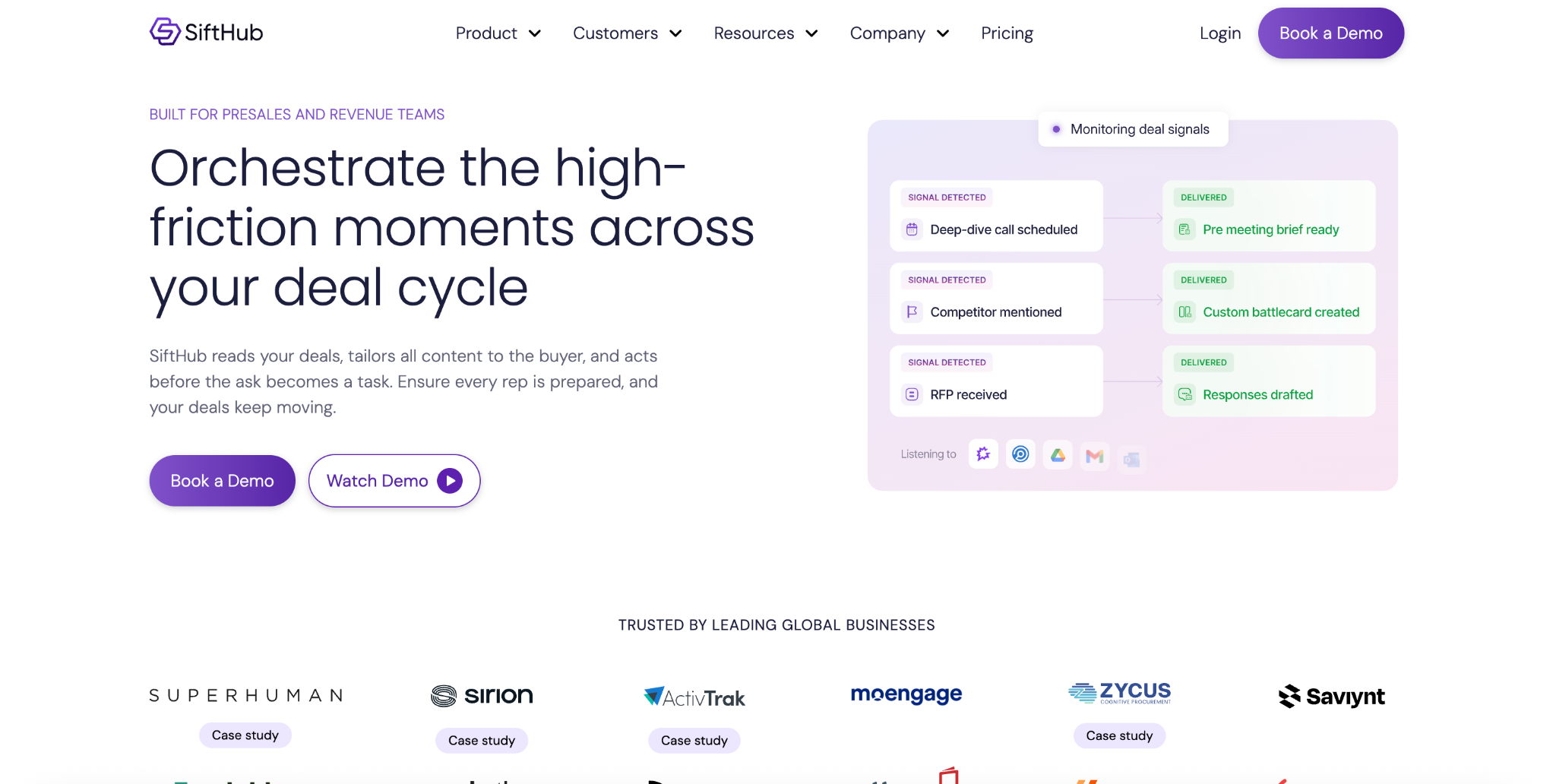
Where AutogenAI's Gamma Review checks a drafted response against compliance requirements after the fact, SiftHub's AI RFP software builds the compliance and content foundation from the moment an intake document lands.
SiftHub, an AI RFP software, reads the full RFP or tender document, including appendices and requirements buried deep in the file, and generates a structured checklist of milestones, mandatory submissions, and recommended attachments before drafting begins, similar in spirit to what Gamma Review verifies after a draft exists, but earlier in the process and tied directly to task assignment. Every generated answer carries source attribution, document name, owner, and last modified date, so reviewers can verify accuracy without hunting through separate files, addressing the same trust concern that pushes teams toward AutogenAI's evidence tracing in the first place.
Where AutogenAI generates net-new proposal narrative from its Library AI, SiftHub's AI teammate capabilities build a deal brief from CRM opportunity records and Gong call transcripts before response work even starts, surfacing which buyer priorities came up in previous conversations and which competitors are in play. Responses are then shaped by that same deal context, adapting tone and emphasis to the buyer's industry and stage, rather than relying on narrative generation alone.
SiftHub also closes the two governance gaps most commonly flagged in AutogenAI reviews: conflicting answers between contributors are flagged automatically before submission rather than requiring manual version control, and expired or outdated content is retired automatically rather than surfacing in a new draft. And where AutogenAI's workflow ends at a compliance-checked document, SiftHub's Pulse extends into live buyer conversations, surfacing deal-aware answers during calls and demos, grounded in the same account context and citing the source documents used to generate them.
Customer proof: Zycus achieved 1.5x productivity per rep and a 65% reduction in first-pass response time. Congruent Solutions generates responses 10x faster, freeing 50% more team bandwidth and achieving 100% knowledge visibility across their response workflow.
SiftHub is the right choice when:
- You need compliance-grade requirement tracing tied to live deal context, not just to a content library
- You need automated conflict detection and content freshness rather than manual version control across contributors
- Your knowledge sources span CRM, Gong, Google Drive, Confluence, Slack, and SharePoint, not just a proposal content library
- You need real-time in-call support for live buyer conversations alongside async document generation.
Book a demo to see SiftHub in action →
2. Loopio: Best for high-volume RFP teams with established content libraries
Loopio is built around a content library model — teams store, tag, and reuse approved answers, with Loopio surfacing relevant content when new questions arrive. It's one of the most widely adopted RFP response platforms, serving over 1,700 companies globally.
Strengths: Strong content governance and reuse workflows, a Chrome extension for portal-based questionnaire submission, and semantic search across the response library. Teams moving from AutogenAI's narrative-generation model to Loopio typically want stronger structured governance over a large existing answer set.
Limitations: Content library requires sustained manual curation — answers must be tagged, reviewed, and updated to stay current. No live deal context or buyer-specific personalization, and less suited to the narrative, persuasive proposal writing that AutogenAI is built for.
Loopio is the right choice when: Your primary workflow is structured RFP and questionnaire response rather than persuasive proposal or grant narrative, and you have dedicated proposal operations staff for content governance.
3. Responsive: Best for enterprise teams with structured approval workflows
Responsive (formerly RFPIO) is the category incumbent for enterprise-scale proposal operations, built for organizations that need highly configurable, multi-level approval chains and documented audit trails across large, distributed teams.
Strengths: Deep workflow configuration for complex approval requirements, strong analytics across the proposal portfolio, and a broad integration ecosystem. Teams that find AutogenAI's collaboration and version control too manual for their contributor volume consistently cite Responsive as offering more structured governance.
Limitations: Steep learning curve and significant implementation timeline. AI-generated responses can require substantial manual editing, similar to the editing overhead reviewers report with AutogenAI's drafts. No live deal context from CRM or Gong, and enterprise pricing reflects the platform's enterprise scope.
Responsive is the right choice when: Your organization needs structured, multi-level approval chains across departments and has dedicated proposal operations headcount to manage the platform.
4. Arphie: Best for teams wanting confidence-scored AI-native drafts
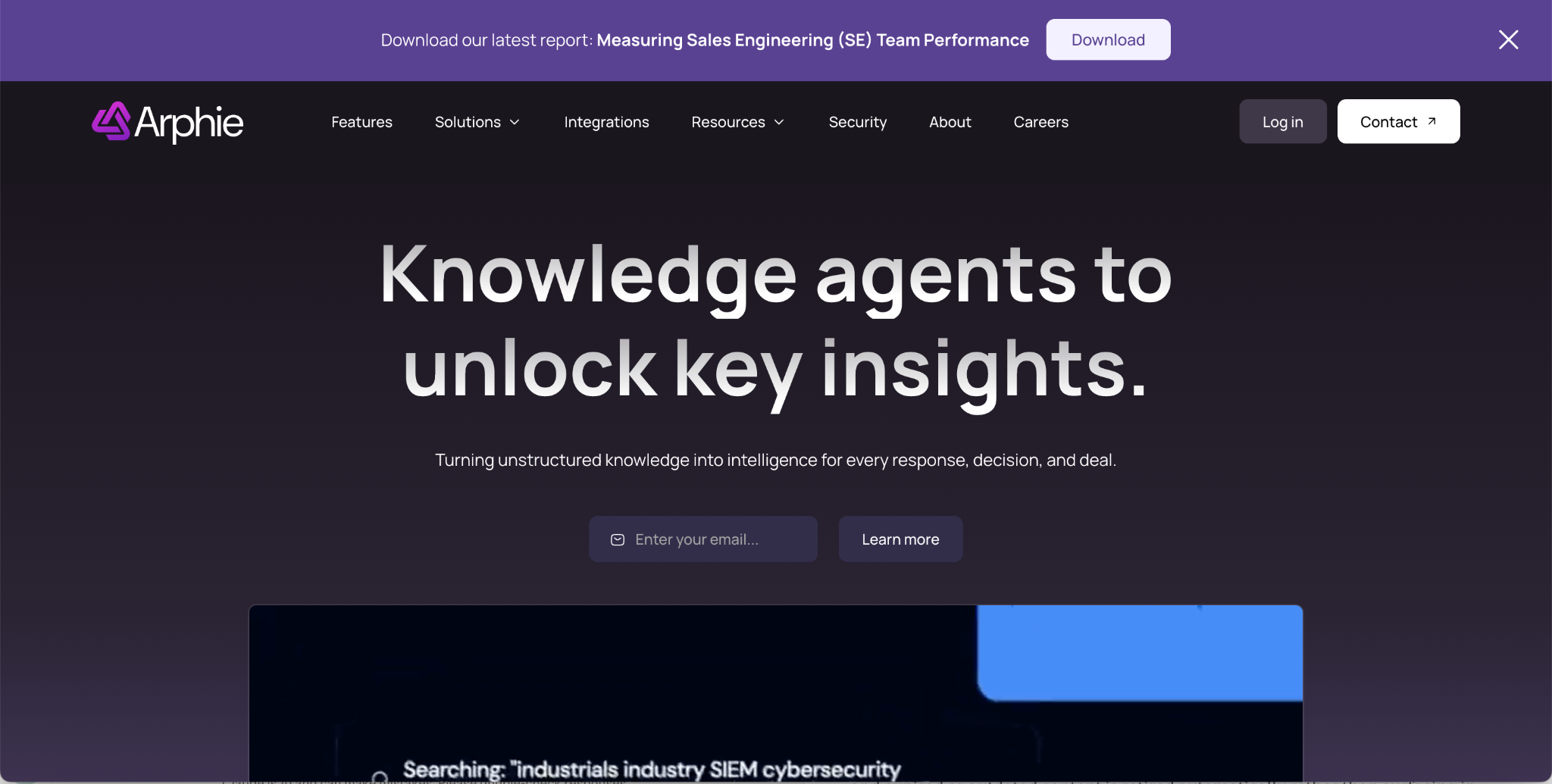
Arphie is an AI-native platform built specifically for RFP and security questionnaire response, with a unique emphasis on answer confidence scoring and explicit source citation on every AI-generated draft.
Strengths: Confidence scoring on every AI-generated answer helps reviewers prioritize which responses need closer attention, a more granular trust signal than AutogenAI's after-the-fact compliance check. Pricing is based on concurrent projects with unlimited users included, a different model from AutogenAI's seat-based enterprise pricing. Fast to onboard, with approximately a 5.0/5 rating across G2 reviews.
Limitations: Scope covers RFP and questionnaire response rather than the full grant and tender narrative writing AutogenAI supports. No live deal context from CRM or Gong. Newer platform with a smaller review volume than established alternatives.
Arphie is the right choice when: Your primary need is transparent, source-cited AI drafting with a simpler pricing model, and your workflow doesn't require the persuasive long-form narrative generation AutogenAI specializes in.
5. Inventive AI: Best for agentic AI with more transparent, usage-based pricing
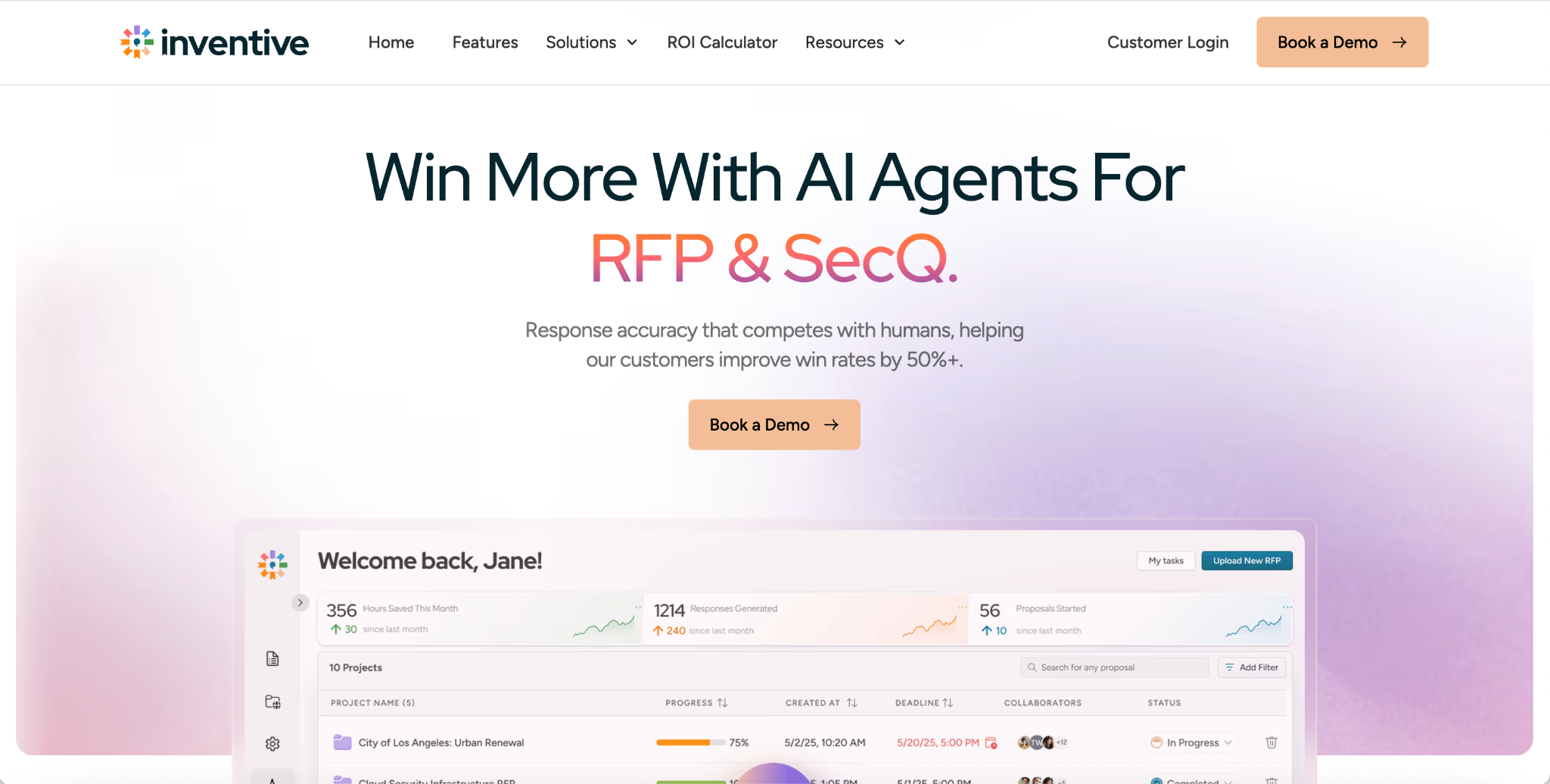
Inventive AI is an AI-powered RFP automation platform built around a Central Knowledge Hub, connecting to SharePoint, Notion, Confluence, Google Drive, Slack, and Salesforce, with built-in AI Agents that assist with competitive research and opportunity-specific guidance alongside drafting.
Strengths: Broader native integrations than AutogenAI's standalone model, an AI Content Manager that flags outdated or conflicting content automatically (addressing the manual version control gap reviewers cite in AutogenAI), and a usage-based pricing structure marketed as more transparent than AutogenAI's custom enterprise quotes, with unused capacity reported to roll over rather than expire.
Limitations: Reviewers note AI-generated responses still require manual fine-tuning for tone and compliance alignment, and pricing, while usage-based, still requires a custom quote call rather than published rates. It also doesn't carry a learning loop connecting submitted responses back to won or lost deal outcomes.
Inventive AI is the right choice when: You want AutogenAI's generative approach to drafting but need broader native integrations and a pricing model that scales with usage rather than a flat enterprise quote.
How to choose the right AutogenAI alternative
Question 1: Do you need compliance checking tied to a content library, or to live deal context?
AutogenAI's Gamma Review verifies a draft against requirements using its own content and library. If your response quality would benefit from also reflecting what was actually discussed with this specific buyer — CRM notes, call transcripts, competitive mentions- SiftHub's deal-context layer serves that need directly.
Question 2: Is pricing transparency and integration breadth more important than narrative generation quality?
AutogenAI's core strength is genuinely persuasive, net-new writing. If your bottleneck is actually pricing opacity, minimum seat commitments, or a narrow integration list, Inventive AI or Loopio address that more directly, generally at the cost of some narrative sophistication.
Question 3: Does your team need automated governance, or is manual version control acceptable?
Every alternative here handles multi-contributor collaboration differently. SiftHub and Inventive AI both address the manual version control and content freshness gap that AutogenAI reviewers flag automatically; Loopio and Responsive still rely on structured but largely manual governance processes.
Conclusion
AutogenAI is a well-built platform for teams whose core need is persuasive, compliance-checked proposal and grant narrative, particularly in government and contracting sectors where Gamma Review's requirement tracing earns its keep. For teams where the priority has shifted toward live deal context, pricing transparency, broader native integrations, or automated content governance rather than manual version control, the alternatives above cover those gaps directly.
SiftHub addresses the broadest set of those needs: compliance-grade source attribution tied to live CRM and Gong context, automated governance instead of manual version control, and real-time in-call support via Pulse that no async writing tool provides.