


.avif)

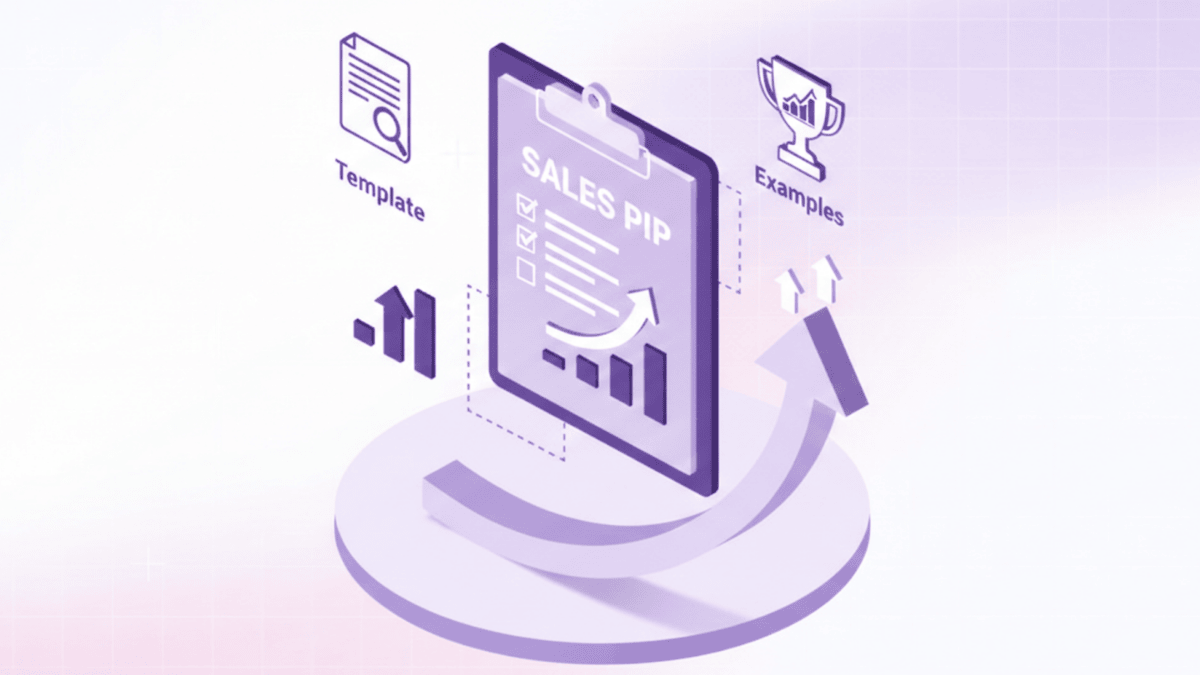
A sales performance improvement plan (PIP) is a formal document that turns vague underperformance into specific, measurable expectations with a defined timeline, genuine support, and clear consequences. Done well, a PIP gives struggling reps a real path to recovery while building a legally defensible record if termination becomes necessary.
- PIPs are appropriate when performance issues are significant, documented, and persist despite informal coaching; consistent quota misses, activity deficiencies, unresolved skills gaps, behavioral issues, or CRM compliance failures
- Every PIP must include specific, data-backed deficiency descriptions, SMART improvement goals with measurement methods, a timeline aligned with the sales cycle, documented support commitments, and clear consequences
- Legal defensibility requires consistent application across the team, documented check-ins after every meeting, and evidence that every promised resource was actually provided
- Four common scenarios covered: quota attainment (180-day), activity and pipeline generation (90-day), CRM compliance (60-day), and client relationship issues (90-day)
- The most common manager mistakes are vague, unmeasurable goals, unrealistic timelines for the sales cycle length, promising support and not delivering, and failing to document weekly check-ins.
A sales performance improvement plan (PIP) is a formal document that turns vague underperformance into specific, measurable expectations with a defined timeline, genuine support, and clear consequences. Done well, a PIP gives struggling reps a real path to recovery while building a legally defensible record if termination becomes necessary.
- PIPs are appropriate when performance issues are significant, documented, and persist despite informal coaching; consistent quota misses, activity deficiencies, unresolved skills gaps, behavioral issues, or CRM compliance failures
- Every PIP must include specific, data-backed deficiency descriptions, SMART improvement goals with measurement methods, a timeline aligned with the sales cycle, documented support commitments, and clear consequences
- Legal defensibility requires consistent application across the team, documented check-ins after every meeting, and evidence that every promised resource was actually provided
- Four common scenarios covered: quota attainment (180-day), activity and pipeline generation (90-day), CRM compliance (60-day), and client relationship issues (90-day)
- The most common manager mistakes are vague, unmeasurable goals, unrealistic timelines for the sales cycle length, promising support and not delivering, and failing to document weekly check-ins.
No sales manager enjoys telling a rep their performance is unacceptable and documenting what must change. But avoiding that conversation does not make the problem disappear — it delays the inevitable while the underperforming rep continues missing quota, the territory stays undercovered, and the team wonders why leadership tolerates inconsistent results.
A Performance Improvement Plan, or PIP, is the structured framework for that difficult conversation. It transforms a vague "do better" into specific, measurable expectations with a defined timeline and clear consequences. Done well, a PIP gives a struggling rep a genuine path to recovery while protecting the organization legally if termination becomes necessary.
This guide explains what sales PIPs are and when to use them, breaks down essential components, provides a complete template, walks through real examples, covers how to conduct PIP conversations effectively, and addresses the legal documentation requirements that make PIPs defensible.
What is a sales performance improvement plan?
A Performance Improvement Plan is a formal document that specifies the performance deficiencies an employee must correct, the measurable standards they must meet, the timeline for improvement, the support the organization will provide, and the consequences if improvement does not occur.
In sales, PIPs typically address consistent failure to meet quota, inadequate activity levels, poor pipeline management, client relationship problems, CRM compliance failures, or behavioral concerns.
The PIP serves three purposes: absolute clarity on expectations, a documented record for potential termination defense, and a structured coaching framework with measurable progress tracking.
PIPs are not punitive, but they are serious
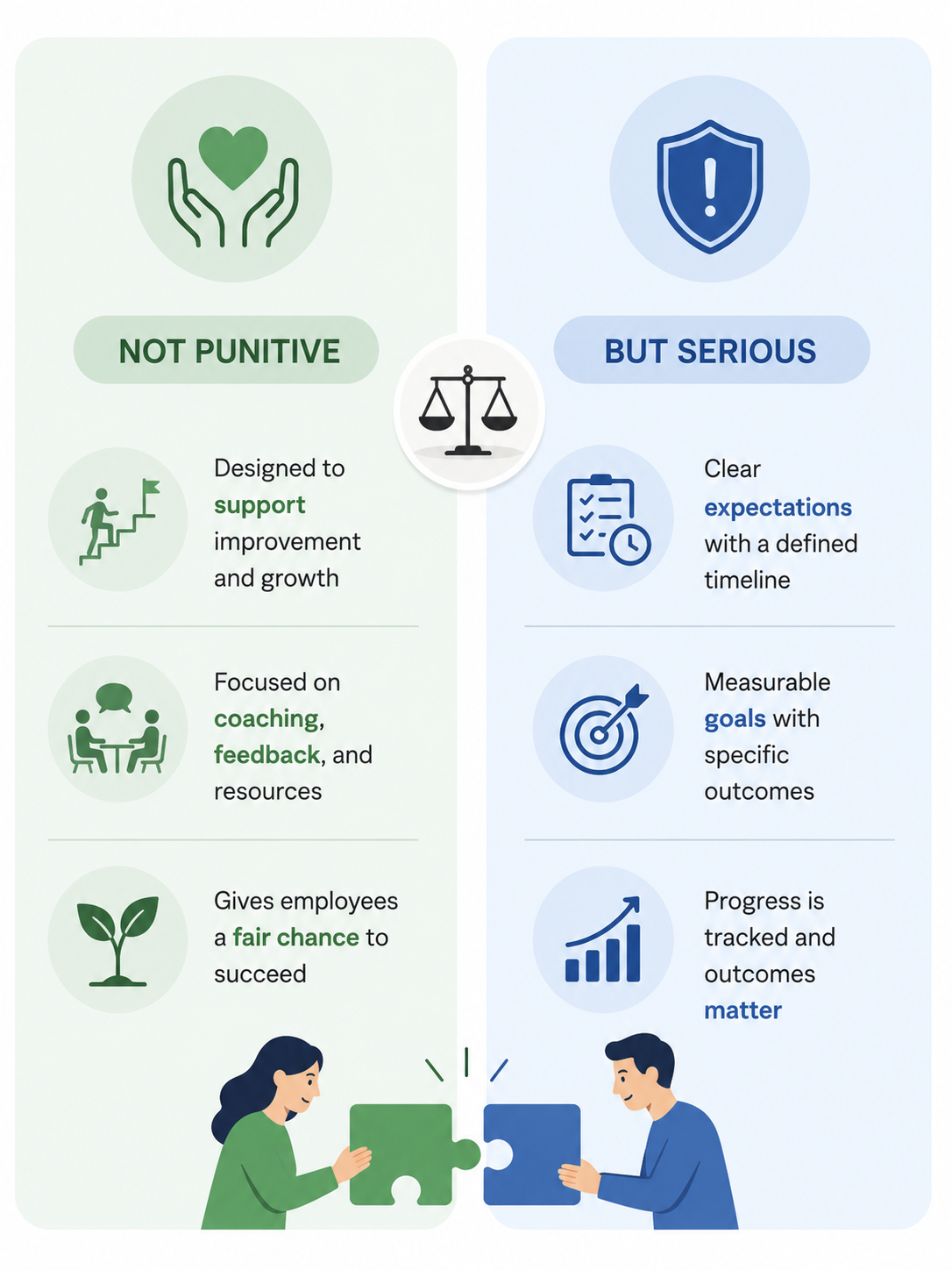
A common misconception is that PIPs are veiled termination notices. While PIPs often precede termination when improvement does not occur, the intent is a genuine opportunity for recovery. Organizations invest significant resources in hiring and training sales reps — terminating someone without attempting structured improvement wastes that investment.
That said, PIPs signal that the current performance level is unacceptable and continuation of that performance will result in termination. They are serious interventions, not routine coaching conversations. A rep on a PIP should understand they are at significant risk.
When to use a PIP in sales
PIPs are appropriate when performance issues are significant, documented, and have persisted despite informal coaching.
Consistent quota misses: A rep who consistently delivers 60% to 70% of quota over multiple quarters, despite adequate territory, reasonable targets, and coaching support — needs a PIP that specifies the minimum acceptable performance and the timeline for achieving it.
Chronic activity deficiencies: If pipeline generation, prospecting activity, or client engagement is consistently below expectations, and you have documented this through multiple conversations without improvement, a PIP establishes clear activity standards and tracks adherence.
Skills gaps that coaching has not resolved: Some reps struggle with specific skills, discovery questioning, objection handling, closing conversations, or technical product knowledge. If skills coaching over 60 to 90 days has not produced measurable improvement, a PIP formalizes the required competencies and provides a final opportunity with additional support.
Behavioral issues affecting the team: Chronic lateness, unprofessional communication with clients, failure to follow processes, or behavior that undermines team morale may require a PIP focused on specific behavioral standards rather than results metrics.
CRM and process compliance failures: Some reps consistently fail to update CRM, skip required approvals, or ignore documented processes. While this seems minor compared to quota attainment, systematic non-compliance creates operational problems and often correlates with poor results. A PIP can address these hygiene issues explicitly.
For teams where performance gaps include knowledge access — reps struggling to find the right case studies, competitive positioning, or technical answers during live deals — AI Teammate connects to your organization's live knowledge sources — CRM, Gong, Google Drive, Confluence, Slack, and past proposals, and surfaces verified answers in the tools reps already use, reducing the search and assembly work that pulls time away from selling.
[LEAD GENERATION FORM PLACEMENT]
Stop writing PIPs from scratch.
A free, fillable Sales PIP Template Pack — all four scenario templates pre-structured in Word, with goal-setting tables, check-in tracking, and signature pages. Open it, customize it, use it.
When NOT to use a PIP
Immediate fireable offenses: Incidents such as harassment, fraud, gross insubordination, or ethics violations do not require PIPs. These situations warrant immediate termination, not structured improvement plans.
New hires still ramping: If a rep has been in the role for less than the standard ramp period and is struggling, they may need additional training or mentoring rather than a formal PIP. However, if a new hire is showing fundamental fit problems or a complete unwillingness to follow coaching, early termination may be appropriate without a PIP.
Performance issues caused by circumstances beyond the rep's control: If a territory is truly unworkable, the product has major gaps, or management has set unrealistic targets, a PIP is inappropriate. Fix the structural problem before holding individuals accountable for predictable failure.
Components of an effective sales PIP
1. Clear identification of performance deficiencies
The PIP must specify exactly what is unacceptable. Not "your performance has been disappointing" but "you have delivered 64%, 58%, and 67% of quota over the past three quarters, whereas the minimum acceptable performance is 80% of quota."
Use data wherever possible. Reference specific CRM reports, activity logs, quota attainment records, or documented client complaints. Vagueness undermines the PIP's credibility and creates confusion about what actually needs to change.
2. Measurable improvement goals
The PIP must define success in concrete, verifiable terms. "Improve performance" is not a goal. "Achieve a minimum 90% of quota in each of the next two quarters" is a goal. "Complete 50 outbound prospecting touches weekly as tracked in CRM" is a goal. "Receive zero client complaints regarding responsiveness" is a goal.
Goals should be aggressive enough to represent genuine improvement but realistic enough to be achievable with focused effort. Setting impossible goals turns the PIP into termination theater rather than a sincere improvement attempt.
3. Defined timeline
Most sales PIPs run 30 to 90 days, depending on the issues addressed and the sales cycle length. Quota attainment goals typically require longer periods because monthly or quarterly results take time to accumulate. Activity or behavioral issues can show improvement more quickly and may warrant 30 to 60 day timelines.
The timeline must align with how performance is measured. If the quota is assessed quarterly, the PIP period should encompass at least one full quarter so the results are meaningful.
4. Support and resources provided
The PIP should specify what support the organization will provide: additional training, more frequent coaching sessions, shadowing opportunities with top performers, adjusted territory if relevant, or access to resources the rep previously lacked.
This component is legally and ethically important. If termination occurs and the rep claims they were set up to fail, documented evidence that the organization provided genuine support strengthens the defense that the PIP was a good-faith improvement attempt.
5. Check-in schedule
PIPs require regular progress reviews — typically weekly or biweekly meetings where the manager and rep review metrics, discuss obstacles, and adjust tactics if needed. These check-ins create accountability, provide ongoing coaching, and generate documentation of progress or lack thereof.
6. Consequences for non-improvement
The PIP must state clearly what happens if performance does not improve to acceptable levels — typically termination, though some PIPs specify probation extensions under certain circumstances. This clarity is essential; both parties must understand the stakes.
7. Signatures
Both manager and rep sign the PIP document, acknowledging they have reviewed and understand it. The signature does not indicate agreement with the assessment — the rep may disagree that their performance was unacceptable, but it confirms they have received the document and understand the expectations.
Legal and documentation requirements
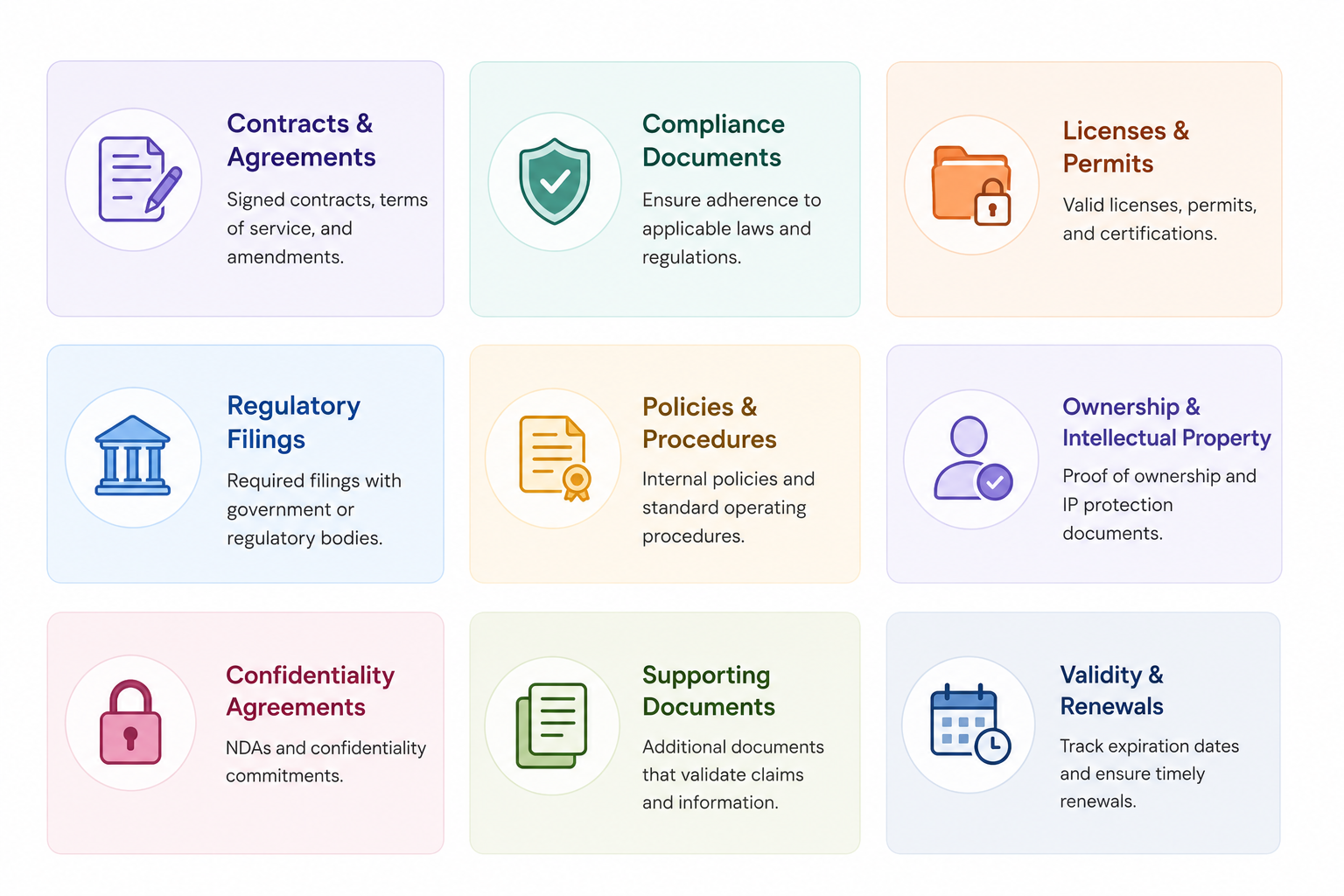
PIPs are legal documents as well as management tools. The documentation you create during the PIP process may become evidence in an employment dispute, wrongful termination claim, or discrimination allegation. Getting the documentation right matters as much as getting the goals right.
What makes a PIP legally defensible:
- Specific, documented evidence — performance deficiencies must reference specific data points, dates, and documented prior conversations. "Your performance has been poor" is not a defensible statement. "You achieved 58% of quota in Q1, 64% in Q2, and 67% in Q3, as documented in our quarterly performance reviews dated [dates]" is.
- Consistent application — if one rep is placed on a PIP for 70% quota attainment and another rep with equivalent attainment is not, the inconsistency creates discrimination risk. PIPs must be applied consistently across the team.
- Genuine support documented — every resource promised must be delivered and documented. If the PIP states weekly coaching sessions will be provided, those sessions must happen and be recorded.
- Reasonable goals — PIPs that set goals no reasonable person could achieve in the timeline given are legally vulnerable. Goals must be ambitious but achievable.
Documentation to maintain throughout the PIP:
- Written notes from every check-in meeting, signed or acknowledged by both parties
- Performance data referenced at each check-in — CRM exports, quota attainment reports, activity logs
- Records of support provided — training attendance, coaching session notes
- Any performance data that materially changes the picture in either direction
How PIPs differ from progressive discipline:
Progressive discipline (verbal warning → written warning → final written warning → termination) is a sequential escalation process often used for behavioral or attendance issues. PIPs are designed specifically for performance improvement — they include goals, support, and a recovery pathway. In some organizations, a PIP is the written warning stage of progressive discipline. In others, they run in parallel. Clarify with HR which framework applies in your organization before issuing a PIP.
Sales PIP template
Below is a complete PIP template you can adapt for your organization. Replace bracketed sections with specifics for your situation.
Performance Improvement Plan
Employee name: [Rep Name] Position: [Sales Title] Manager: [Manager Name] Date issued: [Date] Review period: [Start Date] to [End Date]
Purpose of this plan
This Performance Improvement Plan outlines specific performance issues that require immediate and sustained improvement, establishes measurable goals, and defines the timeline and support resources available to help you succeed. This plan is designed to provide a clear path forward and to ensure mutual understanding of expectations.
Performance issues requiring improvement
The following performance deficiencies have been observed and documented through [time period]:
[Issue category, e.g., quota attainment] [Specific description with data: "Your quota attainment for the past three quarters has been 58%, 64%, and 67%, whereas the minimum acceptable performance is 80% of quota. Your territory has a comparable opportunity to peers who are consistently achieving 95% to 110% of quota."]
[Issue category, e.g., activity levels] [Specific description with data: "CRM records show an average of 18 prospecting touches per week over the past quarter, compared to the team standard of 40 touches per week and top performer average of 65 touches per week."]
[Additional issues as relevant]
Improvement goals and success criteria
To complete this performance improvement plan, you must achieve the following measurable goals by [end date]:
[Goal 1]: [Specific, measurable target] Measurement method: [How this will be tracked]
[Goal 2]: [Specific, measurable target] Measurement method: [How this will be tracked]
[Goal 3]: [Specific, measurable target] Measurement method: [How this will be tracked]
Support and resources provided
To support your improvement efforts, the following resources and support will be provided:
- [e.g., Weekly one-on-one coaching sessions with your manager]
- [e.g., Access to [specific training program or materials]]
- [e.g., Opportunity to shadow [top performer name] on client calls]
- [e.g., Bi-weekly pipeline review sessions with sales operations]
Progress review schedule
We will meet [frequency, e.g., weekly] on [day/time] to review your progress against the goals outlined above. These meetings will include review of performance metrics, discussion of obstacles and challenges, adjustment of tactics and approach as needed, and documentation of progress and feedback.
Consequences
Successful completion of this plan means achieving all stated goals by [End Date]. Upon successful completion, you will return to standard performance management processes.
If the goals outlined in this plan are not met by [End Date], further action up to and including termination of employment may occur.
Acknowledgment
I acknowledge that I have received and reviewed this Performance Improvement Plan. I understand the performance issues identified, the goals I must achieve, the timeline for improvement, and the consequences if improvement does not occur.
Employee Signature: _________________________ Date: _________
Manager Signature: _________________________ Date: _________
HR Representative Signature: _________________________ Date: _________
PIP examples for common scenarios
Example 1: Quota attainment issues
Performance issue: John has delivered 62%, 58%, and 65% of quota over the past three quarters. The minimum acceptable performance threshold is 80% of quota.
Improvement goals:
- Achieve a minimum 85% of the quarterly quota in Q2 (April–June)
- Achieve a minimum 90% of the quarterly quota in Q3 (July–September)
- Maintain a pipeline coverage ratio of a minimum of 3.5x quarterly quota throughout the PIP period
Support provided:
- Weekly pipeline review with sales operations to identify at-risk deals early
- Bi-weekly strategy sessions with the manager to review large opportunity pursuit tactics
- Access to pre-approved discount authority for deals over $50K to improve close rates
Timeline: 180 days (two full quarters)
Example 2: Activity and pipeline generation deficiencies
Performance issue: Sarah's prospecting activity averages 22 touches per week versus the team standard of 45 touches per week. Her pipeline coverage is 1.8x quota versus the required 3.0x, creating predictable quota attainment problems.
Improvement goals:
- Complete a minimum of 45 qualified prospecting touches per week as tracked in CRM, measured weekly
- Build a pipeline to a minimum 3.0x quarterly quota within 60 days, maintained thereafter
- Book a minimum of 8 qualified discovery meetings per month
Support provided:
- Daily activity accountability check-ins for the first two weeks
- Access to the prospecting training course and weekly role-play sessions for the first month
- Revised target account list with higher-fit prospects to improve conversion rates
Timeline: 90 days
Example 3: CRM compliance and process adherence
Performance issue: Mike consistently fails to update CRM opportunity stages, resulting in inaccurate forecasts. Over the past quarter, 60% of his opportunities had no activity logged for more than 30 days, and 40% of closed deals were not marked closed until prompted by management.
Improvement goals:
- 100% of opportunities updated with current stage and next steps within 24 hours of any client interaction
- Zero opportunities with no logged activity for more than 14 days
- All closed deals are marked closed in CRM within 48 hours of contract signature
Support provided:
- Weekly CRM hygiene review with the manager for the first month
- Calendar reminder system for daily CRM updates
- Access to CRM training refresher and process documentation
Timeline: 60 days
Example 4: Client relationship and communication issues
Performance issue: Rachel has received three documented client complaints in the past quarter regarding slow responsiveness, missed commitments on follow-up, and unprofessional communication tone. Client satisfaction scores for her accounts average 6.2/10 versus team average of 8.4/10.
Improvement goals:
- Zero client complaints regarding responsiveness or communication professionalism during the PIP period
- Respond to all client requests within 4 business hours (even if a full answer requires more time, acknowledge receipt and provide a timeline)
- Achieve a minimum client satisfaction score of 8.0/10 on accounts surveyed during the PIP period
Support provided:
- Communication skills coaching with [external coach or senior leader]
- Weekly account review to identify at-risk relationships early
- Manager shadowing on challenging client interactions for the first month
Timeline: 90 days
How to conduct PIP meetings
The initial PIP meeting
Schedule dedicated time in a private setting. Do not deliver a PIP in passing or in a group setting. Bring two copies of the written PIP document.
Open with direct clarity: "I need to discuss some serious performance concerns and place you on a formal Performance Improvement Plan." Do not soften the message so much that the rep misses the gravity.
Walk through the documented performance issues. Use data. Reference specific examples. Allow the rep to respond, but do not turn this into a negotiation about whether the problems exist. By the time you are issuing a PIP, that question has been answered.
Explain the improvement goals, timeline, support being provided, and consequences. Make sure the rep understands what success looks like and what happens if they do not achieve it.
End by signing the document together and scheduling the first check-in. Be empathetic but firm — this is hard news to deliver and receive, but ambiguity helps no one.
Weekly check-in meetings
Use a consistent structure: review metrics against goals, discuss what is working and what is not, identify obstacles, adjust tactics, and document the conversation in writing.
Be honest about progress or lack thereof. If the rep is falling short, say so clearly rather than offering false optimism that delays the inevitable difficult decision.
These meetings are coaching opportunities. If you see effort and incremental improvement, support it. If you see no meaningful change, document that for the final decision.
Emotional preparation
PIPs are emotionally challenging for both parties. The rep is facing potential job loss. The manager is responsible for someone's livelihood and must deliver difficult feedback repeatedly.
Prepare mentally to stay professional, direct, and compassionate. The goal is clarity and support, not comfort or punishment. Some reps will respond defensively, some will shut down, some will commit intensely. Your job is to remain consistent regardless of their emotional response.
Common PIP mistakes managers make
What happens after the PIP period
Successful completion: The rep met all stated goals and demonstrated sustained improvement. The PIP concludes, the rep returns to standard performance management, and the organization monitors to ensure improvement sticks. Some organizations keep reps on informal watch after PIP completion to catch backsliding early.
Partial improvement warrants extension: The rep showed genuine effort and meaningful progress but did not quite hit all targets. In some cases, extending the PIP by 30 to 60 days with adjusted goals is appropriate. This should be the exception rather than the rule — PIPs are not indefinite probationary periods.
Insufficient improvement leading to termination: The rep did not meet the goals, did not demonstrate sustained effort, or achieved some metrics while failing critically on others. Termination proceeds with documented evidence that the organization provided clear expectations, support, and a fair timeline.
The termination conversation references the PIP documentation directly: "We placed you on a Performance Improvement Plan on [date] with specific goals and support. Despite these efforts, you have not achieved the required performance level. As outlined in the plan, we are terminating your employment effective [date]."
Conclusion
Sales PIPs are uncomfortable but essential tools for managing performance accountability. They transform vague dissatisfaction into measurable expectations, provide genuine improvement pathways for reps who can recover, protect organizations legally when termination becomes necessary, and signal to the broader team that consistent underperformance has consequences.
Done well, PIPs save some struggling reps while building the documented case for parting ways with those who cannot or will not improve. Done poorly, they waste time, create legal risks, and allow performance problems to fester. The difference is clarity, consistency, and commitment to following through on the standards you establish.