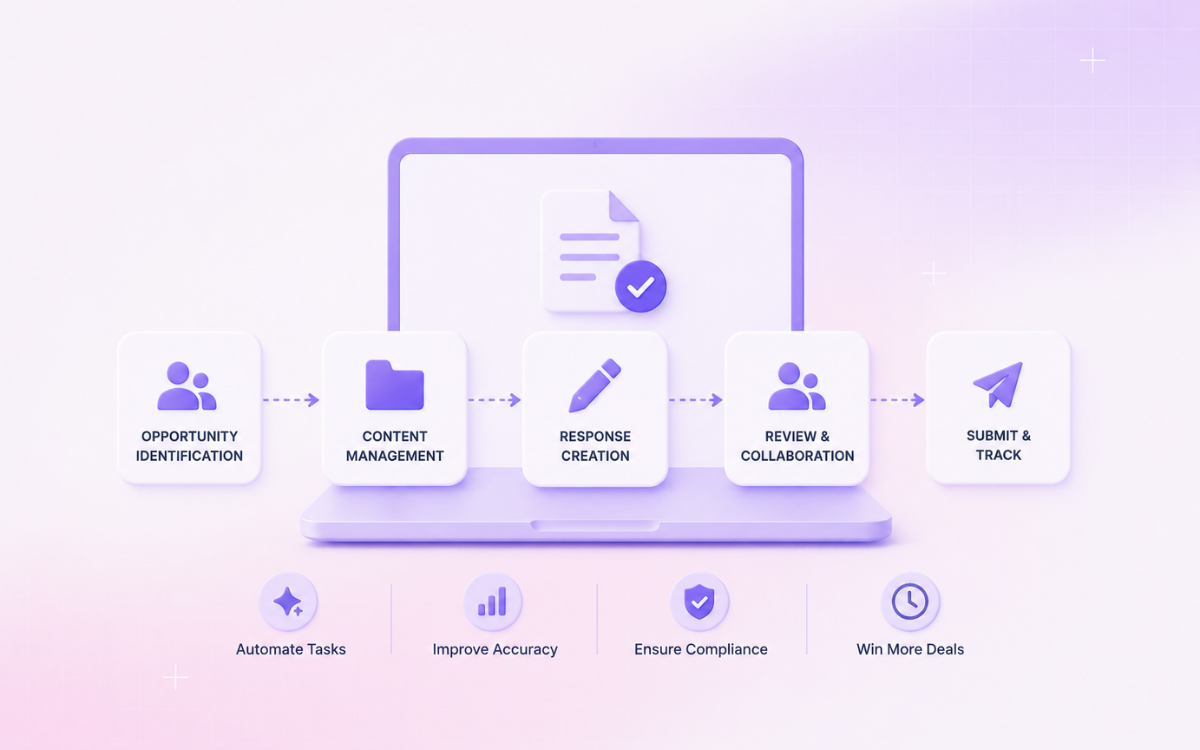




Proposal workflow software and RFP response workflow tools solve a coordination problem, not just a writing one: task assignment, approval routing, version control, and status visibility across everyone touching a response, sales, SMEs, legal, and security. This guide evaluates five platforms specifically on workflow and collaboration capability, not drafting speed alone, since that's the dimension buyers researching "workflow software" actually care about.
- The core workflow features that separate a real platform from email and shared documents are task assignment with deadlines, automatic approval routing, real-time status visibility, and version control across every contributor.
- RFP360, one of the more established names in this space, is now part of Responsive (formerly RFPIO acquired RFP360), so evaluating them as fully separate options is inaccurate; they're the same company today.
- Content-library platforms (Loopio, Qvidian) pair workflow tooling with a governed answer repository; broader document-workflow tools (PandaDoc) extend into e-signature and tracking but weren't built RFP-specific.
- SiftHub pairs workflow coordination, automatic task routing, deadline visibility, and reassignment with governance that runs on live-connected knowledge, so the workflow isn't just tracking status on a static document; it's routing questions to the right person based on content type automatically.
- Most workflow software in this category is priced on a custom quote basis, so total cost of ownership, implementation time plus the labor of maintaining the underlying knowledge, is a better comparison point than list price.
Proposal workflow software and RFP response workflow tools solve a coordination problem, not just a writing one: task assignment, approval routing, version control, and status visibility across everyone touching a response, sales, SMEs, legal, and security. This guide evaluates five platforms specifically on workflow and collaboration capability, not drafting speed alone, since that's the dimension buyers researching "workflow software" actually care about.
- The core workflow features that separate a real platform from email and shared documents are task assignment with deadlines, automatic approval routing, real-time status visibility, and version control across every contributor.
- RFP360, one of the more established names in this space, is now part of Responsive (formerly RFPIO acquired RFP360), so evaluating them as fully separate options is inaccurate; they're the same company today.
- Content-library platforms (Loopio, Qvidian) pair workflow tooling with a governed answer repository; broader document-workflow tools (PandaDoc) extend into e-signature and tracking but weren't built RFP-specific.
- SiftHub pairs workflow coordination, automatic task routing, deadline visibility, and reassignment with governance that runs on live-connected knowledge, so the workflow isn't just tracking status on a static document; it's routing questions to the right person based on content type automatically.
- Most workflow software in this category is priced on a custom quote basis, so total cost of ownership, implementation time plus the labor of maintaining the underlying knowledge, is a better comparison point than list price.
Most RFP delays don't come from the writing. They come from the coordination underneath it: a question sitting in an SME's inbox for three days, a reviewer who didn't know they were supposed to approve section 4, two people editing the same paragraph in parallel without realizing it. Proposal workflow software and RFP response workflow tools exist specifically to solve that problem, not to write faster, but to make sure the right person does the right task at the right time, with full visibility into where everything stands.
This guide evaluates five platforms specifically on workflow and collaboration capability: task assignment, approval routing, version control, and status visibility, since that's what distinguishes real workflow software from a shared drive with a deadline reminder.
What actually matters in proposal and RFP workflow software
Four capabilities separate genuine workflow software from a content library with a task list bolted on.
Task assignment with real deadline tracking. Sections need named owners, due dates, and automatic reminders, not a spreadsheet someone updates manually.
Approval routing that matches your org chart. Legal questions should route to legal, security questions to InfoSec, technical questions to engineering, automatically, based on content type, not by someone remembering to forward an email.
Real-time status visibility. Anyone on the project, not just the proposal manager, should be able to see what's done, what's in review, and what's overdue without asking.
Version control across simultaneous contributors. When multiple people touch the same document, conflicting edits need to surface before submission, not after a buyer notices two different answers to the same question.
The 5 best proposal & RFP response workflow platforms in 2026
Quick comparison
1. SiftHub: Best for workflow tied to live, governed knowledge
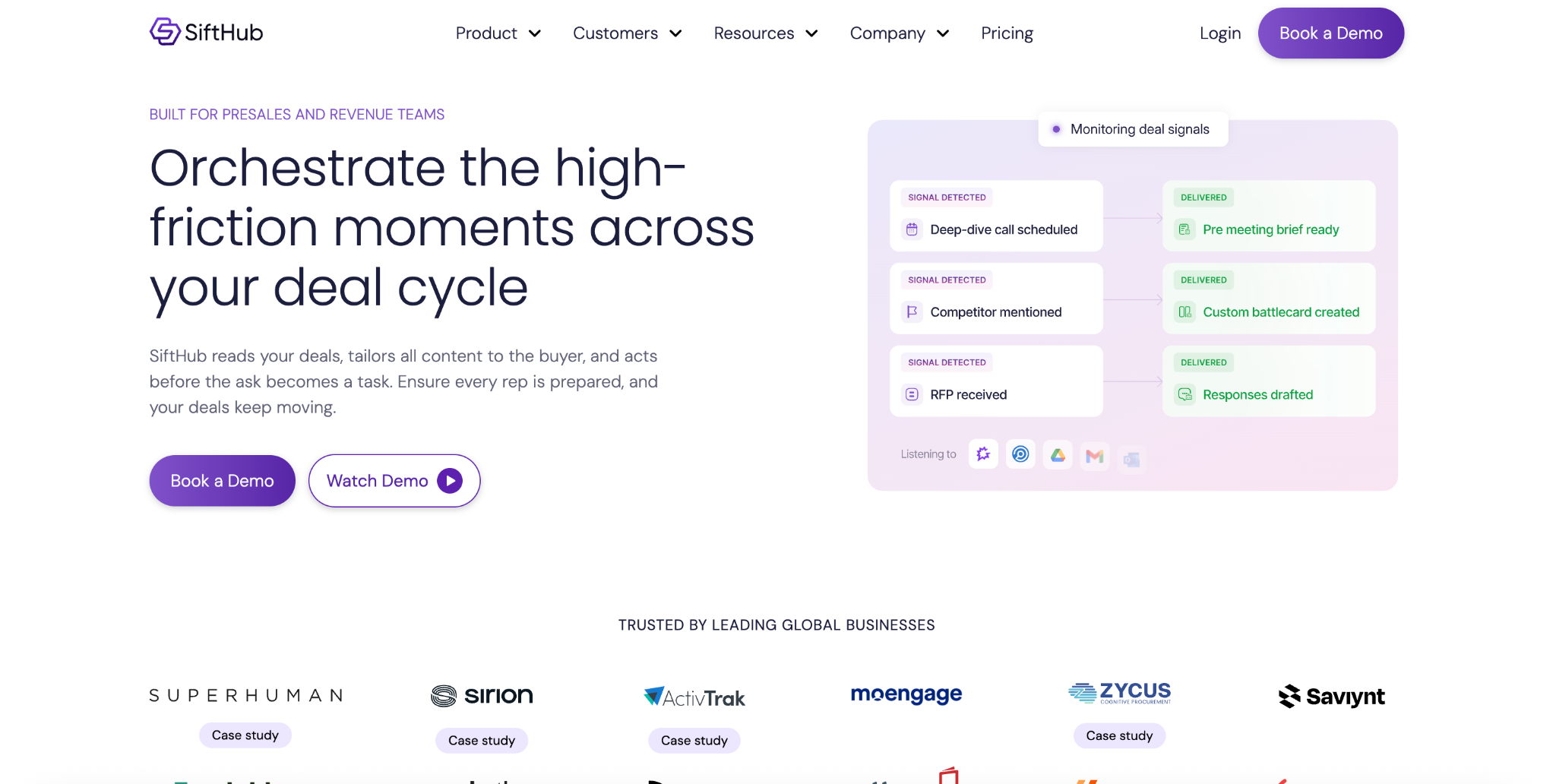
Most workflow tools coordinate people around a static document. SiftHub's project management capabilities route questions to the right SME automatically, based on content type: legal questions to legal, security questions to InfoSec, technical engineering questions, rather than requiring a proposal manager to manually triage and assign every section.
Deadline visibility and workload tracking run across every active RFP simultaneously, not one project at a time, so a proposal manager can see where a specific contributor is overloaded before it becomes a missed deadline. Because the same platform generates answers from connected knowledge sources, version control isn't just tracking who edited a document last; conflicting answers between contributors are flagged automatically before submission, and content that's gone stale is retired rather than surfacing in a live draft.
SiftHub is the right choice when you need workflow coordination that's connected to the same governed knowledge base driving your responses, not a task tracker layered on top of a separate content system.
2. Responsive (including RFP360): Best for enterprise teams with complex approval chains
Responsive's workflow and collaboration tooling lets teams assign writers, approvers, and deadlines at any point in a project, with notifications and task functions built to move a proposal toward submission without email threads or shared spreadsheets. RFP360, one of the earlier dedicated names in dual-sided RFP workflow (supporting both the issuing and responding sides of a solicitation), is now part of the Responsive product family following RFPIO's acquisition of the company, worth knowing since some comparison content still lists them as if they were independent competitors.
Reviewers consistently point to the platform's task visibility, dashboards, and task lists that make it clear who's working on what and when something is due, as a genuine strength for teams managing multiple contributors across a complex approval chain.
Limitations: Configuring multi-level approval chains correctly takes real setup investment, and some users report reviewing teams occasionally getting skipped in the approval sequence without manual double-checking.
Responsive is the right choice when your organization needs configurable, multi-level approval workflows across a large distributed team, and has the operational capacity to set that configuration up properly.
3. Loopio: Best for high-volume teams with dedicated content operations
Loopio's workflow tooling centers on structured review cycles layered on top of its content library; task assignment and progress tracking exist, but the underlying answer quality still depends on how well-maintained the library is, since the workflow surfaces existing content rather than generating new responses from external context.
For teams with an established content operations function, this pairing works well: the workflow ensures the right reviewer sees the right section, while the library ensures that section starts from an approved answer rather than a blank page.
Limitations: Workflow visibility is strong for a single project; portfolio-level visibility across many concurrent RFPs depends on how the library and tagging structure were originally set up. No live deal-context routing.
Loopio is the right choice when: your primary workflow need is structured review and reuse of a governed content library, with dedicated staff maintaining that library over time.
4. Qvidian: Best for regulated industries needing strict document governance
Qvidian's workflow strength is document governance rather than speed: every edit is logged with author and timestamp, approval chains are built for organizations that need a defensible audit trail, and version management is a named differentiator for regulated industries where "who approved this and when" is a compliance question, not just an operational one.
Limitations: Content is edited through a desktop Word add-in rather than natively in-browser, and workflow configuration for a large enterprise rollout typically takes a multi-month setup investment.
Qvidian is the right choice when your workflow requirements are driven by audit and compliance obligations as much as coordination efficiency, and you have the runway for a longer implementation.
5. PandaDoc: Best for sales-led teams needing proposals through signature
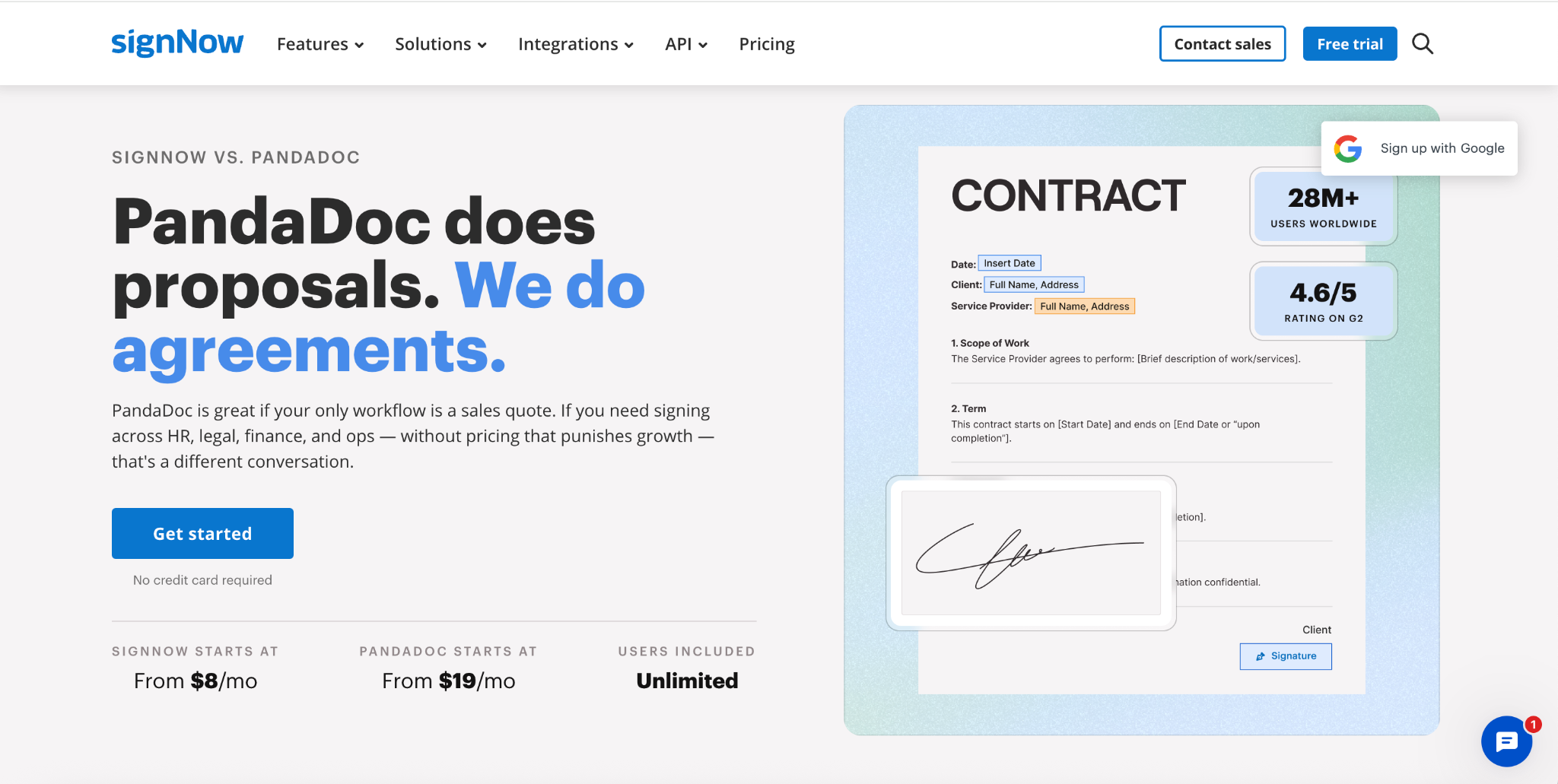
PandaDoc isn't RFP-specific; its workflow covers the broader universe of business documents: proposals, quotes, and contracts, with approval workflows and version history built around getting a document from draft to signed rather than through a compliance-heavy questionnaire process.
For teams whose "RFP response workflow" is really a sales proposal that needs to move quickly from draft to client signature, PandaDoc's combined workflow and e-signature functionality removes a handoff to a separate tool that RFP-specific platforms typically don't cover.
Limitations: Approval and version control tooling is built for general business documents, not RFP-specific compliance workflows, and it lacks the content library depth or SME-routing logic purpose-built RFP platforms offer.
PandaDoc is the right choice when your workflow ends at a signed proposal rather than a scored RFP evaluation, and e-signature integration matters more than RFP-specific compliance routing.
How to choose the right workflow software
If your bottleneck is routing questions to the right person automatically: SiftHub's content-type-based routing removes the manual triage step that most platforms still require a proposal manager to do by hand.
If you need configurable, multi-level approval chains: Responsive offers the deepest configuration for complex, multi-department sign-off sequences.
If your workflow depends on a large, governed content library: Loopio and Qvidian both pair workflow tooling with library governance, Loopio for general enterprise use, Qvidian specifically for regulated, audit-heavy industries.
If your process ends at a signature, not a scored evaluation: PandaDoc's broader document-workflow scope, including e-signature, fits proposals that function more like sales contracts than compliance questionnaires.
Conclusion
Proposal and RFP response workflow software earns its cost by removing coordination friction, not by writing faster. The right platform depends on where your actual bottleneck sits: automatic routing and live-connected governance, complex multi-level approvals, content library maintenance, audit-heavy compliance, or a workflow that needs to end in a signed document rather than a scored submission.