



The best AI tools for deal acceleration in 2026 work across the full sales cycle, from surfacing in-market accounts to closing deals faster with AI-generated proposals, briefs, and responses.
- SiftHub is the strongest choice for mid to late-funnel deal acceleration. It converts deal signals from your entire GTM stack into ready-to-use outputs that move stalled opportunities forward
- Gong remains the standard for conversation intelligence and deal risk detection across 5,000+ companies worldwide
- Clari and Salesloft merged in 2025 to form a unified revenue orchestration platform. The combination of forecasting and sales engagement is significant for teams evaluating either tool
- 6sense leads on buyer intent data, capturing 1 trillion signals daily to identify in-market accounts before they raise their hands
- ZoomInfo Copilot has expanded well beyond prospecting; it now surfaces deal signals and at-risk contact gaps throughout the active sales cycle
- Outreach, Seismic, Mindtickle, and Nooks each accelerate a specific stage, engagement, content, readiness, and outbound pipeline generation, respectively
- Microsoft Copilot for Sales is the best CRM-native option for teams already running on Dynamics 365 or Salesforce inside the Microsoft 365 ecosystem
The best AI tools for deal acceleration in 2026 work across the full sales cycle, from surfacing in-market accounts to closing deals faster with AI-generated proposals, briefs, and responses.
- SiftHub is the strongest choice for mid to late-funnel deal acceleration. It converts deal signals from your entire GTM stack into ready-to-use outputs that move stalled opportunities forward
- Gong remains the standard for conversation intelligence and deal risk detection across 5,000+ companies worldwide
- Clari and Salesloft merged in 2025 to form a unified revenue orchestration platform. The combination of forecasting and sales engagement is significant for teams evaluating either tool
- 6sense leads on buyer intent data, capturing 1 trillion signals daily to identify in-market accounts before they raise their hands
- ZoomInfo Copilot has expanded well beyond prospecting; it now surfaces deal signals and at-risk contact gaps throughout the active sales cycle
- Outreach, Seismic, Mindtickle, and Nooks each accelerate a specific stage, engagement, content, readiness, and outbound pipeline generation, respectively
- Microsoft Copilot for Sales is the best CRM-native option for teams already running on Dynamics 365 or Salesforce inside the Microsoft 365 ecosystem
Deals stall because reps can't find the right answer fast enough, follow-ups slip, RFPs sit unanswered, and context gets lost between calls.
AI tools for deal acceleration solve that problem not by replacing reps but by removing the friction that slows them down.
This guide covers the 10 best AI tools for deal acceleration, what each one does well, and how they work together
What is deal acceleration in B2B sales?
Deal acceleration is the practice of reducing the time between a qualified opportunity and a closed deal by removing execution bottlenecks at every stage of the sales cycle.
In 2026, AI tools accelerate deals by surfacing buyer signals, automating content generation, reducing admin work, and helping reps take the right next action faster.
Where AI actually accelerates deals
AI tools don't all work on the same part of the deal cycle. Knowing where each category applies helps you build a stack that covers the full funnel, not just one stage.
Top of funnel, prospecting, and pipeline generation
This is where most AI tool lists begin and end. Intent data platforms (6sense, ZoomInfo), AI dialers (Nooks), and sales engagement platforms (Outreach, Salesloft) help teams identify in-market accounts, reach them faster, and book more qualified meetings.
The problem: Top-of-funnel acceleration only helps if deals don't stall once they enter the pipeline.
Mid-funnel, deal execution, content, and buyer engagement
This is where most deals actually stall. Reps need tailored proposals, RFP responses, competitive battlecards, and deal briefs, quickly, accurately, and grounded in the specific deal context.
Conversation intelligence tools (Gong), sales enablement platforms (Seismic), and deal orchestration platforms (SiftHub) work here.
This stage is the most underutilized in most revenue stacks. It's also where SiftHub's impact is most direct.
Late funnel, forecasting, coaching, and closing
Forecasting tools (Clari), sales readiness platforms (Mindtickle), and CRM-native AI (Microsoft Copilot for Sales) help teams prioritize the right deals, coach reps through objections, and maintain forecast accuracy in the final weeks of a quarter.
The top 10 AI tools for deal acceleration in 2026
1. SiftHub is the best AI tool for deal acceleration
SiftHub is the best AI tool for deal acceleration in 2026 because it's the only platform that converts deal signals into ready-to-use outputs across the full mid-to-late funnel.
Every other tool on this list either captures information or surfaces insights. SiftHub turns that information into the content your team needs to move deals forward, RFP responses, deal briefs, proposals, battlecards, and follow-ups, automatically, grounded in your actual deal context.
Most AI tools for deal acceleration help reps understand what's happening. SiftHub helps them take action.
How it works:
SiftHub connects to your entire GTM stack, Gong, Salesforce, Google Drive, SharePoint, Confluence, Slack, and your enablement content, and uses that connected knowledge to generate buyer-ready outputs in minutes.
It doesn't require a pre-built content library. It pulls from your live systems.
The 3 workflows it accelerates most:
RFP and questionnaire responses: SiftHub's RFP response management handles the full cycle from bid/no-bid analysis through autofill, compliance checks, and submission.
It completes 80% of responses automatically, with source attribution for every answer, so responses are traceable, accurate, and audit-ready.
Across SiftHub customers, 240,000+ questions were answered in six months — and the platform evens out a hidden timing drag, where midweek turnaround otherwise runs about 2x slower than work at the start or end of the week.
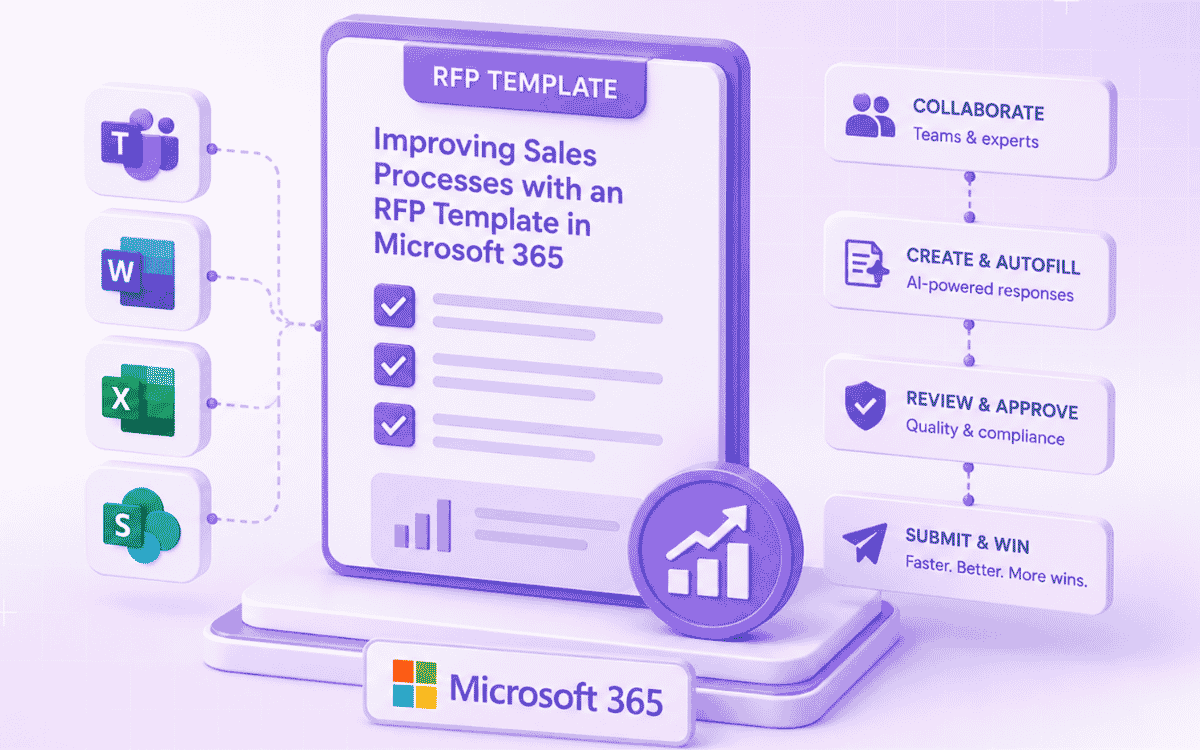
It works natively inside Google Sheets, Google Docs, Microsoft Excel, and Word. Allego achieved 90% autofill rates and 8x faster RFP turnaround. Sirion handled 1.5x more RFPs with a 48-hour SLA reduction.
Deal briefs and pre-call prep: SiftHub auto-generates internal briefs for every opportunity, pulling from call transcripts, CRM notes, emails, and enablement content.
Pre-call prep is ready before every meeting. Handover documents are 80% complete when a deal closes.
Superhuman saved 8+ hours per week and diverted 50% of repetitive queries away from their presales team.
Technical sales collateral: Tailored proposals, battlecards, POV decks, and executive summaries, generated from live call insights and CRM context. Competitive intel is pulled automatically from call mentions.
Collateral adapts to each buyer's industry, use case, and deal stage.
How does SiftHub accelerate deals specifically?
SiftHub accelerates deals specifically by eliminating the content bottleneck that stalls most mid-funnel opportunities.
- When an RFP lands on a Friday, the default is manual work and slow turnarounds.
- When a buyer asks for a competitive comparison, it depends on which rep you ask.
- When an SE needs a handover brief before a POC, someone has to write it from scratch.
SiftHub removes all 3 bottlenecks, automatically, grounded in your actual deal context.
It's the only tool on this list that covers RFP responses, deal briefs, and technical sales collateral in a single platform, connected to your entire GTM stack.
Enterprise credentials: SOC 2 Type II, ISO 27001, VAPT certified. Source-backed answers with full audit trails. Granular RBAC and SSO.
Best for: B2B revenue and presales teams with high RFP volume, a 4:1 AE: SE capacity bottleneck, or deals that stall in the mid-funnel due to slow content turnaround.
2. Gong: Best for conversation intelligence and risk detection
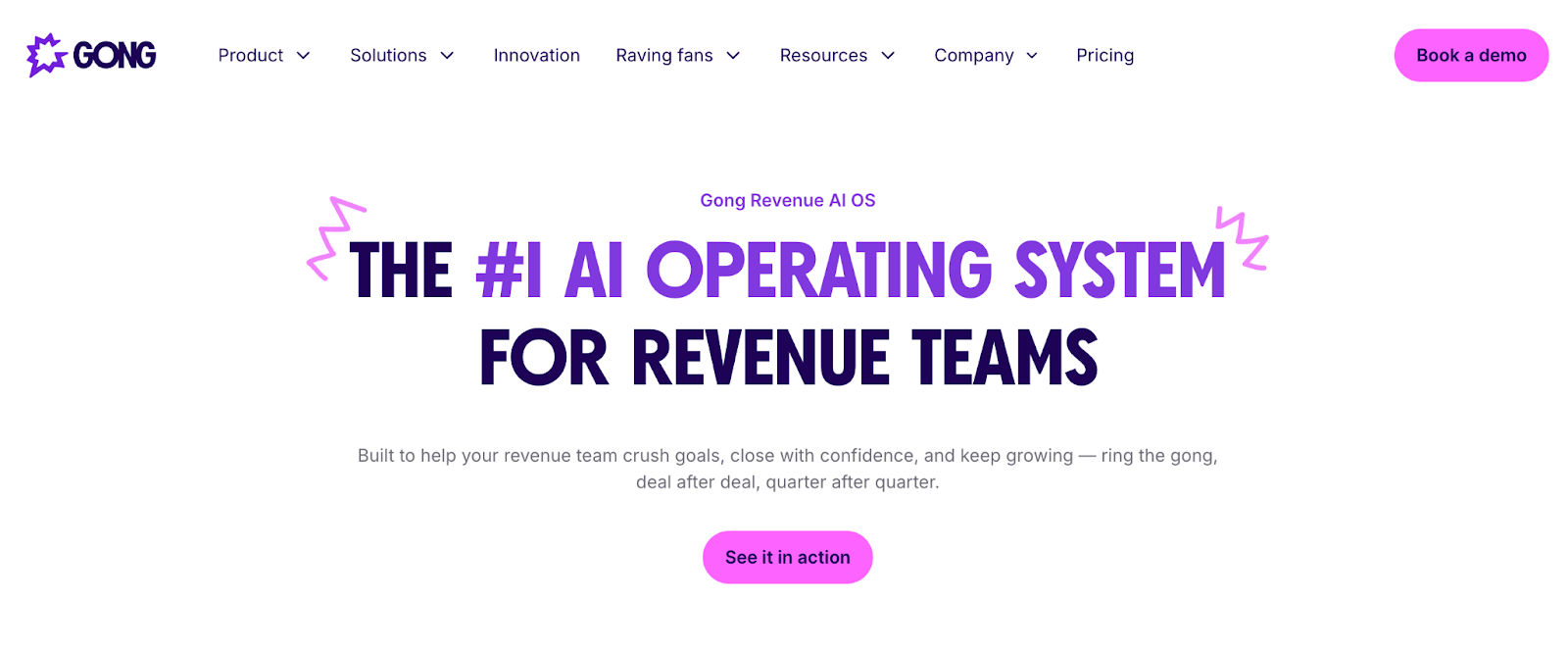
Gong captures every customer interaction, calls, emails, and meetings, and surfaces deal risks, coaching gaps, and buyer patterns. Over 5,000 organizations use it to manage pipeline health.
Pros
- Captures 100% of customer interactions and converts them into searchable deal intelligence
- AI Data Extractor populates CRM fields from conversations automatically
- Gong Orchestrate acts on insights, not just surfaces them
- Paycor reported a 141% increase in deal wins after adoption
Cons
- Surfaces insights well, but does not generate the follow-up content those insights call for
- A separate tool is still needed for RFP responses, proposals, and deal briefs
Best for: Revenue teams that need full visibility into deal conversations and pipeline health.
3. Clari + Salesloft: Best for pipeline visibility and revenue forecasting
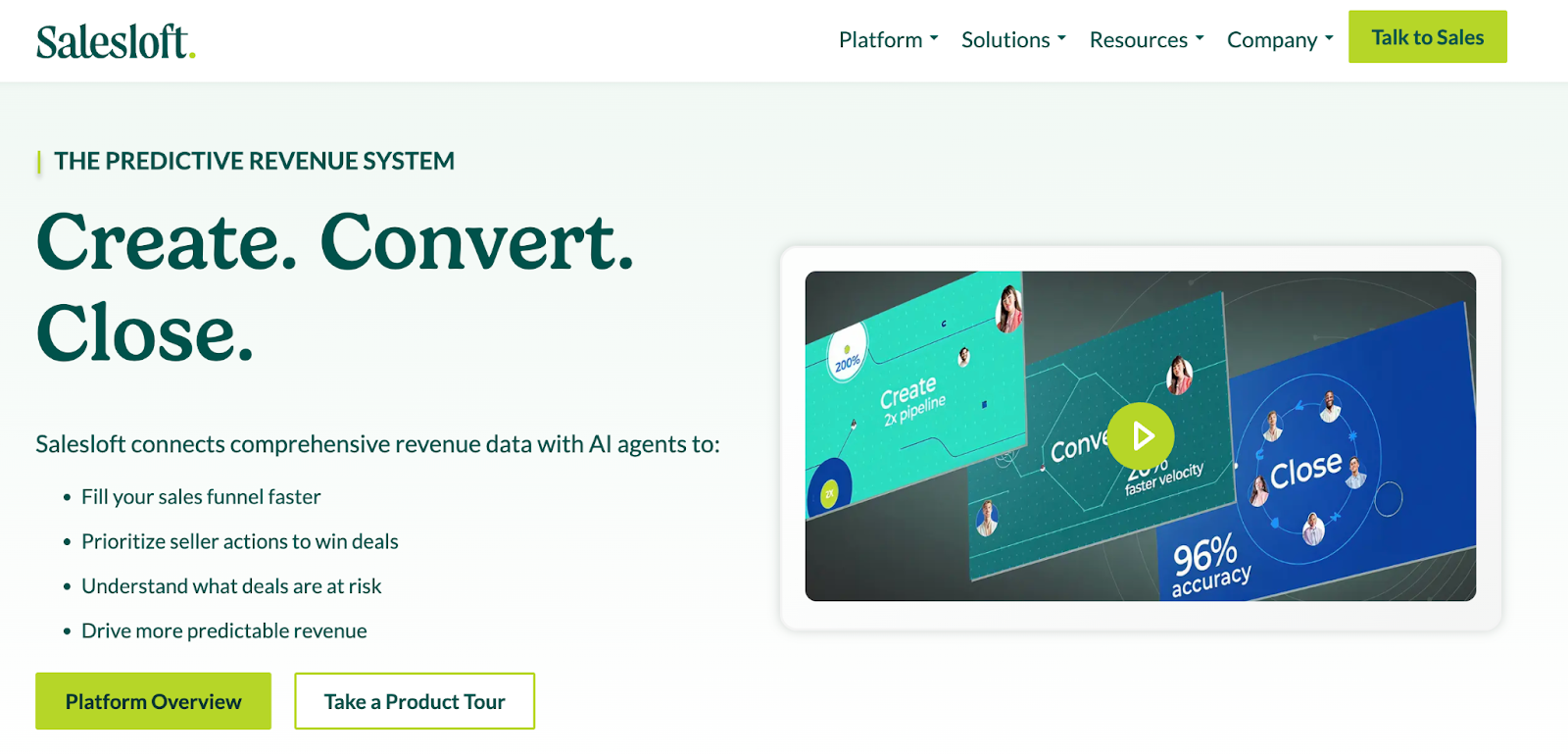
Clari and Salesloft merged in January 2026 to form a single revenue orchestration platform that combines forecasting and sales engagement. Together, they manage over $5 trillion in revenue for global enterprises.
Pros
- Clari Forecast achieves up to 98% forecast accuracy by week two of the quarter
- Salesloft AI agents return up to 300 hours per year per rep
- Real-time deal health signals pull from CRM, email, calendar, and engagement activity
Cons
- The merger is recent, and the integration depth between the two layers is still developing
- Teams mid-evaluation should pressure-test the unified data model before committing
Best for: Revenue and RevOps leaders who need forecasting, pipeline management, and sales engagement in one platform.
4. Outreach: Best for sales engagement and rep workflow automation
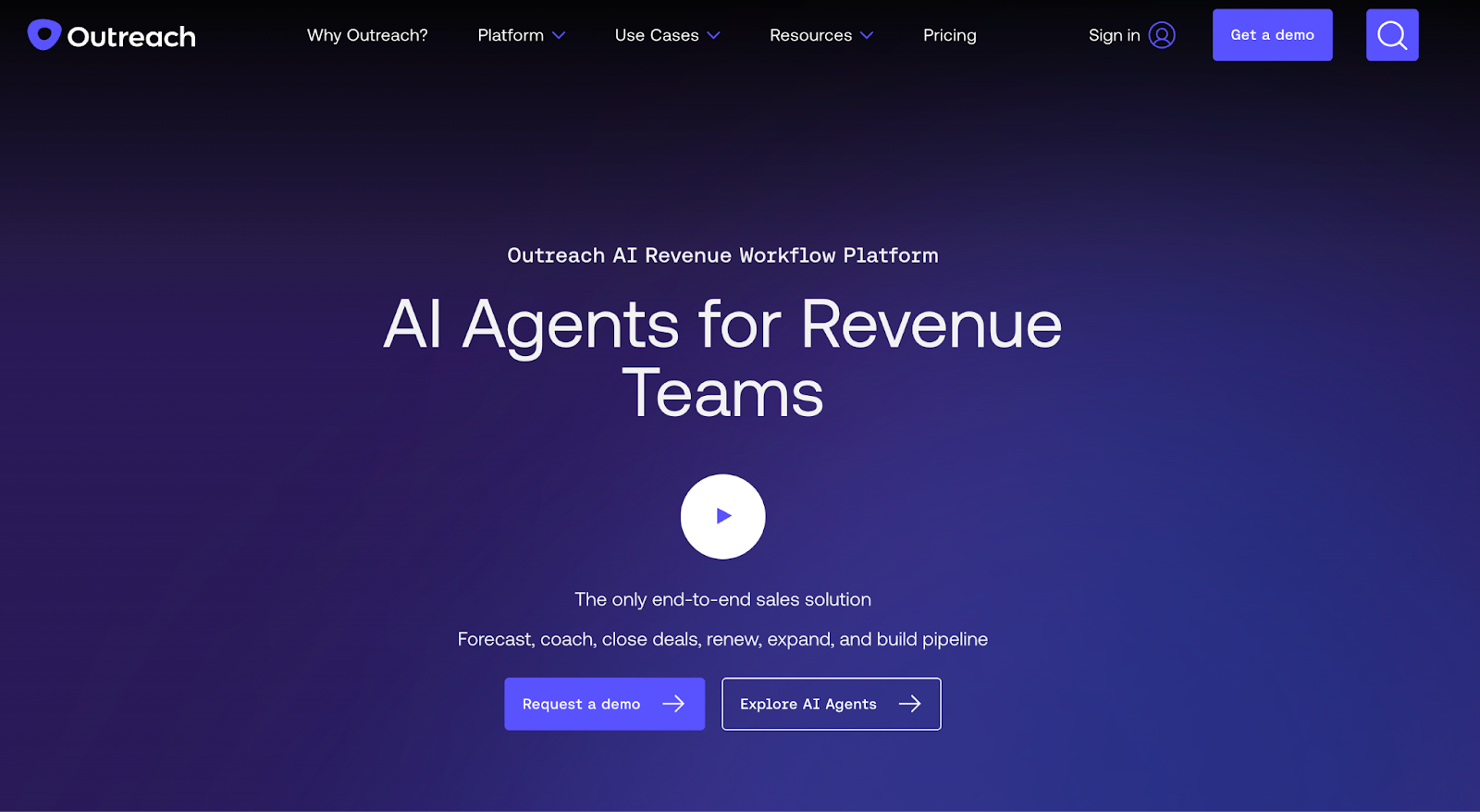
Outreach automates multi-channel outreach, CRM hygiene, and rep workflows across complex deal cycles. Rootly reported a 69% increase in meetings booked after switching to Outreach.
Pros
- AI agents cover research, pipeline generation, deal hygiene, and call guidance
- Mutual action plans and deal health scores are built into the deal workflow
- Strong governance and compliance controls for enterprise and regulated industries
Cons
- Primarily an engagement platform, mid-funnel content generation still needs a separate tool
- Does not generate deal briefs, RFP responses, or tailored technical proposals
Best for: Enterprise sales teams with complex, multi-touch deal cycles needing AI-driven engagement automation.
5. 6sense: Best for buyer intent data and account-based pipeline generation
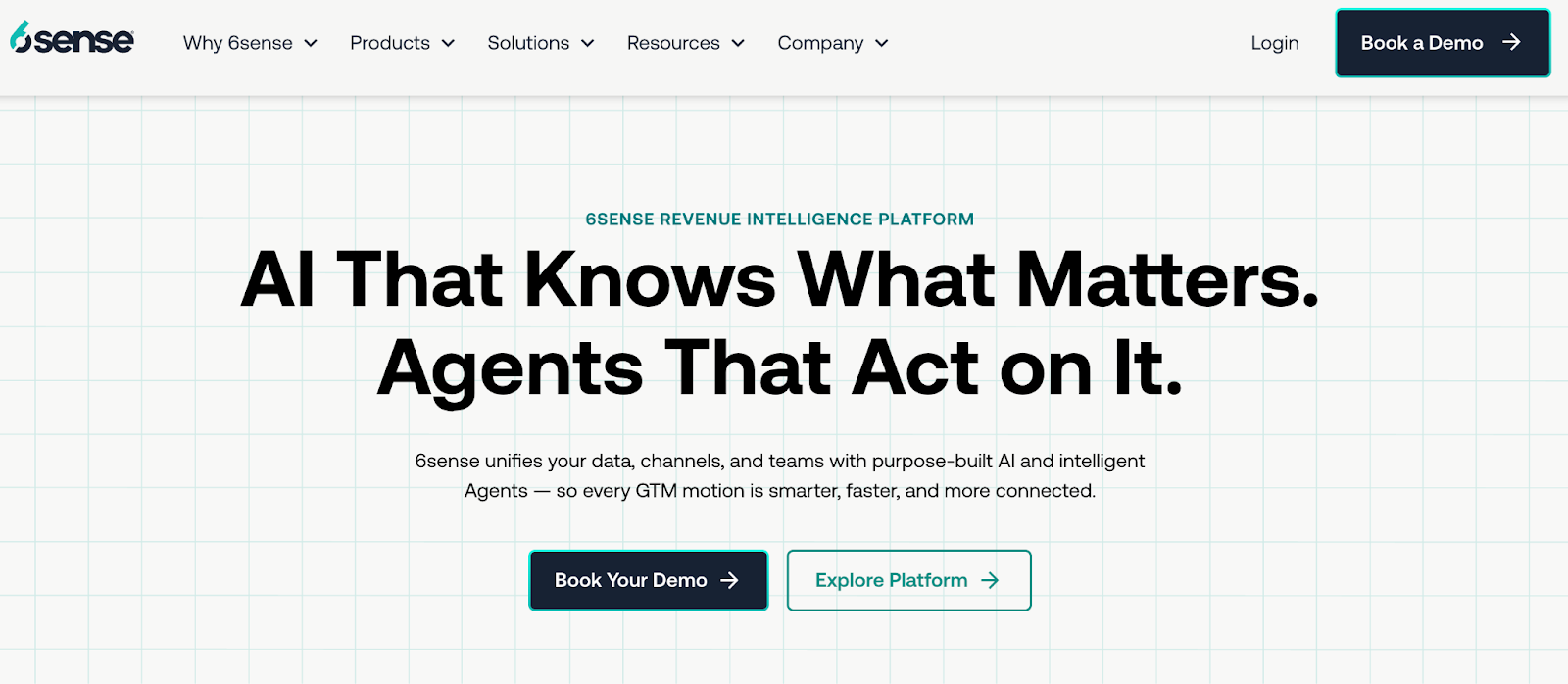
6sense captures 1 trillion buyer signals daily to identify in-market accounts before they raise their hands. Socure generated $52M in pipeline in year one using 6sense.
Pros
- Surfaces the 95% of B2B buyers who research anonymously before contacting a vendor
- Predictive buying-stage model assigns Awareness, Consideration, Decision, or Purchase stage to each account
- AI Email Agents personalize outreach and book meetings automatically
Cons
- A pipeline generation tool only; its role drops sharply once an opportunity enters the CRM
- Not suited for teams without an account-based go-to-market motion
Best for: Marketing and sales teams running account-based motions who need to engage in-market accounts first.
6. Seismic: Best for sales enablement and deal-specific content delivery
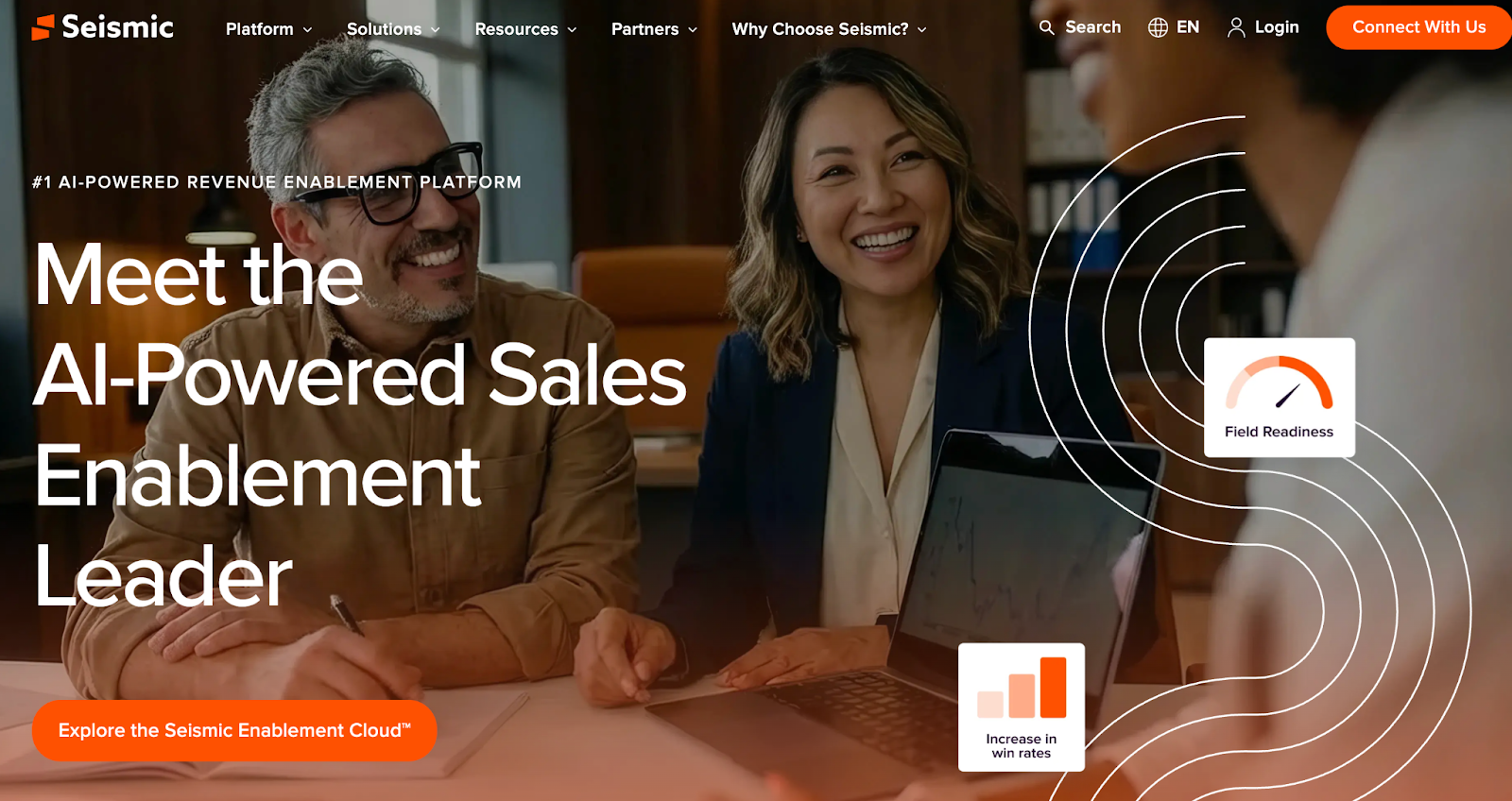
Seismic delivers AI-powered content recommendations to reps at the right moment in the deal cycle. In early 2026, Seismic merged with Highspot to create the dominant sales enablement entity.
Pros
- Aura AI agents embedded across Slack, Teams, and Salesforce surface the right content instantly
- Presentation Agent builds personalized decks inside PowerPoint using CRM data
- Deep analytics show what content is being used and what is driving wins
Cons
- A content delivery layer, reps can only find content that already exists in the library
- Does not generate RFP responses or deal briefs from live call context
Best for: Enterprise organizations with large content libraries that need better discoverability and content performance tracking.
7. Mindtickle: Best for rep coaching and sales readiness
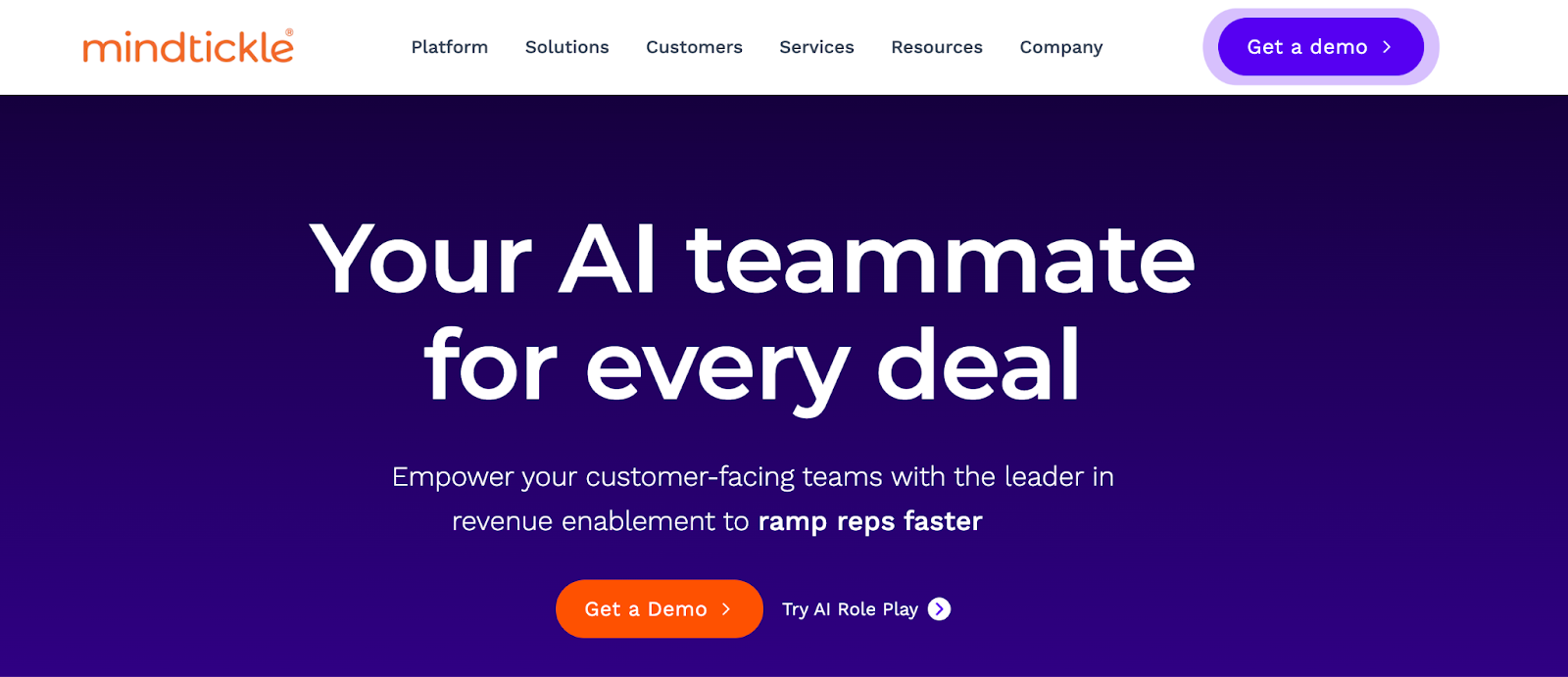
Mindtickle prepares reps for every selling situation with AI coaching, role-play simulations, and readiness analytics tied to revenue outcomes. Cisco increased average deal sizes by 31% using Mindtickle's AI role-play platform.
Pros
- AI Copilot reviews role-play submissions in 60 seconds vs. 17 minutes for a human reviewer
- Readiness Index dashboards correlate coaching performance with quota attainment and ramp time
- Bi-directional Salesforce integration brings rep skill data into CRM reporting
Cons
- A readiness platform, not a deal execution tool, it prepares reps but does not act on deals
- Impact is indirect: better-prepared reps close more deals, but the tool itself does not touch active opportunities
Best for: Sales leaders who want to reduce ramp time, replicate top-performer behaviors, and connect coaching to revenue outcomes.
8. ZoomInfo: Best for prospecting intelligence and contact data
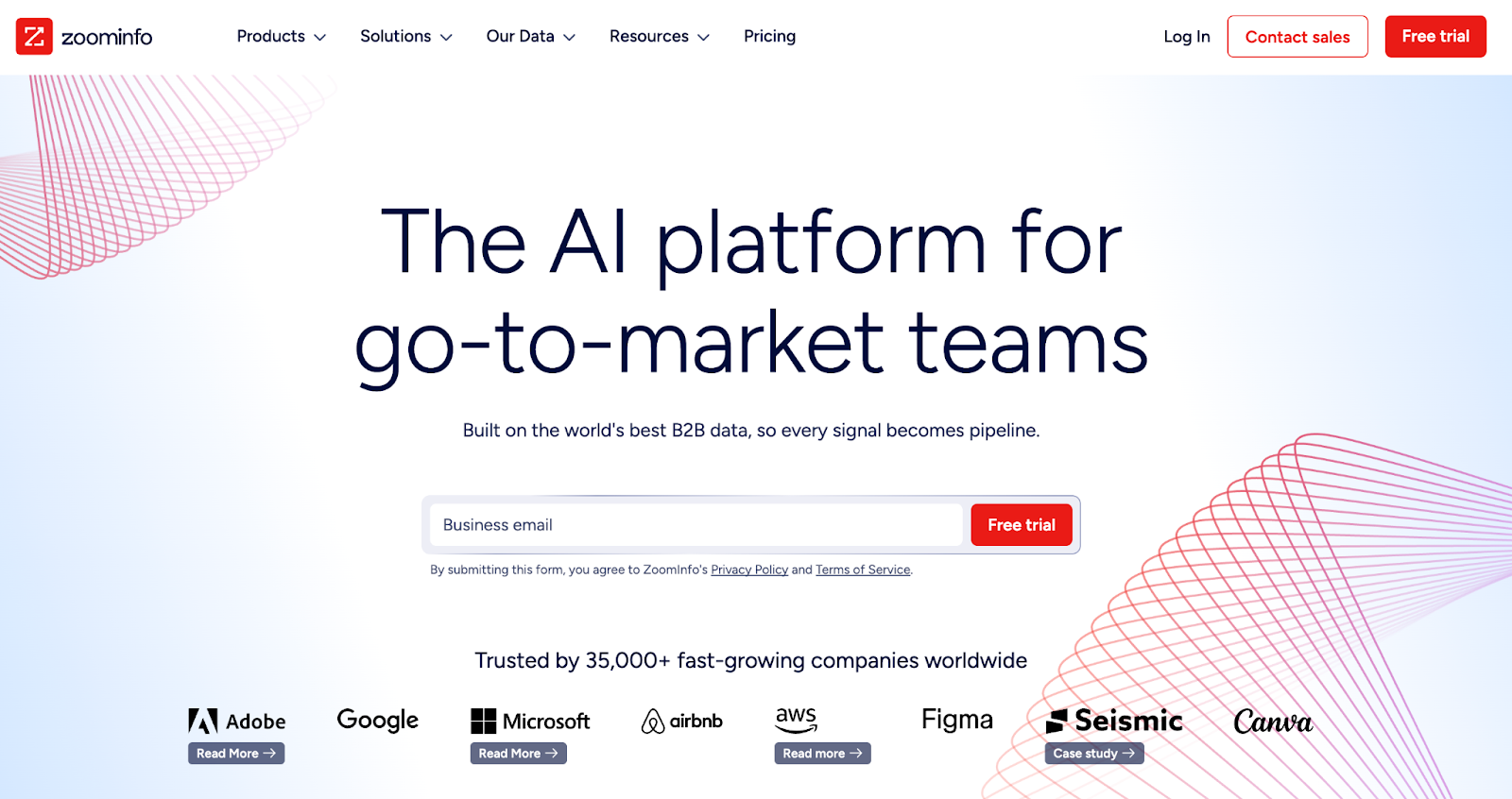
ZoomInfo provides revenue teams with verified contact data and AI-powered signals throughout the full sales cycle. Copilot users report booking 60% more demos and meetings and saving more than 10 hours per week.
Pros
- Copilot alerts reps when an active deal's decision-maker has not engaged in 30 days
- GTM Workspace lets reps research accounts and map buying committees without switching tabs
- Breaking Alerts via Slack surface leadership changes, funding events, and surge intent in real time
Cons
- Data and intelligence platform only, does not generate deal briefs, RFP responses, or proposals
- Downstream content generation still requires a separate tool
Best for: Revenue teams that need high-quality, real-time B2B intelligence from prospecting through active deal management.
9. Microsoft Copilot for Sales: Best for CRM-native AI and workflow automation
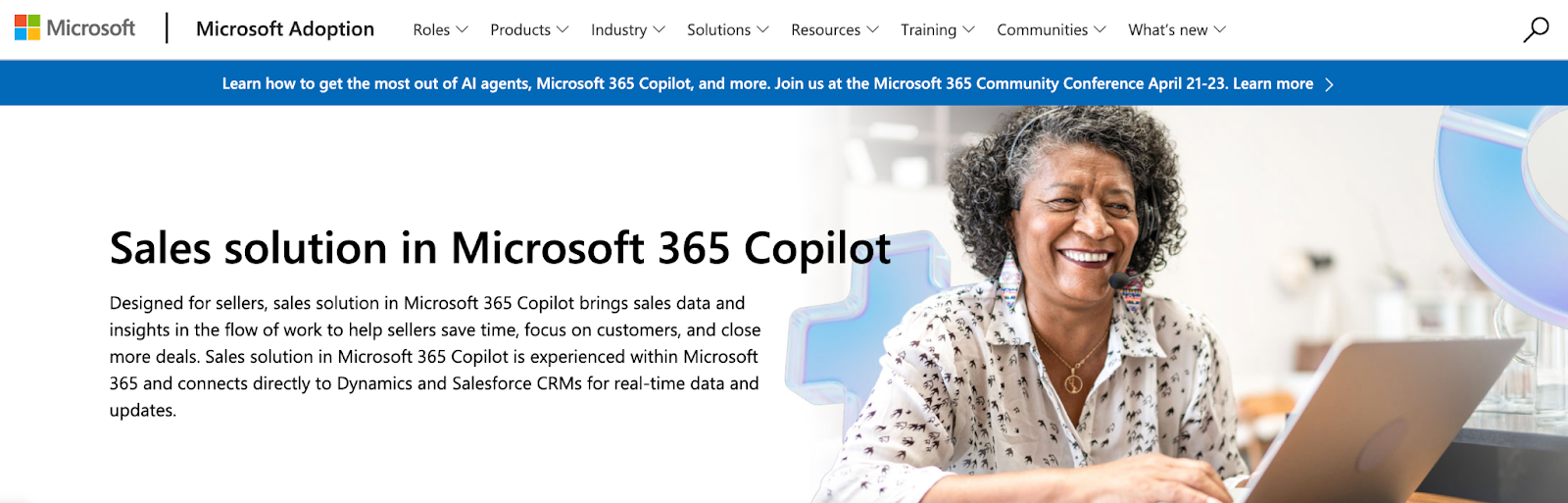
Microsoft Copilot for Sales embeds sales intelligence directly into Outlook, Teams, and Dynamics 365 or Salesforce. Its 2025 Sales Agent update automates SDR functions at scale across territories and languages.
Pros
- Meeting prep, email drafting, follow-ups, and CRM updates happen without leaving Outlook or Teams
- Auto-logging reduces post-call admin to near zero for teams in the Microsoft ecosystem
- Sales Chat lets reps ask natural language questions about accounts, deals, and pipeline
Cons
- Value is tightly tied to Microsoft 365; teams outside that ecosystem lose most of the benefit
- Does not generate specialized deal content such as RFP responses or technical proposals
Best for: Enterprise teams on Microsoft 365 and Dynamics 365, or Salesforce, who want AI in their existing workflow.
10. Nooks: Best for AI-powered outbound dialing and pipeline generation
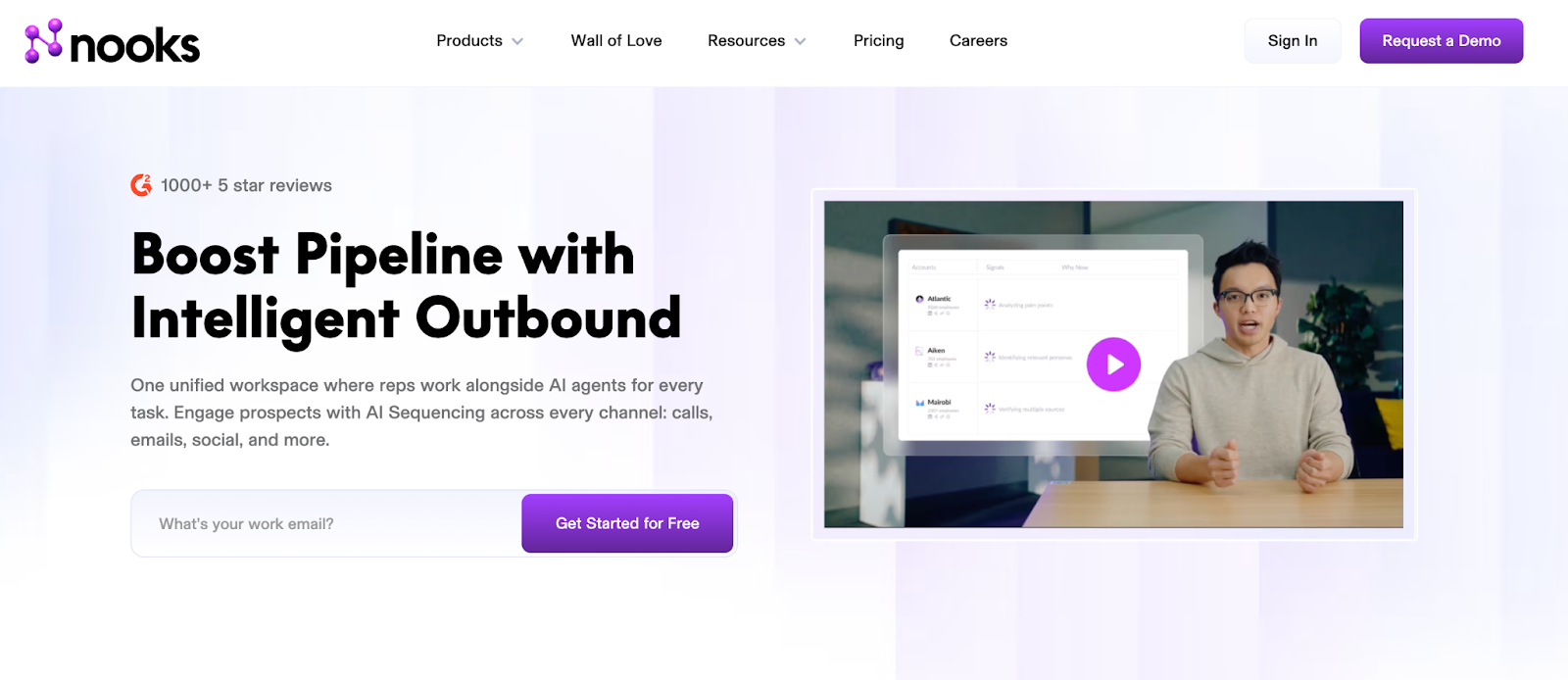
Nooks combines parallel dialing, AI prospecting, and a virtual sales floor into a single workspace.
Pros
- Dials up to five simultaneous calls; AI detects live pickups and drops unanswered ones instantly
- AI Sequencing (2026) runs multichannel outbound across calls, email, and social automatically
- Real-time coaching assistant gives in-call guidance without manual ride-alongs
Cons
- Phone-first platform with no application for deals already in the pipeline
- At $5,000 per user per year, ROI depends on the phone being a primary pipeline channel
Best for: SDR and BDR teams running high-volume outbound calling motions who need more pipeline without adding headcount.
How to build a deal acceleration stack that actually works
A deal acceleration stack that works covers 3 layers: pipeline generation, deal execution, and forecast and close. Most revenue teams have layer 1 and layer 3 covered. Layer 2, where deals actually stall, is where most stacks have a gap.
Layer 1: How do you accelerate pipeline generation?
6sense identifies in-market accounts before they raise their hands. ZoomInfo provides verified contact data and buying signals to reach them. Nooks gets reps into live conversations faster. Outreach or Salesloft runs the multichannel sequences that convert those conversations into qualified opportunities.
These tools generate the pipeline. They don't close it.
Layer 2: How do you accelerate mid-funnel deal execution?
Mid-funnel execution is where SiftHub operates. Once an opportunity is created, the real work begins: responding to RFPs, preparing for technical discovery calls, producing tailored proposals, generating competitive battlecards, and creating handover briefs.
SiftHub connects to your entire stack: Gong, Salesforce, Google Drive, Seismic, Confluence, Slack, Microsoft Teams, and more to generate the content your team needs in minutes, not days.
Source attribution means every output is verifiable.
It works inside your existing drafting tools, so there's no new workflow to adopt.
Gong surfaces what was said on calls, what risks exist, and what the buyer cares about, feeding that context directly into SiftHub's outputs. Seismic provides the content library SiftHub draws from when generating tailored collateral.
What is the mid-funnel execution gap?
The mid-funnel execution gap is the space between a qualified opportunity and a closed deal, where most B2B deals stall.
- RFPs sit unanswered for 3 days.
- Follow-up content is inconsistent because it depends on which rep you ask.
- Handovers from sales to presales lose context.
- Competitive intel from a call last Tuesday hasn't made it into the proposal being sent on Friday.
Book a demo with SiftHub to see how the mid-funnel execution layer works, and what your team's first week looks like.
Layer 3:How do you accelerate forecast and close?
Clari + Salesloft gives revenue leaders real-time pipeline visibility and the engagement data to see which deals are progressing and which are at risk.
Mindtickle ensures reps can handle late-stage objections and competitive pressure. Microsoft Copilot for Sales automates CRM hygiene and follow-up coordination in the final stages.
What is the most important principle for building an AI sales stack?
The most important principle is to evaluate tools as a connected system, not in isolation. The best AI stacks in 2026 aren't 10 separate tools; they're connected layers where the outputs of one tool feed into the next. Gong call recordings inform SiftHub's deal briefs. 6sense intent signals trigger Outreach sequences. SiftHub's RFP responses draw from your Seismic content library.
The teams winning in 2026 aren't using more AI. They're using connected AI.
If you're starting from scratch, prioritize the mid-funnel first. Faster pipeline generation just creates a bigger backlog of stuck opportunities if deals stall after the first call. Solve the execution gap first, then scale the generation.