



The best RFP search engines in 2026 do more than match keywords — they retrieve the right verified answer from governed, real-time knowledge and show exactly where it came from. This guide compares seven RFP search tools on semantic depth, source freshness, and review confidence, and breaks down where each one holds up once a content library grows past what anyone can remember by heart.
- Semantic search beats keyword search for RFP questions that get reworded every time they repeat.
- Source attribution and freshness governance separate defensible answers from ones that quietly go stale.
- SiftHub's enterprise search and smart repository pair real-time sync with automated freshness flags, and extend into live buyer calls through Pulse, a combination none of the other six tools compared fully match.
- Loopio, Responsive, and Ombud offer strong content organization but rely on manual curation to stay current.
- Presales teams answering 61+ questions per questionnaire need a search that returns one verified answer in seconds, not a list of ten documents to open.
The best RFP search engines in 2026 do more than match keywords — they retrieve the right verified answer from governed, real-time knowledge and show exactly where it came from. This guide compares seven RFP search tools on semantic depth, source freshness, and review confidence, and breaks down where each one holds up once a content library grows past what anyone can remember by heart.
- Semantic search beats keyword search for RFP questions that get reworded every time they repeat.
- Source attribution and freshness governance separate defensible answers from ones that quietly go stale.
- SiftHub's enterprise search and smart repository pair real-time sync with automated freshness flags, and extend into live buyer calls through Pulse, a combination none of the other six tools compared fully match.
- Loopio, Responsive, and Ombud offer strong content organization but rely on manual curation to stay current.
- Presales teams answering 61+ questions per questionnaire need a search that returns one verified answer in seconds, not a list of ten documents to open.
Your team has answered this exact question before. Somewhere in Drive, in an old submission, in a Slack thread from three months ago, the answer already exists. The problem was that nobody knew it. The problem is finding it before the deadline.
That search problem is bigger than most teams realize. Across more than 240,000 questions answered on SiftHub in six months, 68% of the questions in a given questionnaire turned out to be near-duplicates of ones answered in the last 90 days, and teams still referenced 23 distinct files from 3 different sources before submitting a single response. The knowledge exists. It's just scattered, unindexed, and in a lot of cases, quietly out of date: 71% of content sitting in Google Drive hasn't been touched in over a year.
A basic keyword search across a shared drive doesn't solve this. It returns ten documents with the word "SOC 2" in them and leaves the reviewer to figure out which one is current. An RFP search engine is supposed to do the opposite: return one verified answer, tell you exactly where it came from, and flag it the moment it's no longer trustworthy.
This guide compares the tools built to do that.
What makes an RFP search engine different from a regular search bar
Most RFP tools that advertise "search" are really running keyword matching against a content library someone has to build and maintain by hand. That works until the library gets big enough that duplicate answers start competing with each other, or until nobody remembers to update the entry after a product change.
A search engine built for RFP work needs four things a generic search bar doesn't have:
Semantic understanding, not string matching. "Do you encrypt data at rest?" and "What's your approach to encryption for stored data?" are the same question worded two different ways. Keyword search treats them as different queries. Semantic search recognizes the underlying intent and returns the same verified answer either way.
Source attribution on every result. A reviewer approving a security answer under deadline pressure needs to see the document name, the owner, and the last-modified date before trusting it — not just the answer text.
Freshness governance built into retrieval. Static libraries decay quietly. The best search tools flag content before it's used, not after a buyer catches an outdated certification.
Breadth across where knowledge actually lives. Answers don't live in one content library. They're in CRM notes, call transcripts, Slack threads, and product docs in Confluence. A search engine that only indexes a curated Q&A bank misses most of what a real organization knows.
Quick comparison: best RFP search engines in 2026
1. SiftHub: Best overall RFP search engine

SiftHub's Enterprise Search is built to answer the question a reviewer actually asks, not just match the words in it. It connects to Google Drive, SharePoint, Slack, Salesforce, Gong, Confluence, and more, and returns a single ranked answer as a "featured snippet," with the source, owner, and last-modified date attached, rather than a list of documents to sort through manually.
The freshness problem is handled structurally through Smart Repository: Q&A pairs sync in real time with connected sources, near-duplicate entries get auto-flagged at creation instead of piling up for a quarterly cleanup, and expiring content triggers automated reminders before it ever reaches a buyer. If SiftHub can't trace an answer to a verified source, it says so rather than guessing — a deliberate design choice that shows up across the platform.
Search results also carry into RFP autofill directly, and into live conversations through Pulse, which surfaces deal-aware answers during buyer calls instead of leaving reps to say "I'll get back to you."
- Sirion uses SiftHub's search layer to field more than 400 technical queries a month and cut RFP SLAs by 48 hours.
- Congruent Solutions reports 100% company knowledge visibility across its response workflow.
- Rocketlane improved solutions engineer bandwidth by 70%
Best for: presales and bid teams that need governed, real-time search across every system where deal knowledge lives, not just a curated Q&A bank.
2. Loopio: Best for teams with a mature, hand-maintained content library
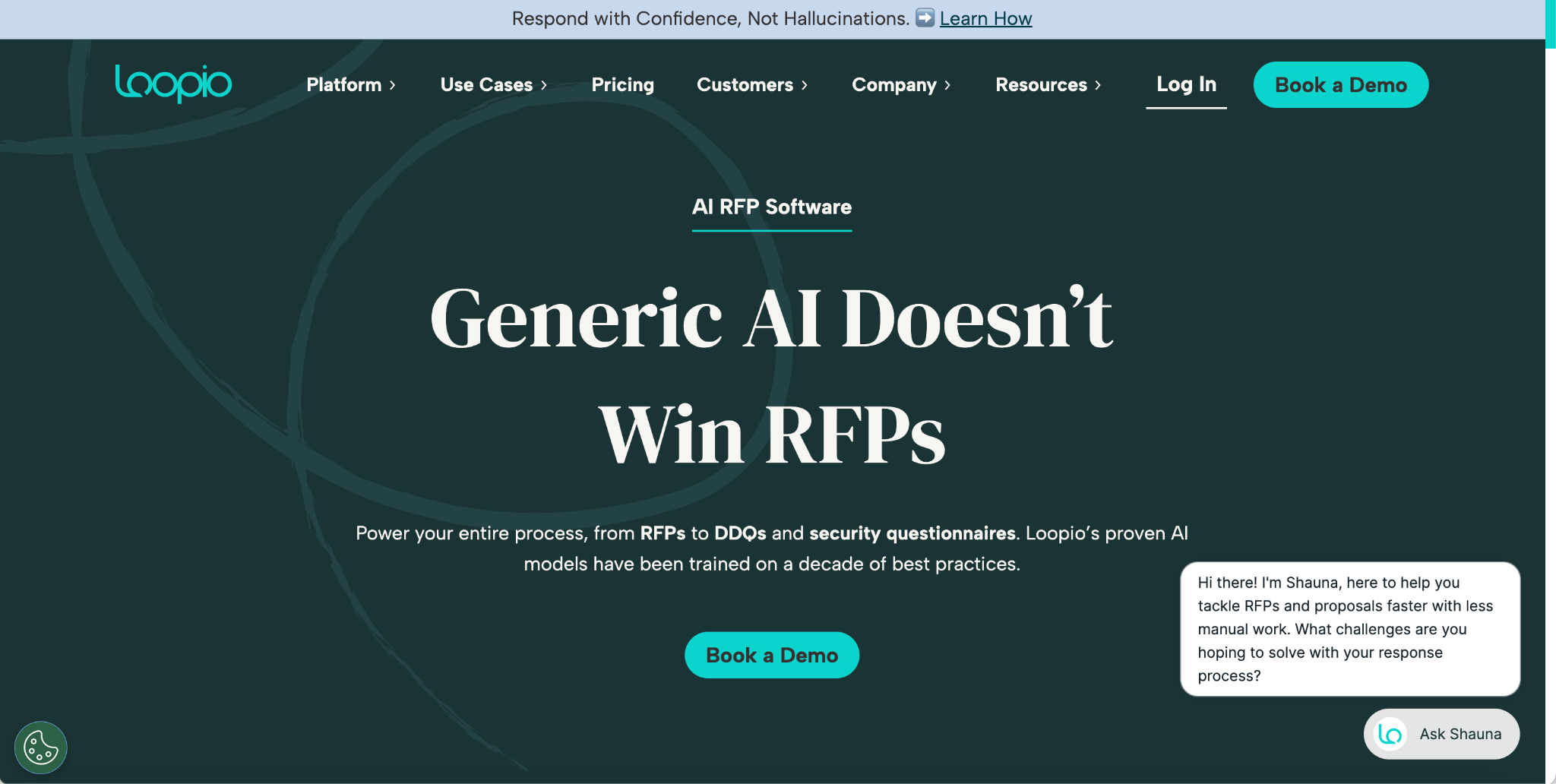
Loopio has one of the most established content libraries in the category, with deep tagging and categorization that reviewers consistently praise for making approved answers easy to find and reuse across RFPs, RFIs, and security questionnaires. Its Magic auto-fill feature uses AI search under the hood to suggest matches from that library.
The tradeoff is maintenance. Its AI-generated answers are reported to be surface-level on complex requirements and often need substantial manual editing, and the library's accuracy depends on how well a team keeps it curated — there's no live sync pulling updates from source systems automatically.
Best for: organizations with dedicated proposal operations staff who can maintain a structured library and want strong categorization over automated freshness.
3. Responsive: Best for enterprise governance-heavy search
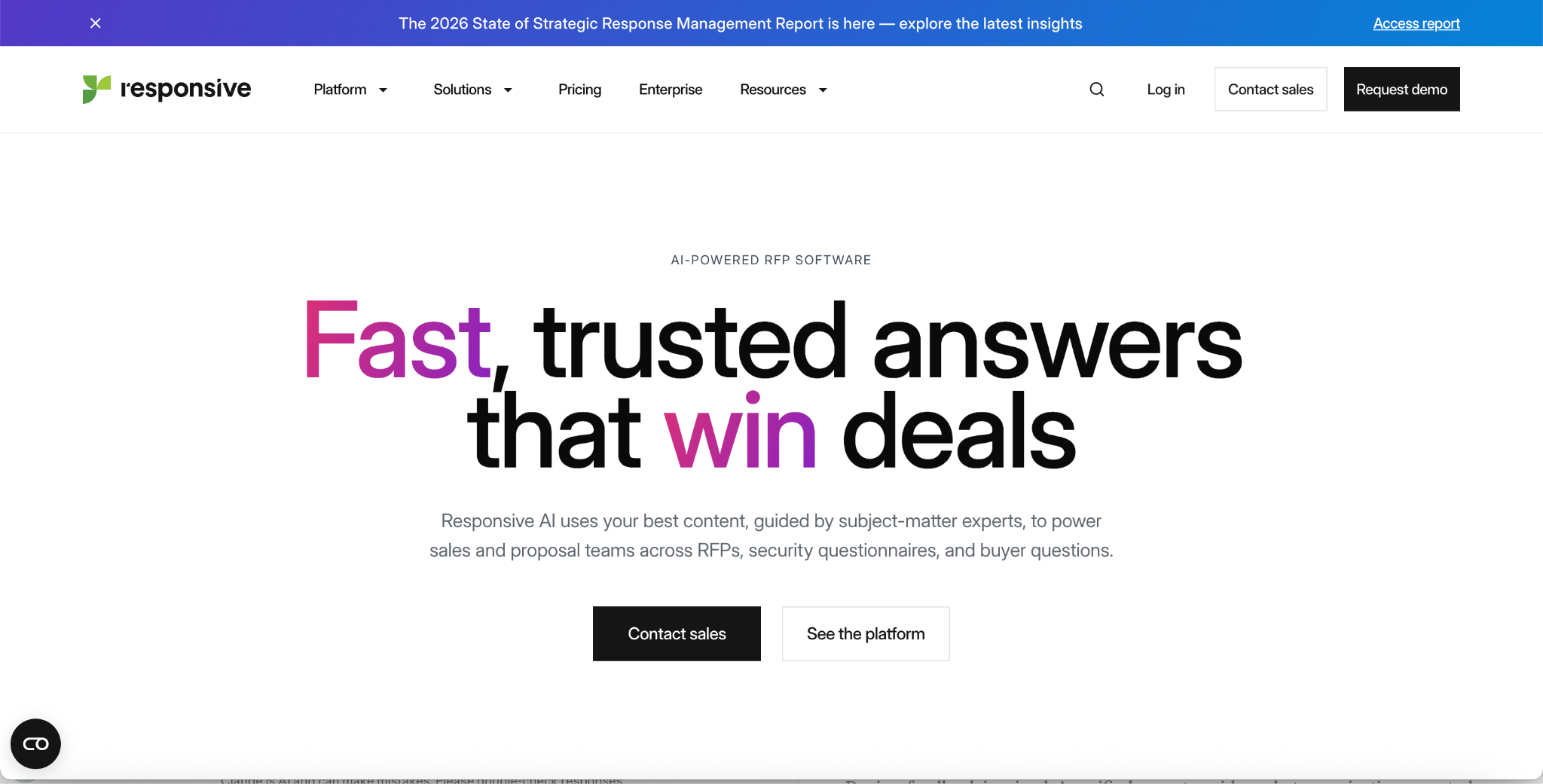
Responsive (formerly RFPIO) pairs its search and content recommendation engine with the deepest approval-chain and audit-trail functionality in the category, which is why heavily regulated teams tend to land here. Its AI-powered recommendation engine can contextualize and suggest responses rather than just following direct queries.
Like Loopio, it's fundamentally a content-management platform: the search index reflects whatever the team has curated, and some reviewers note the search function could be more specific, occasionally surfacing irrelevant matches even with exact-phrase queries.
Best for: enterprise teams whose primary requirement is governance and compliance depth alongside search.
4. Ombud: Best for cross-department knowledge graph search

Ombud's AI-powered knowledge engine centralizes and surfaces approved content across departments through an AI search and knowledge graph that connects content, experts, and historical responses, which makes it a reasonable fit for organizations where RFP knowledge is genuinely scattered across many teams, not just one library.
It's a narrower tool than a full RFP lifecycle platform — search and knowledge orchestration are the core value, with less depth on the surrounding bid/no-bid and project management workflow.
Best for: teams whose main problem is unifying knowledge that lives across many departments and systems.
5. AutoRFP.ai: Best for fast generative first-draft search
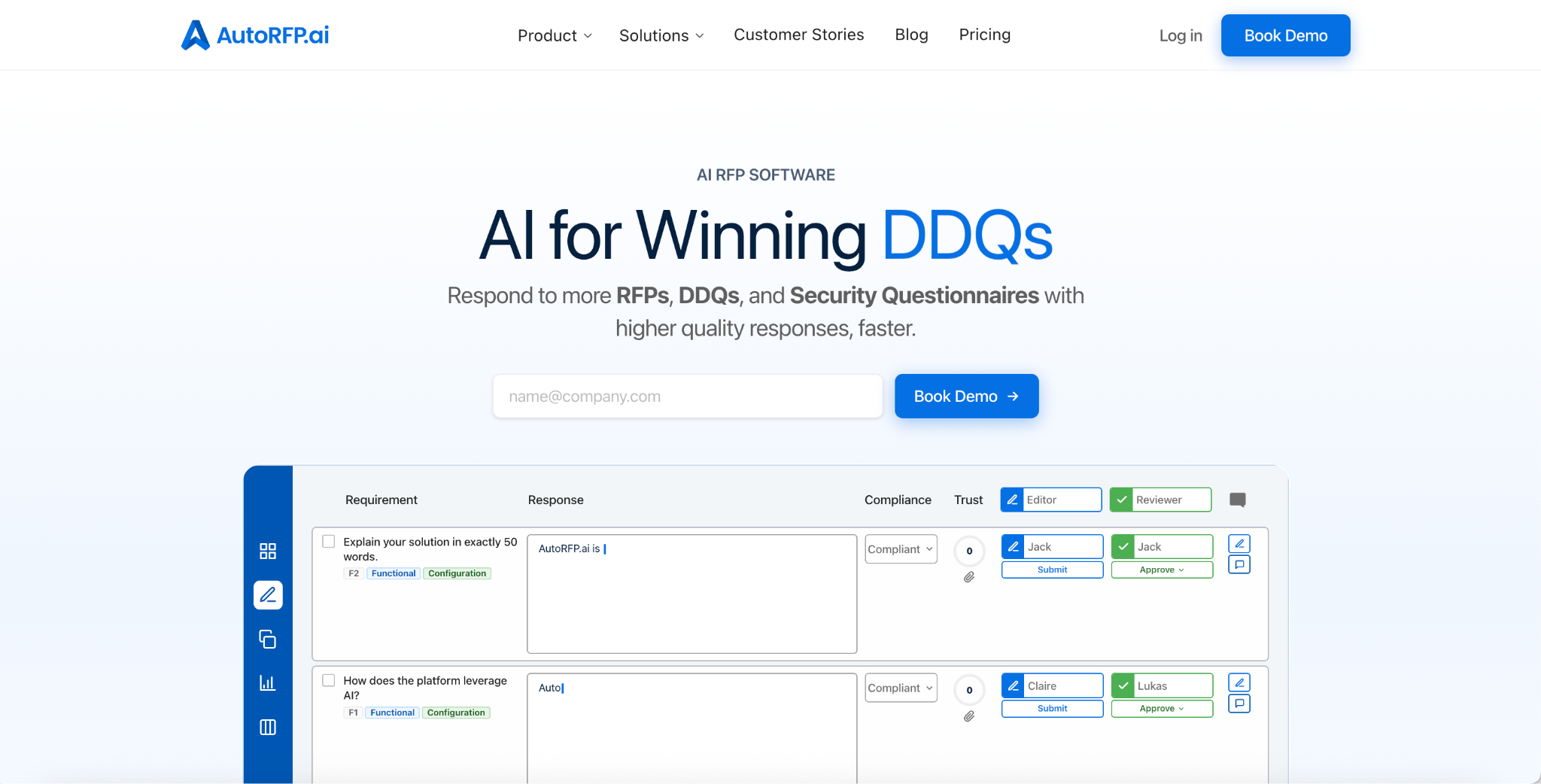
AutoRFP.ai leans on generative AI rather than a rigid Q&A database, which means its search-and-draft process pulls from connected sources dynamically instead of requiring a pre-tagged library. Users reviewing the platform note it emphasizes fast, relevant draft generation over complex multi-layered workflow orchestration, which suits high-volume, recurring questionnaire types well.
The tradeoff is the same one most generative-first tools face: less structured governance around content freshness and fewer controls for regulated review chains.
Best for: teams prioritizing draft speed on recurring, well-documented question types over deep governance controls.
6. Tribble: Best for Gong-driven buyer-personalized search
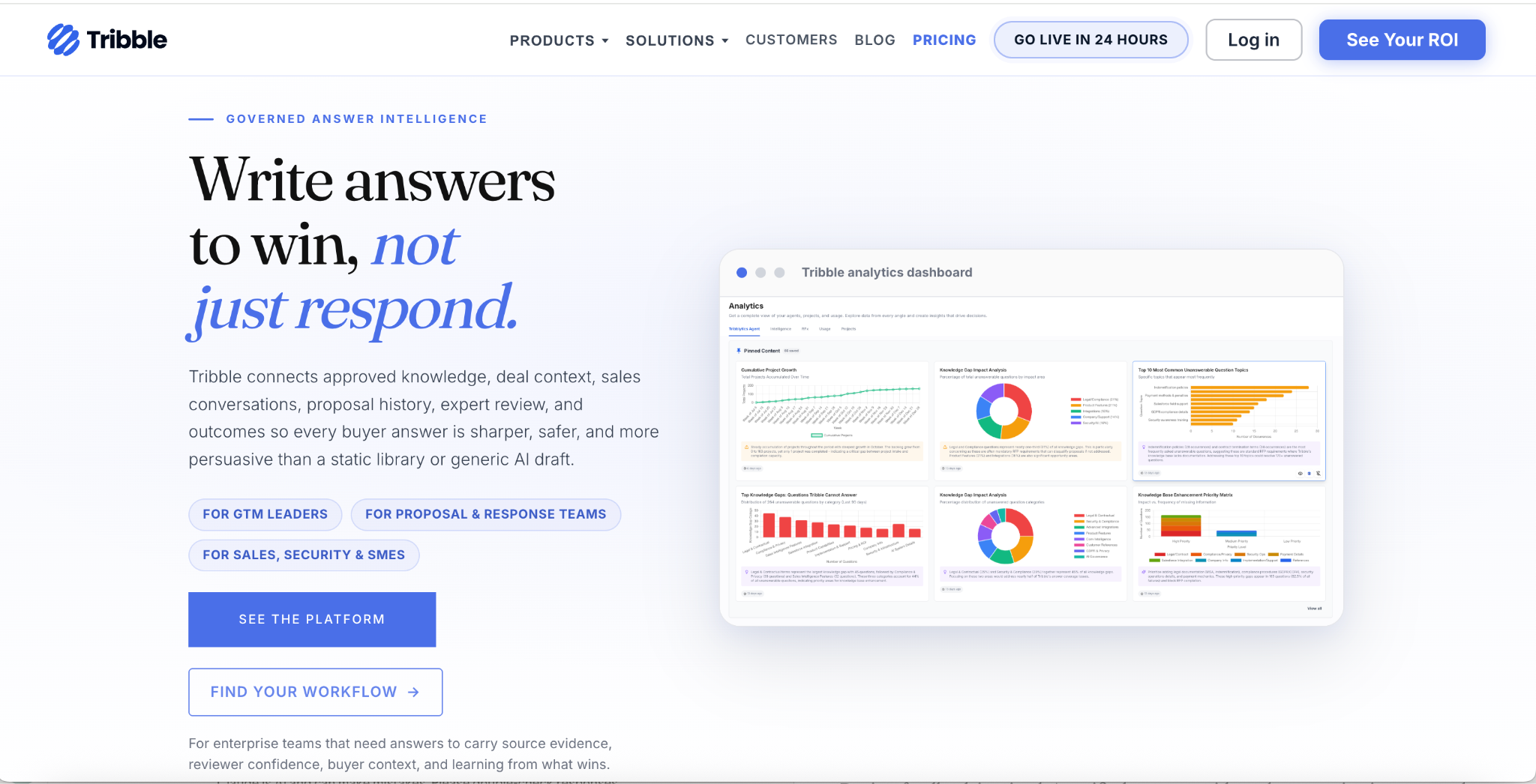
Tribble's search and drafting are meaningfully sharper when a deal has Gong call data attached, the answers it surfaces adjust to what was actually said on prior buyer calls, and its Tribblytics layer tracks which answers correlate with wins. For teams already deep in the Gong ecosystem, this personalization is a real differentiator.
The dependency runs the other way too: without Gong connected, the buyer-context advantage narrows considerably, and the platform stops at the drafted answer rather than extending into live-call support or full project coordination.
Best for: Gong-native sales teams where buyer-specific personalization matters more than lifecycle breadth.
7. Arphie: Best for reviewer trust and confidence scoring

Arphie's search results come with a confidence score attached to every AI-generated answer, plus explicit "I don't know" signaling when the underlying source material is thin — a direct answer to the trust problem that makes reviewers second-guess AI-sourced content. This lets reviewers focus their attention on genuinely uncertain answers instead of auditing every result.
It doesn't yet connect outcome data back to the search layer, and coverage outside the core drafting workflow; live support, broader project orchestration is limited.
Best for: teams whose main blocker is reviewer confidence in AI-sourced answers, not process breadth.
How to choose the right RFP search engine for your team
If your content library is already mature and well-staffed: Loopio's categorization depth is hard to beat, provided someone owns ongoing maintenance.
If governance and audit trails are the deciding factor: Responsive's approval-chain depth serves regulated industries well.
If knowledge is scattered across many departments, not one library: Ombud's knowledge graph approach is built for exactly that shape of problem.
If speed on repetitive, well-documented questions matters most: AutoRFP.ai's generative-first approach reduces first-draft time without requiring a pre-built library.
If your deals live inside Gong and buyer-specific personalization is the priority: Tribble's Gong-linked search delivers real differentiation, with a corresponding dependency on that integration.
If reviewer trust in AI answers is the blocker: Arphie's confidence scoring gives reviewers a faster way to know what to double-check.
If the problem spans all of the above — stale content, scattered sources, reviewer trust, and no support once the buyer asks a follow-up on a live call: that combination is what SiftHub's Enterprise Search and Smart Repository were built to solve together, with Pulse extending the same governed knowledge into live conversations.
The bottom line
Search quality is the ceiling on everything else an RFP platform does. A fast auto-fill built on a stale or unindexed content library just moves the wrong answer faster. The teams getting the most out of AI-assisted RFP work aren't the ones with the most content — they're the ones whose search layer can find the right answer, prove where it came from, and know when it's no longer true.
Ready to see what a governed, real-time RFP search looks like against your own knowledge base?
Reach out to us, and SiftHub will map it to your actual questionnaire volume.