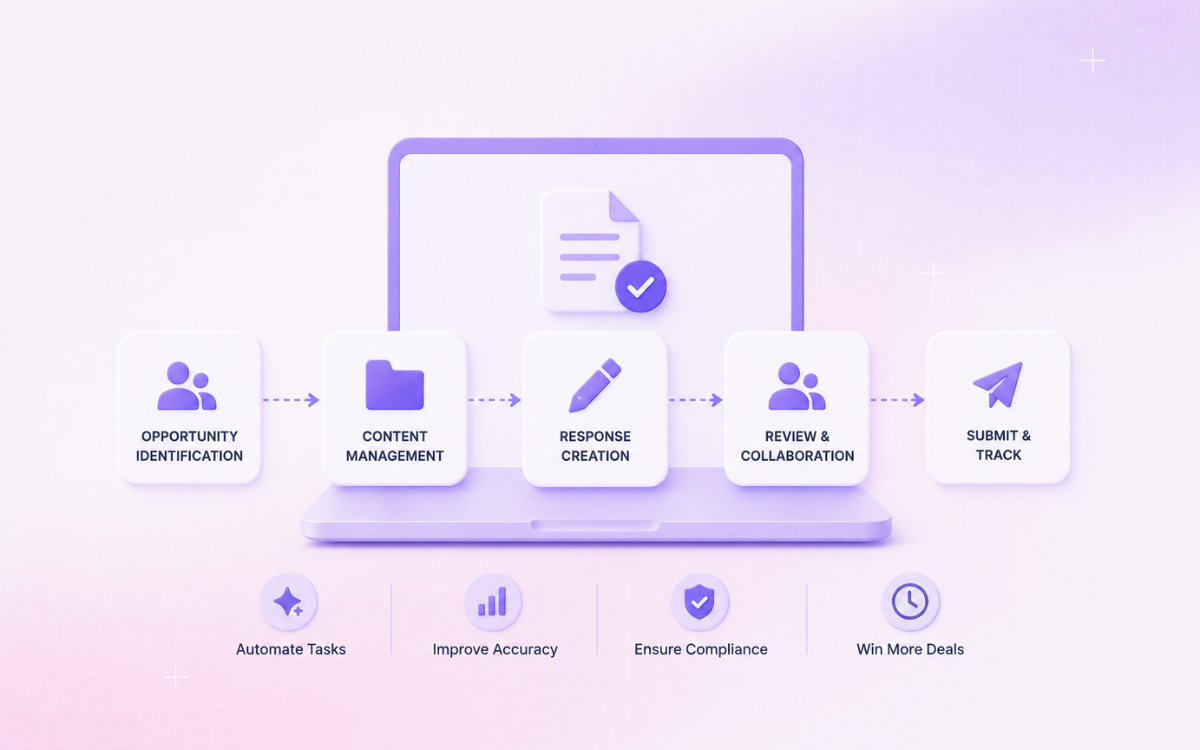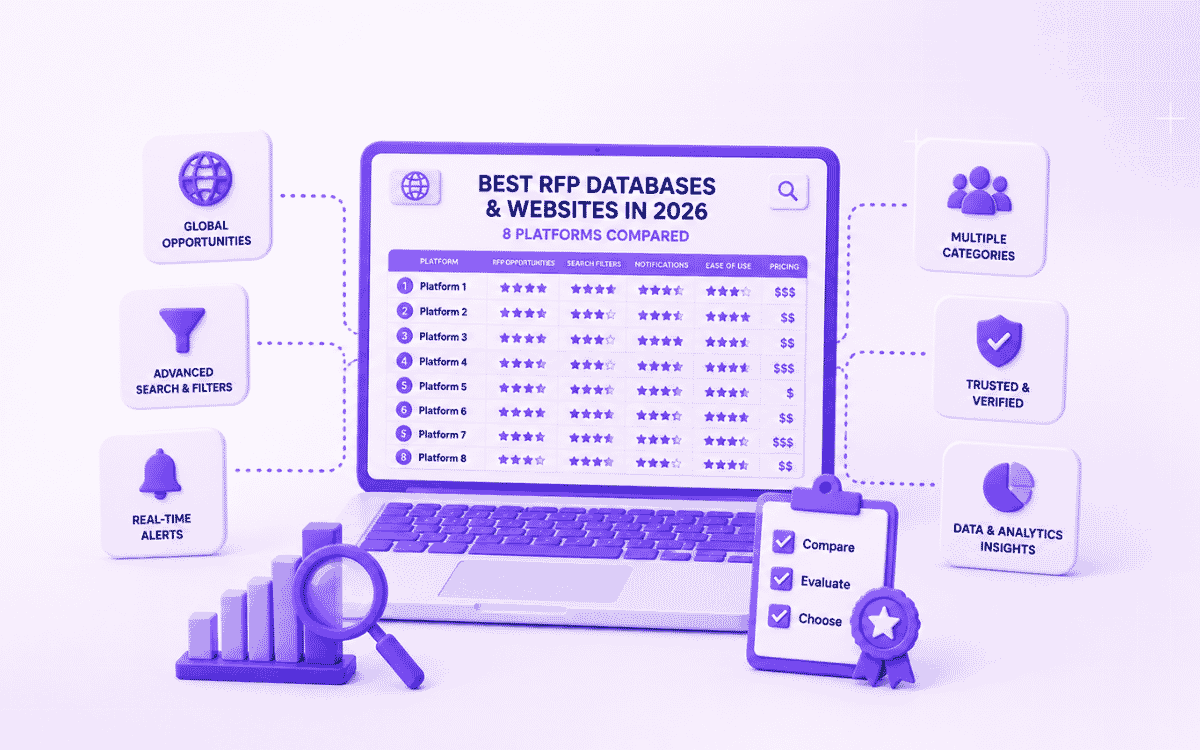





- AI tools for sales teams to close deals faster each remove one delay: slow technical answers, missing champion content, risk in calls, effort on the wrong accounts or a weak forecast.
- The guide groups 10 tools by stall point: SiftHub and Consensus for the technical evaluation, Mutiny and GetAccept for buyer content, Gong, Sybill and Mindtickle for calls and coaching, Salesloft (with Clari Forecast), 6sense and Salesforce Agentforce for prioritization and forecasting.
- A comparison table lists pricing signals and G2 ratings checked in November 2026.
- Gartner found in May 2026 that AI saves sellers 4.8 hours a week, but 72% of sales organizations report low reinvestment of that time.
- SiftHub is an AI RFP software that automates RFP, RFI, DDQ, and security questionnaire responses for B2B SaaS presales, solutions engineering, and bid teams.
AI tools for sales teams to close deals faster each remove one delay in the deal. SiftHub speeds RFP and security questionnaire answers. Consensus and Mutiny get buyer-ready content to the committee. Gong and Sybill catch risk in calls. Salesloft (with Clari Forecast) and 6sense show which deals and accounts deserve time.
Jump to: comparison table · the 10 tools · FAQ
What are AI tools for sales teams to close deals faster?
The call went well. The champion is in. Then the buyer sends a 200-row security questionnaire, a legal redline and a request for "something I can show my CFO." Two weeks later the deal is still in the same stage.
AI tools for sales teams to close deals faster are software that shortens the time between a qualified opportunity and a signed contract. They do three jobs inside a live deal. They cut admin work, prepare buyer-facing content, and show which deals are at risk.
Most teams already have some of this. According to Salesforce's State of Sales report, 87% of sales organizations use some form of AI. Results are thinner. In a May 2026 Gartner survey, only 25% of sales organizations reported a return of 50% or more on their AI spend.
So the question is less "should we use AI" and more "which delay are we fixing." This guide groups ten tools by the stage where deals stall. SiftHub publishes it and lists itself first for RFP-heavy and presales-supported deals. The criteria we used are in how we evaluated these tools. If you want a broader category list, see our guide to AI sales tools.
How do AI tools help sales teams close deals faster?
Here is how AI tools help sales teams close deals faster in practice. Each mechanism maps to a lever on time to close.
- Same-day follow-up. Call recaps and next steps go out the same afternoon instead of three days later. Buyers keep momentum.
- Deal-specific content. Briefs, battlecards, business cases and RFP answers come from approved material, so reps stop rebuilding them per deal.
- Risk detection. Call and email signals flag a silent stakeholder or a competitor mention before the forecast call, not after.
- Rep coaching. Managers review more calls, and newer reps practice the hard conversations before they happen live.
The time is real. Gartner found that AI saves sellers 4.8 hours a week. The same survey found that 72% of sales organizations report low reinvestment of that time into high-value work. Saved hours that go to more internal meetings do not close anything. Decide before rollout where they go: live buyer conversations, deal reviews, and the technical questions that hold up late-stage deals.
Where do B2B deals stall after the first call?
Most lists of AI tools for sales reps to close deals sort by category: notetakers, outreach, CRM. That tells you what a tool is. It does not tell you which delay it removes.
Deals stall in five predictable places.
| Stall point | What it costs | Tool category | Tools in this list |
|---|---|---|---|
| Slow technical answers (RFPs, security questionnaires, SE bandwidth) | Weeks at the finish line, often after the champion has said yes | AI RFP software, demo automation | SiftHub, Consensus |
| No champion-ready content | The champion cannot sell internally without you in the room | Deal rooms, AI content assistants | Mutiny, GetAccept |
| Risk buried in calls | Silent stakeholders and competitor mentions go unnoticed | Conversation intelligence, AI sales assistants | Gong, Sybill, Mindtickle |
| Effort on the wrong accounts | Rep time goes to accounts that are not buying | Buyer intent | 6sense |
| A forecast built on rep opinion | Leaders find out late which deals slipped | Forecasting, CRM-native agents | Salesloft (with Clari Forecast), Salesforce Agentforce |
The first row is the one most lists skip. Presales teams know it well. The Presales Collective describes the moment as arriving "right at the finish line, when a security form nobody planned for stops everything cold." One security newsletter described a $500K deal that "nearly walked because a simple SOC 2 verification took three weeks to answer" (Cycore, June 2025).
Buyers still want a person to check the AI. Gartner's survey, released May 20, 2026, found that 69% of B2B buyers prefer to validate AI-generated insights with sales reps, even though 67% prefer a rep-free buying experience overall. Buyers research alone, then come to a rep to check what they found. AI should make that check faster and better prepared.
Top AI sales tools to close deals: quick comparison
Pricing and G2 ratings were checked on November 12, 2026. "Not public" means the vendor quotes on request.
| Tool | Best for | Deal stage | Core AI capability | Pricing signal | G2 rating |
|---|---|---|---|---|---|
| SiftHub | RFP-heavy and presales-supported deals | Technical evaluation | Drafts RFP and security questionnaire answers from approved content, with sources | Not public | 4.5 (73 reviews) |
| Consensus | Demo-heavy deals with large committees | Technical evaluation | Self-guided and live demos with stakeholder engagement data | From $600/month | 4.7 (2,133) |
| Mutiny | Champion-ready deal assets | Buyer content | Drafts follow-ups, meeting prep and proposals | Free, Business $50/month, Enterprise from $40,000/year | 4.7 (32) |
| GetAccept | Deal rooms, proposals and contracts | Buyer content | Digital sales rooms with e-signature | $25 to $49 per user/month | 4.6 (1,317) |
| Gong | Call coverage and deal risk | Conversation | Conversation and revenue intelligence | Not public | 4.7 (6,793) |
| Sybill | Affordable closing assistant | Conversation | Deal answers, follow-ups and CRM fill | Free, $30 and $90 per user/month | 4.8 (150) |
| Mindtickle | Readiness and coaching at scale | Conversation | AI coaching and role-play | Not public | 4.7 (2,404) |
| Salesloft (with Clari Forecast) | Forecast accuracy | Forecast and close | Forecasting on shared pipeline data | Not public | Salesloft 4.5 (9,918); Clari 4.6 (about 5,600) |
| 6sense | In-market account priority | Prioritization | Buyer intent and account scoring | Not public | 4.2 (1,595) |
| Salesforce Agentforce | Salesforce-standardized teams | Forecast and close | CRM-native AI agents | $125/user/month on top of a Sales Cloud licence | 4.4 (27,591, Agentforce Sales listing) |
Best sales AI tools by deal stage, November 2026.
If you run fewer than 20 reps, start with Sybill or Mutiny on a free plan. Mid-market teams with technical buyers usually get the fastest win from SiftHub or Consensus. Enterprise teams that already own Gong and Salesforce should look at the late-stage gaps those tools leave.
The 10 best AI sales tools to close more deals in 2027
The tools below are grouped by the stall point they fix. Each entry covers who it is for, what it does, why it helps close deals, pricing and where it falls short. SiftHub publishes this guide and is listed first because it fits RFP-heavy and presales-supported deals. Every tool was judged on the same criteria.
Group A: Win the technical evaluation
1. SiftHub: best for RFP, security questionnaire and presales deal support
The deal is verbally won. Then procurement sends the RFP, and security sends a questionnaire in a spreadsheet with 300 rows. The SE who knows the answers is on four other deals.
What it does. SiftHub is an AI RFP software that automates RFP, RFI, DDQ, and security questionnaire responses for B2B SaaS presales, solutions engineering, and bid teams. It drafts answers from your approved content, past responses and connected tools, and shows the source behind each answer, with a last-updated timestamp, so reviewers can check it. If no approved source exists, it flags the question instead of guessing (security questionnaire automation). Teams work where the questionnaire arrives: Word, Excel, Google Docs and Google Sheets. SiftHub auto-fills about 80% of a typical questionnaire on the first pass, so SEs review and edit instead of starting from a blank row.
Why it helps close deals. It takes the slowest late-stage step and makes it predictable. Customer-reported results shown on sifthub.io: Rocketlane cut RFP turnaround by 50%, Sirion handles 1.5x more RFPs a month and cut its SLA by 48 hours, and Superhuman reached 75% automated RFP completion. ActivTrak's CISO described SiftHub's answers as "95% of the way there."
Integrations and security. SiftHub connects to Salesforce, HubSpot, Slack, Microsoft Teams, Gong, Clari, Google Drive, SharePoint, Confluence, Highspot and Seismic, among others on its connectors page. It holds SOC 2 Type II and ISO 27001:2022 (security and compliance).
Best for. Mid-market and enterprise presales, solutions engineering and bid teams that answer RFPs and security questionnaires as part of most deals.
Pricing. Not public. Pricing comes through a demo, which fails the transparency test in our criteria.
Where it falls short. It has 73 G2 reviews, far fewer than Gong or Consensus, so there is less third-party evidence to go on. It pays off for teams with steady RFP and questionnaire volume, and is hard to justify for a team that answers a few a year. It is not a prospecting, intent or forecasting tool, so pair it with those layers.
See how SiftHub drafts an RFP from your own content. Book a demo.
2. Consensus: best for interactive demos across buying committees
What it does. Consensus runs self-guided and live product demos and shows which stakeholders engaged, and with what.
Why it helps close deals. Large buying committees rarely all make the same live demo. Consensus lets each person see the parts that matter to them, and shows the seller who is engaged and who has gone quiet.
Best for. Technical products with demo-heavy cycles and large committees.
Pricing. From $600 a month, seat-based with usage add-ons and custom enterprise plans (Consensus pricing).
Where it falls short. It covers the demo step only. You still need a source for written technical answers, business cases and follow-ups. It pairs well with SiftHub for the written response.
Group B: Buyer-facing content and deal rooms
3. Mutiny: best for AI-built deal assets
What it does. Mutiny now calls itself a sales assistant built for customer-facing work. It drafts follow-ups, meeting prep and proposals in the rep's voice, using account context.
Why it helps close deals. Champions sell when you are not in the room. A tailored proposal or recap they can forward does that work for them.
Best for. Account executives on complex deals who spend hours on per-account assets.
Pricing. Free for up to five team members, Business at $50 a month, Enterprise from $40,000 a year (Mutiny's own FAQ; G2 shows a different Enterprise figure).
Where it falls short. Output is only as good as the CRM and account data going in. It adds less for single-buyer, transactional deals. Any results Mutiny publishes are vendor-reported.
4. GetAccept: best for digital sales rooms with proposals and contracts
What it does. GetAccept puts proposals and contracts in one digital sales room, from first meeting to e-signature.
Why it helps close deals. Buyers stop hunting through email threads for the latest proposal, and everyone signs in the same place.
Best for. Mid-market B2B teams with multi-stakeholder deals.
Pricing. eSign at $25 per user a month. Professional at $49 per user a month with a five-user minimum, billed annually. Enterprise on request. All plans run on 12-month agreements (GetAccept pricing).
Where it falls short. Heavy for small deals decided from a one-page quote.
Group C: Conversation intelligence and coaching
5. Gong: best for conversation intelligence and deal risk
What it does. Gong records and analyzes calls and emails, flags deal risk and competitor mentions, and helps managers coach from real conversations.
Why it helps close deals. Risk that lives in a call transcript reaches the manager before the forecast call.
Best for. Sales managers running larger teams where call coverage is the bottleneck.
Pricing. Not public. Gong prices per user plus a platform fee. Cost comes up often in reviews. One TrustRadius reviewer called it "quite pricey but worth while for major corporations," and answered "No" when asked whether it was good value for the price (TrustRadius).
Where it falls short. Gong tells you a deal is at risk. It does not draft the RFP answers, proposals or security responses that unblock it. Pair it with a content tool.
6. Sybill: best for an affordable closing assistant
What it does. Sybill is an AI sales assistant that answers questions about deals, writes follow-ups and fills CRM fields from calls.
Why it helps close deals. Follow-ups go out the same day and the CRM stays current, so the next meeting starts where the last one ended.
Best for. Teams that want an affordable closing-focused assistant.
Pricing. Free plan, Pro at $30 and Business at $90 per user a month billed annually, Enterprise custom (Sybill pricing).
Where it falls short. Built for closing, not prospecting.
7. Mindtickle: best for AI coaching and sales readiness at scale
What it does. Mindtickle combines training, AI coaching, role-play and conversation intelligence on one revenue enablement platform. Its site says Gartner named it a Leader in the 2026 Magic Quadrant for Revenue Enablement Platforms.
Why it helps close deals. Reps rehearse late-stage conversations, such as pricing pushback or a security objection, before they happen with a buyer.
Best for. Enablement leaders trying to cut ramp time across large teams.
Pricing. Not public.
Where it falls short. It prepares reps. It does not execute deal work such as proposals or questionnaire answers.
Group D: Prioritization and forecasting
8. Salesloft (with Clari Forecast): best for forecasting and deal risk
What it does. Clari and Salesloft completed their merger in December 2025 and rebranded as Salesloft in September 2026. Clari Forecast keeps its name and runs on the same pipeline data as Salesloft's cadences, conversation intelligence and deal tools (Salesloft).
Why it helps close deals. Leaders see what changed in the pipeline week to week and which deals are slipping, while there is still time to act.
Best for. Mid-market and enterprise RevOps teams where forecast accuracy is a board number.
Pricing. Not public.
Where it falls short. Small teams that can run the forecast in a spreadsheet will not use most of it.
9. 6sense: best for buyer intent and in-market accounts
What it does. 6sense scores accounts on buying intent from first-party engagement and third-party signals.
Why it helps close deals. Reps spend time on accounts that are already looking.
Best for. Named-account motions with a defined target list.
Pricing. Not public. Packages cover revenue marketing and sales intelligence.
Where it falls short. It points at the account. Once an opportunity is open in the CRM, its role shrinks. Capterra reviewers describe it as pricey.
10. Salesforce Agentforce: best for CRM-native AI sales agents
What it does. Agentforce runs AI agents on Salesforce data. For sales teams, that means agents that work on the same records, activity and pipeline your reps already use, configured with Salesforce's Prompt Builder.
Why it helps close deals. Agents work inside the CRM reps already live in, so there is no new tool to adopt.
Best for. Teams already standardized on Salesforce.
Pricing. The Agentforce add-on for Sales is $125 per user a month on top of a Sales Cloud licence. Agentforce 1 Editions start at $550 per user a month. Flex Credits are sold in blocks of 100,000 for $500.
Where it falls short. Output follows your CRM data and configuration. Setup takes real admin time.
How did we evaluate these tools?
There are hundreds of AI tools for sales. We used five criteria to pick ten.
| Criterion | What to look for | Red flag |
|---|---|---|
| Fit to a deal stage | One clear stall point the tool removes | "Does everything" positioning |
| Works inside existing tools | Salesforce, HubSpot, Slack, Gmail, Microsoft 365, Google Workspace | A new tab reps must remember to open |
| Results in 30 to 90 days | A metric that moves early, such as RFP turnaround or follow-up time | Value only after a long rollout |
| Data governance | SOC 2, source attribution, access controls | AI answers with no visible source |
| Pricing transparency | Published plans, or clear packaging | Price only after three calls |
We read vendor documentation and pricing pages, checked G2 ratings on November 12, 2026, and compared the top-ranking lists for this topic. SiftHub publishes this guide. We applied the same criteria to SiftHub as to every other tool, and noted where it falls short. Results that vendors publish about themselves are labeled as vendor-reported.
AI sales assistant or specialized closing tool: which do you need?
An AI sales assistant is a general copilot. A sales AI assistant like Sybill or Mutiny drafts, summarizes and answers questions across a rep's whole day.
A specialized closing tool goes deep on one stage. It has governed data for that job. AI RFP software is an example: it answers from approved, sourced content, which a general assistant does not have.
| AI sales assistant | Specialized closing tool | |
|---|---|---|
| Strength | Broad daily productivity | Depth on one stall point |
| Data | CRM, email, calls | Approved content for one job, with sources |
| Trade-off | Shallow on technical or regulated answers | Narrow scope |
The rule is simple. Choose an assistant when the need is general rep productivity. Choose a specialized tool when one stage costs you deals you can name.
What are AI sales enablement tools?
AI sales enablement tools help reps find and use the right content during a deal. Some recommend existing assets. Others generate deal-specific content from live context.
The gap they close is time. Salesforce's State of Sales research found reps spend about 40% of their time selling. The rest goes to admin, searching for content and internal back-and-forth. AI sales enablement shortens the search and the rewrite.
The two types work differently. Content-recommendation platforms surface the deck someone already built. Generation tools build a new answer or brief from what the team already knows. If your problem is "we have the content but nobody can find it," start with the first type. If it is "every deal needs a custom answer," look at the second. For a full list, see our guide to sales enablement tools.
AI prospecting tools vs closing tools
The best AI tools for sales prospecting fill the top of the funnel. Apollo and ZoomInfo find contacts and enrich data. Clay builds research workflows. Lavender coaches reps on cold email.
These AI sales prospecting tools matter, but they stop mattering once an opportunity exists. From that point the delay is evaluation, content and decision. Move from prospecting tools to the closing tools above. A team whose deals stall late gets more from a closing tool first.
How do you choose the right AI sales tool for your team?
Start with the stall point, then the team.
| Team | Start with | Add next |
|---|---|---|
| Under 20 reps | An AI sales assistant on a free plan (Sybill, Mutiny) | Call recording once call volume justifies coaching |
| 20 to 100 reps | The tool for your slowest stage | Conversation intelligence, then forecasting |
| Enterprise or presales-supported cycles | AI RFP software and deal rooms for late-stage delays | Intent data and CRM-native agents |
Questions to ask any vendor before you buy AI tools for sales reps:
- What does week one look like for a rep?
- Where does our data live, and who can see it?
- How is each answer sourced, and can a reviewer check it?
- Which metric should move first, and by when?
Integration and security checklist:
- Works in the CRM and chat tools reps already use
- SSO and role-based access
- SOC 2 Type II or equivalent
- Audit trail for customer-facing answers
Free and low-cost options
There are free AI tools for sales worth testing. Mutiny has a free plan for up to five team members. Sybill has a free plan with meeting summaries (capped at 20 meetings a month) and follow-up emails. Free plans limit credits, seats or governance features. Use them to test fit. Move to paid once the tool touches answers a customer will read.
How do you build an AI sales stack that closes deals?
Sales AI tools work best as a short stack with clear jobs.
- Pipeline generation. Prospecting and intent: Apollo or ZoomInfo, plus 6sense for named accounts.
- Deal execution. Content and technical answers: SiftHub for RFPs and questionnaires, Mutiny or GetAccept for champion-ready assets.
- Conversation and coaching. Gong or Sybill for calls, Mindtickle for readiness.
- Forecast and close. Salesloft (with Clari Forecast) or Agentforce for pipeline and CRM updates.
A sample mid-market B2B software stack: HubSpot or Salesforce as the system of record, Gong for calls, SiftHub for RFPs and security questionnaires, GetAccept for proposals. Call context from Gong feeds the deal brief. The approved answers in SiftHub feed the proposal. Stage updates flow back to the CRM.
Keep it short. "The problem is never that reps lack tools. The problem is that they have 12 tools and none of them talk to each other," Craig Rosenberg of Scale Venture Partners is quoted as saying by SyncGTM. Start with the tool for your worst stall point, prove it, then add the next layer.
Best practices for using AI in sales
- Pick the metric before the tool. Win rate, late-stage cycle time, RFP turnaround or follow-up speed.
- Set a 90-day baseline. Measure again at 90 and 180 days. Agree on a kill criterion up front.
- Keep a person on the buyer conversation. Use AI for preparation, drafting and follow-up.
- Ground customer-facing answers in approved sources. Require a visible source for anything a buyer will read, and keep a reviewer in the loop. Users of every AI RFP tool, SiftHub included, still review drafts before they go to a buyer.
- Decide where recovered hours go. If the time goes back into internal meetings, the deal does not move.
Which AI tools help sales reps close more deals?
It depends on the team and the deal.
- Presales and RFP-heavy teams: SiftHub for RFP and security questionnaire answers.
- Demo-heavy committees: Consensus.
- Content-heavy late stages: Mutiny for assets and GetAccept for deal rooms.
- Call coverage and coaching: Gong for larger teams, Sybill for smaller ones.
- Salesforce-standardized teams: Salesforce Agentforce.
Related reading: AI tools for presales teams, tools for sales engineers, AI tools for security questionnaires, how to respond to a security questionnaire, enterprise RFP response software, respond to RFPs faster, AI proposal software, AI sales acceleration tools, sales acceleration and AI virtual sales assistant tools.
The deal that stalls at the security review was won weeks earlier. Close the gap between yes and signed. Book a demo to see SiftHub answer a live security questionnaire.